


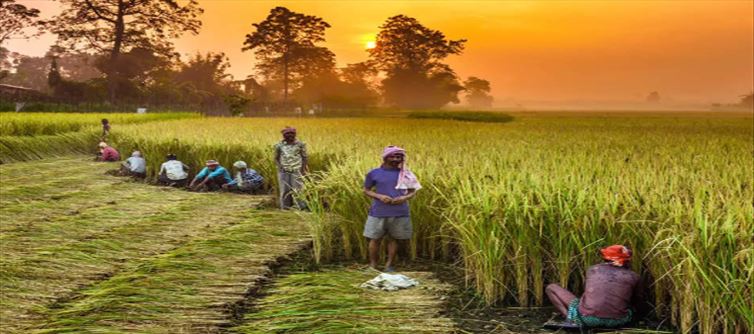

Two years ago, the indian government ended the farmers' protest by withdrawing three controversial agricultural laws. But one of the most important demands of the farmers, 'guarantee of MSP on crops', has still not been fulfilled. For this reason, all the farmer organizations have once again raised an alarm against the government. Thousands of farmers from UP, Haryana, punjab and rajasthan have reached delhi border. Farmers allege that the government did not fulfill its promises made two years ago. Most importantly, no law was made on MSP.
In such a situation, many people have questions in their minds that what is MSP, how is it decided, what is the swaminathan formula, why is it important for farmers, what does the government say, what is the government rate for which crop and when the MSP? If it is certain then what are the farmers afraid of?
First understand what is MSP?
MSP means Minimum Support Price. In hindi it is called Minimum Support Price. This is the price of farmers' crops which is decided by the government. The government first purchases the grains that reach the people of the country from the farmers at MSP. Then the government delivers this grain to the public under the ration system or other government schemes. Apart from this, it is expected that even if sold directly in the market, the farmers will not get the price of the crop less than the MSP. In this way, farmers get the right price for their crops and avoid exploitation by middlemen. The system of MSP has been running for the benefit of farmers for 5 decades. Even if the price of crops falls in the market due to any reason, the government of india still buys that crop at MSP. Farmers do not suffer loss due to this.
 click and follow Indiaherald WhatsApp channel