
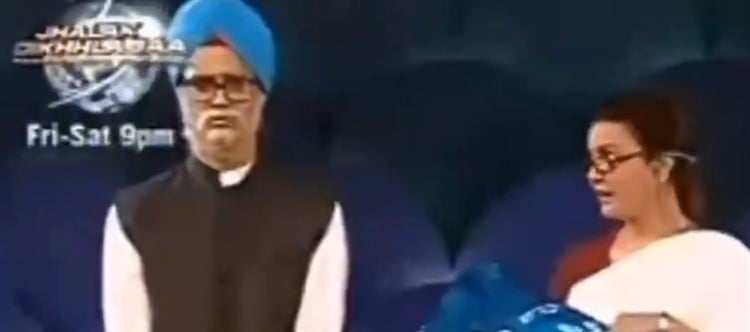


WHEN POWER COULD BE MOCKED: THE tv JOKE THAT FEELS IMPOSSIBLE TODAY
There was a time—not centuries ago, not in some distant democracy—when indian television could laugh upwards. In 2010, a mainstream comedy show on Sony TV openly cracked jokes about the most powerful people in the country. No disclaimers. No panic edits. No midnight arrests. Just satire, broadcast into living rooms across India.
Fast forward to today, and one uncomfortable question hangs in the air:
Would anyone dare to do this now?
1. manmohan SINGH: THE PM WHO COULD BE PARODIED
Back then, Manmohan Singh was routinely caricatured as a well-meaning but powerless Prime Minister. The joke wasn’t flattering—but it was allowed. Comedians leaned into the perception of him as a soft-spoken technocrat overshadowed by political forces.
The keyword? Allowed.
2. sonia GANDHI: ACCENT, ORIGIN, AND OPEN MOCKERY
Even Sonia Gandhi wasn’t spared. Her foreign accent and background became punchlines on national television. Crude? Sometimes. Uncomfortable? Definitely. Criminal? Apparently not—because no FIRs were filed, no actors were dragged to police stations, and no channels were threatened with shutdowns.
3. NO FIRs. NO APOLOGIES. NO FEAR.
That’s the part that stings the most in hindsight.
No cases against writers.
No outrage mobs.
No “hurt sentiments” press conferences.
Satire existed in the open—messy, imperfect, but free.
4. WHAT CHANGED: FROM MOCKERY TO MINEFIELD
Today, satire has become a legal hazard. A joke can trigger FIRs across states. A sketch can invite interrogation. A punchline can cost livelihoods. comedy has shifted from creativity to calculation—what can I say without consequences?
The chilling effect isn’t hypothetical.
It’s operational.
5. POWER NO LONGER LAUGHS—IT WATCHES
In healthy democracies, power tolerates ridicule because it knows it can survive it. When power begins to fear jokes, it starts policing laughter. The question isn’t whether today’s leaders are more sensitive—it’s whether the system has grown less tolerant.
6. SATIRE IS NOT DISRESPECT—IT IS A STRESS TEST
Mocking leaders isn’t about hatred. It’s about accountability. Satire tests whether authority can withstand public scrutiny without cracking down. In 2010, that test was passed—quietly, imperfectly, but decisively.
Would it pass today?
THE REAL LOSS: NOT JOKES, BUT COURAGE
This isn’t nostalgia for bad comedy. It’s grief for lost space. A space where artists could exaggerate, offend, and provoke without fearing legal retaliation. Where democracy could laugh at itself—and survive.
FINAL WORD: WHEN LAUGHTER BECOMES DANGEROUS, SOMETHING IS WRONG
The absence of FIRs in 2010 isn’t proof that leaders were kinder. It’s proof that institutions were stronger. When comedians self-censor more than politicians self-reflect, the joke isn’t funny anymore.
So yes—only one question remains:
Would anyone have the courage to attempt this now?
Or has fear already answered it for us?
 click and follow Indiaherald WhatsApp channel