

-

Acer
-
Apple
-
Asus
-
Australia
-
Bharatiya Janata Party
-
chetan
-
CM
-
Congress
-
court
-
Currency
-
Delhi
-
Dell
-
Donald Trump
-
European Union
-
Father
-
Fort
-
France
-
HP
-
HTC
-
Huawei
-
India
-
Indian
-
Indians
-
INTERNATIONAL
-
Japan
-
Leader
-
LG
-
Madhya Pradesh - Bhopal
-
Mohan
-
Motorola
-
MP
-
Nokia
-
Parents
-
Redmi
-
Research and Analysis Wing
-
Samsung
-
Service
-
siya
-
Sony
-
South Korea
-
Supreme Court
-
TECHNOLOGY
-
WATCH

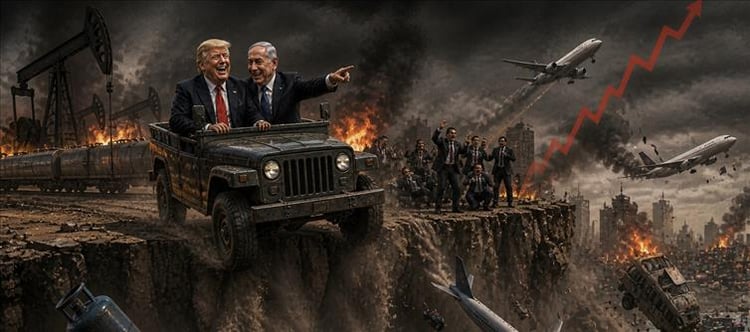
Donald Trump's global approval ratings have fallen to historic lows across allied nations, with india Today's polling compilation reporting sharp declines across Europe, Asia-Pacific, and Latin America. The trend raises questions about India's deepening US-centric diplomatic tilt at a time when other democracies are recalibrating.
This is an india Herald analysis. Editorial assessments are clearly distinguished from sourced reporting throughout.
Across the democracies that once formed America's reliable outer ring — from Seoul to Stockholm, from Ottawa to Canberra — Donald Trump's approval as a global leader has fallen sharply, according to india Today's compilation of international polling data. The report indicates significant declines in multiple european nations and records historically unfavourable views of American leadership across the Asia-Pacific and Latin America.
[Analysis] The raw numbers are significant on their own. But in this correspondent's assessment, the underlying geopolitical signal may matter more than the topline figures: the trend suggests that publics across allied nations are beginning to treat Trumpian unilateralism as America's default setting rather than an aberration. india, which has spent the last decade deepening its engagement with Washington through frameworks such as QUAD and the Initiative on Critical and Emerging technology (iCET), has been notably restrained in publicly addressing this shift.
What the Polling Data Shows
india Today's data compilation documents what the outlet describes as synchronised disillusionment across multiple regions. According to the report, the decline is sharpest in NATO nations, where Trump's public comments questioning alliance commitments have been widely reported by international media. But the erosion extends beyond the transatlantic sphere: Latin American publics, Asian democracies, and several traditionally US-sympathetic African nations also register historically negative views, per india Today's aggregation.
[Analysis] What makes these numbers politically consequential, rather than merely atmospheric, is their potential downstream effect on allied governments. Leaders in Berlin, Tokyo, and Canberra face domestic electorates for whom visible closeness to Washington may increasingly be a political liability rather than an asset. Multilateral forums that once centred American participation are, in this correspondent's reading, increasingly structured around the possibility of American disengagement.
India's Diplomatic Posture: The Debate
New Delhi's official posture has combined deepening defence and technology engagement with Washington while avoiding public commentary on Trump's broader international approach. india has not publicly criticised US trade policy shifts that have affected indian exports, according to multiple indian media reports, nor has it distanced itself from its defence technology partnership with the United States.
India's Ministry of External Affairs has not publicly commented on how Trump's global approval trajectory affects India's diplomatic calculations. india Herald has reached out to the MEA for comment; this article will be updated if a response is received.
[Analysis] In this correspondent's assessment, the calculus behind India's posture has been straightforward: New delhi needs American semiconductor cooperation, defence platforms, and a counterweight to Beijing. Everything else has been treated as manageable friction. But this equation may be coming under pressure. When other major democracies' publics move away from Washington, India's reluctance to publicly acknowledge the drift could, some analysts argue, create a perception problem that compounds into a strategic one. european and Asian partners whom india courts for supply-chain diversification and green-energy cooperation may grow wary of a New delhi that appears too closely tethered to a Washington they themselves are quietly deprioritising.
The Domestic Dimension
India's own public opinion on trump, while reportedly warmer than Europe's — partly owing to diaspora dynamics and ideological affinities — is not monolithic. Trade disputes and visa restrictions affecting India's IT workforce, which constitutes the largest national cohort of H-1B applicants according to US Citizenship and Immigration services data, have tempered enthusiasm. [Analysis] In this correspondent's reading, a general sense that the bilateral relationship delivers more rhetoric than reciprocity has also contributed to cooling sentiment, though systematic indian polling on the question remains limited.
What Strategic Analysts Are Debating
[Analysis] The sophisticated argument from India's foreign policy establishment is that New delhi has always been transactional — it partners with whoever serves indian interests. This is historically accurate, and it has served india well from the Non-Aligned Movement era through the civil nuclear deal. But transactionalism, in this correspondent's assessment, only works when your partner's strategic currency is stable. The india Today polling data suggests that the reliability of American commitments made under Trump's watch is being questioned by publics worldwide — a trend that could affect allied governments' willingness to sustain US-centred frameworks.
Consider QUAD: India's partnerships with japan and australia within the grouping depend on those nations' domestic political willingness to sustain a US-centred Indo-Pacific architecture. If Japanese and Australian publics sour on trump — as the india Today data suggests is occurring — their governments' enthusiasm for frameworks that place America at the centre may cool. india could find itself invested in partnership architectures whose other participants are reassessing their commitment.
[Analysis] The alternative, in this correspondent's view, is not to abandon the US relationship — that would be counterproductive. It is to build strategic redundancy. Some foreign policy commentators in indian media have suggested diversifying defence partnerships — with france and south korea among the options discussed — accelerating indigenous semiconductor capabilities so that iCET dependence has a backstop, and recalibrating India's multilateral posture. These remain editorial and expert-community suggestions rather than official policy prescriptions.
The Question Ahead
india Today's polling data represents snapshots of public sentiment that can shift. But the trend line across Trump's second term, as documented in the report, has moved in one direction. [Analysis] The question for india, in this correspondent's assessment, is whether a foreign policy built on proximity to an increasingly isolated American presidency constitutes forward-looking strategy or inertia dressed as realism. The world's allied publics appear to be making up their minds. India's official silence on the subject is itself a position — but whether it is a sustainable one remains an open question that MEA and South Block will need to address as the data accumulates.
More from india Herald


Key Takeaways
- Trump's global approval ratings have fallen to historic lows across allied nations in Europe, Asia-Pacific, and Latin America, according to india Today's polling data compilation.
- India remains a notable outlier in its official diplomatic posture, deepening ties with Washington through QUAD, iCET, and defence partnerships even as other democracies' publics express growing disapproval.
- [Analysis] The approval decline could have downstream effects on India's multilateral partnerships if japan, australia, and european nations become less willing to sustain US-centred frameworks.
- [Analysis] India's strategic ambiguity may risk becoming a liability if New delhi does not build diplomatic and defence redundancy beyond its US engagement.
- India's Ministry of External Affairs has not publicly commented on the implications of Trump's global approval trajectory for indian foreign policy.
Frequently Asked Questions
What is happening with Trump's global approval ratings?
According to india Today's compilation of international polling data, Trump's global approval has fallen to historic lows across allied nations in Europe, Asia-Pacific, Latin America, and parts of Africa.
Why could Trump's global unpopularity matter for India?
India's foreign policy is deeply invested in US-centred frameworks like QUAD and iCET. Analysts note that if allied nations whose publics oppose trump become less willing to sustain these frameworks, India's investment in them could face diminishing returns. The MEA has not publicly commented on this question.
Is indian public opinion on trump also shifting?
While reportedly warmer than Europe's, indian public sentiment toward trump has shown signs of cooling due to trade disputes and visa restrictions affecting IT workers, though comprehensive indian polling on the subject remains limited.
What are analysts suggesting india should do?
Some foreign policy commentators in indian media have suggested india build strategic redundancy — exploring diversified defence partnerships, accelerating indigenous semiconductor capabilities, and recalibrating its multilateral posture — though these remain commentary rather than official policy prescriptions.
 click and follow Indiaherald WhatsApp channel