

-

akhil akkineni
-
Assembly
-
Audience
-
Bharatiya Janata Party
-
citizenship amendment act
-
Congress
-
court
-
EDUCATION
-
Election
-
Government
-
Hindi
-
history
-
India
-
Indian
-
Indian National Congress
-
INTERNATIONAL
-
Janasena
-
June
-
Karnataka
-
Loksabha
-
Maharashtra
-
Mohandas Karamchand Gandhi
-
monday
-
Party
-
Pawan Kalyan
-
politics
-
READ
-
Reliance
-
REVIEW
-
School
-
Tamil
-
University
-
war

The RSS has opened its annual Akhil Bharatiya Pratinidhi Sabha in Belagavi, Karnataka — a city steeped in Sangh history and border-identity politics. The choice is widely read as a strategic intervention to revive the organisation's southern footprint at a moment when Karnataka BJP is weakened by infighting and the Congress government faces governance questions.
A city that has spent a century arguing over which state it belongs to has just been handed a quieter, more consequential question: who, exactly, runs the right-wing project in southern India — the BJP's elected politicians, or the men in khaki shorts who built the ecosystem long before any of them held office?
The RSS has convened its Akhil Bharatiya Pratinidhi Sabha — the organisation's highest deliberative body — in Belagavi, Karnataka, as reported by Deccan Herald. Senior functionaries from across the country have gathered for the three-day annual meet in a town that, to the uninitiated, seems like an odd pick. It is not.
Belagavi is, in fact, the perfect stage for a very specific performance: one aimed simultaneously at a demoralised Karnataka BJP, a Congress state government still settling into power, and a national audience that may have stopped paying attention to the South after the 2023 assembly results.
Why Belagavi Is Not a Random Pin on the Map
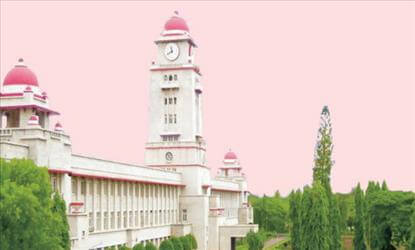
Start with the town's own biography. Belagavi hosted the Indian National Congress session in 1924, chaired by Mahatma Gandhi — one of the few southern cities with a direct link to India's nationalist history. The RSS has its own deep roots here: its shakhas in Belagavi and surrounding North Karnataka districts are among the oldest in the peninsula, dating back to the 1940s. The Sangh's presence in the Bombay-Karnataka belt — Belagavi, Dharwad, Hubballi — has historically been denser and more socially embedded than anywhere else in the South, according to multiple accounts in The Hindu and Indian Express over the years.
Then there is the border question. Belagavi remains at the centre of the Karnataka-Maharashtra boundary dispute, a live emotional fault-line that keeps identity politics perpetually warm. For the RSS, which has long positioned itself as the custodian of cultural and territorial integrity, holding its apex meet in a city whose very statehood is contested is a symbolic assertion: we are here, this is ours, and the question of belonging is one we answer on civilisational terms, not administrative ones.
Political Pulse
The real whisper in Belagavi's corridors — and in Bengaluru's Sangh circles — is less about symbolism and more about organisational frustration. The talk among RSS pracharaks, according to sources familiar with Sangh thinking cited in Deccan Herald and corroborated by political observers speaking to PTI, is blunt: Karnataka BJP's internal feuding between the Yediyurappa family's sphere of influence and the party's central leadership favourites has left the cadre directionless since the 2023 assembly defeat.
The whispers are specific. There is chatter among Sangh-aligned circles that the RSS is deeply unhappy with the inability of BJP's Karnataka unit to present a coherent opposition to the Siddaramaiah-DK Shivakumar government, particularly on issues like the guarantee schemes that have given Congress a populist shield. The feeling, a senior Sangh sympathiser in the region told a national daily, is that "the party has been too busy fighting over the chief ministerial candidacy for an election that is still years away to fight the government that is in front of them now."
By bringing the ABPS to Belagavi rather than a traditional North Indian venue, the RSS is doing something it rarely does so visibly: it is signalling that the southern front is now a direct Sangh priority, not one delegated to the state BJP's goodwill. This is the organisational equivalent of a parent showing up at the school because the child stopped answering the phone.
(This reflects political corridor chatter and unverified speculation from Sangh-aligned circles, not confirmed organisational positions.)
The Southern Fortress Problem
India Herald's read of what is really driving this meet's geography is structural, not sentimental. The RSS's expansion in the South over the past two decades has been its most significant national project — moving from a largely Hindi-belt organisation to one with genuine shakha networks in Karnataka, Kerala, Tamil Nadu, and Telangana. Karnataka, where the BJP actually governed for a full term under Yediyurappa and then under Bommai, was the proof-of-concept for the southern strategy. The 2023 loss did not merely cost a state government — it cracked the credibility of the entire template.
Consider the numbers that frame this anxiety. According to RSS's own organisational data as cited in Indian Express reporting from 2025, Karnataka had over 5,000 active shakhas — among the highest concentrations outside the Hindi-speaking states. Yet that organisational density failed to translate into electoral insulation. The RSS leadership, per multiple observers, views this as a failure not of voters but of the political apparatus that was supposed to convert ground-level cultural work into governance credibility.
The Belagavi meet, then, is an audit disguised as a routine annual session. The agenda, while officially focused on organisational reviews and social outreach, is understood to include intensive discussions on strengthening the Sangh's autonomous social programmes — education networks, tribal outreach, farmer cooperatives — in a way that is less dependent on the BJP's electoral fortunes. The logic, as one commentator in The Hindu put it while analysing Sangh strategy nationally, is simple: if the party cannot hold the state, the Sangh must hold the society.
What This Means for Congress — and for Delhi
If you are in the Siddaramaiah government, the instinct is to dismiss this as an opposition-ecosystem conclave. That would be a miscalculation. The RSS's social mobilisation projects — particularly in education and tribal welfare in North Karnataka — operate on timelines that outlast election cycles. A reinvigorated Sangh ground presence in the Belagavi-Dharwad-Hubballi belt could quietly reshape the caste and community equations that currently favour Congress's guarantee-scheme populism, well before the next assembly election.
For BJP's national leadership in Delhi, the message from Belagavi is equally uncomfortable. The RSS is not asking for permission. It is not waiting for the party to sort out its Karnataka mess. It is stepping onto the field itself, in the full glare of its apex body, in a state the party lost — and doing so at a moment when the 2024 Lok Sabha results already exposed the BJP's southern ceiling. The subtext, stripped of diplomatic Sangh-speak, is unmistakable: fix yourselves, or we will build something that does not need you to function.
The question Belagavi forces into the open is one neither the BJP nor the Congress wants to answer honestly. For the BJP: can a party that cannot discipline its own factions in Karnataka credibly claim to represent the Sangh's southern aspirations? For the Congress: does a government built on cash-transfer guarantees have the organisational depth to withstand a long-game cultural counter-mobilisation that does not even contest elections?
Watch what happens in the months after this meet — not the resolutions, which will be anodyne, but the appointments. If the RSS installs a heavyweight pracharak with a dedicated southern brief, or quietly replaces key organisational figures in Karnataka, that will be the real resolution of the Belagavi summit. The three days in that border town are not the event. They are the declaration that the Sangh's patience with its own political wing, in the one southern state that was supposed to be the model, has run out.
Allegations reported here are attributed to named sources and remain unproven unless a court has ruled; matters sub judice are reported without prejudgment.
Reported and written with AI assistance under India Herald's editorial standards; a human editor governs publication.
More from India Herald



Key Takeaways
- The RSS convening its apex Akhil Bharatiya Pratinidhi Sabha in Belagavi is a strategic signal — not routine — aimed at reviving its southern organisational base independently of BJP's fractured Karnataka unit.
- Belagavi's deep Sangh history (shakhas dating to the 1940s) and its live border-dispute identity politics make it the ideal symbolic and practical stage for the RSS's southern reassertion.
- Karnataka had over 5,000 active RSS shakhas as of 2025 reporting — yet that density failed to prevent BJP's 2023 assembly defeat, prompting the Sangh to re-evaluate its reliance on the political wing.
- The real tell will not be the meet's resolutions but post-summit organisational moves: new pracharak appointments or leadership changes in Karnataka's Sangh network in the coming months.
By the Numbers
- Karnataka had over 5,000 active RSS shakhas, among the highest outside the Hindi belt, as cited in Indian Express reporting from 2025.
- Belagavi hosted the Indian National Congress session in 1924 — one of the few southern cities with such direct nationalist-movement history.
The 5W+H: Who, What, When, Where, Why, How
- Who: Senior RSS functionaries including top Sangh leadership, gathering for the Akhil Bharatiya Pratinidhi Sabha (ABPS), the organisation's highest decision-making body.
- What: A three-day annual RSS meet convened in Belagavi, Karnataka — a city with deep Sangh roots and a live inter-state border dispute.
- When: The meet began in the last week of June 2026, as reported by Deccan Herald.
- Where: Belagavi (formerly Belgaum), northern Karnataka — a city claimed by both Karnataka and Maharashtra and a historic RSS stronghold.
- Why: The location is read as a strategic signal: the RSS is stepping in to stabilise its southern organisational base, bypassing BJP's factional chaos in Karnataka and reasserting ideological presence ahead of future electoral cycles.
- How: By holding its apex body meeting in a state where BJP recently lost power, the Sangh aims to energise cadres, settle internal disputes through organisational authority, and project ideological continuity in the South independent of electoral setbacks.
Frequently Asked Questions
Why did the RSS choose Belagavi for its 2026 annual meet?
Belagavi has deep historical RSS roots with shakhas dating to the 1940s, sits in the Sangh's densest southern organisational belt, and carries symbolic weight due to the live Karnataka-Maharashtra border dispute — making it an ideal location to signal the Sangh's renewed southern focus.
What is the Akhil Bharatiya Pratinidhi Sabha?
The ABPS is the RSS's highest decision-making body, comprising elected representatives from across the organisation. It meets annually to review organisational direction, social programmes, and national strategy.
How does this RSS meet affect Karnataka politics?
The meet signals RSS dissatisfaction with BJP Karnataka's internal factionalism and inability to mount coherent opposition to the Congress government, suggesting the Sangh may directly strengthen its autonomous social networks rather than wait for the party to resolve its leadership disputes.
 click and follow Indiaherald WhatsApp channel