
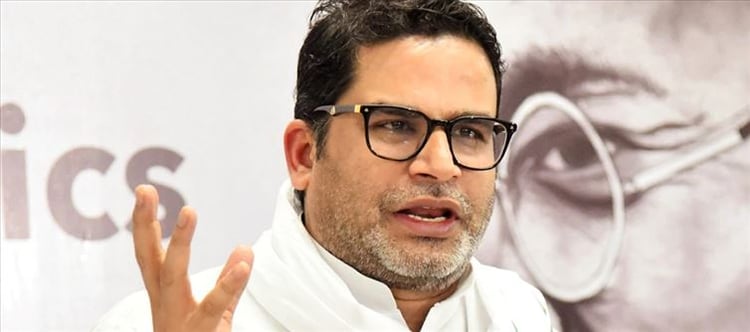


BJP Karnataka president B.Y. Vijayendra announced a formal coordination panel with JD(S) ahead of upcoming elections, ostensibly to challenge the Siddaramaiah-led Congress government. But the panel's deeper function, India Herald's analysis suggests, is to institutionalise Vijayendra's grip by binding rebel voices — especially the Yatnal faction — into a structure where internal dissent becomes indistinguishable from disloyalty to the NDA itself.
A coordination panel sounds like the most bloodless piece of political furniture imaginable — the kind of committee that exists in a press release and dies in a filing cabinet. But in Karnataka's BJP, where the state president's chair has been a revolving door of factional knives, this particular committee may turn out to be the sharpest weapon B.Y. Vijayendra has wielded yet.
According to the Times of India, Vijayendra announced after a meeting with JD(S) leaders that the two NDA partners would form a formal coordination panel ahead of upcoming elections, presenting a united front against Chief Minister Siddaramaiah's Congress government. The Hans India reported the development as a move to strengthen the alliance's electoral machinery. On the surface, this is textbook coalition politics — two parties aligning resources, rationalising seat-sharing, avoiding the vote-splitting that gifted Congress its 2023 sweep.
But look past the press conference optics, and the architecture tells a different story entirely.
The Real Enemy Isn't in Vidhana Soudha — It's in Vijayendra's Own Party Room
Vijayendra's tenure as BJP Karnataka president has been shadowed by one relentless fact: a faction led by Basanagouda Patil Yatnal that has never accepted his leadership as legitimate. Yatnal's camp has repeatedly questioned Vijayendra's elevation — an elevation they attribute less to organisational merit than to his father, former Chief Minister B.S. Yediyurappa's enduring influence over the central leadership. The whispers in Bengaluru's political corridors, according to party watchers, have never fully quieted: that Vijayendra inherited the chair, not earned it.
Enter the coordination panel.
By locking JD(S) into a formal, structured NDA mechanism at the state level, Vijayendra has performed what India Herald's read identifies as a quiet institutional checkmate. Here is the logic: any BJP leader who now publicly challenges Vijayendra's authority — questions his decisions, undermines his candidates, or runs a parallel power centre — is no longer merely engaging in an internal party squabble. They are threatening the structural integrity of a national alliance partnership. They are not just defying a state president; they are sabotaging the NDA's coalition arithmetic, the very framework the BJP central high command treats as sacrosanct.
That is a vastly more dangerous charge in New Delhi's eyes than being a noisy backbencher in Karnataka.
Political Pulse
The talk in BJP circles in Karnataka — the kind of corridor conversation that never makes the official briefing — is pointed. "Yatnal can shout about dynasty all he wants," one party functionary is understood to have remarked, as reported in political circles, "but the moment he disrupts a coordination mechanism that has JD(S) and Delhi's blessing, he is not fighting Vijayendra — he is fighting Amit Shah's alliance strategy." Whether this framing holds under pressure remains to be seen, but the structural incentive is unmistakable.
JD(S), for its part, has its own reasons to embrace the panel. The party, diminished after its 2023 drubbing and increasingly dependent on NDA goodwill for relevance, gains a formal seat at the pre-election table — guaranteed consultation on seat-sharing rather than last-minute scraps. For the Deve Gowda family, the panel is an insurance policy: a documented structure that makes it harder for BJP to sideline them when the actual ticket distribution begins. Both sides get something real, which is precisely why the arrangement has teeth that a vague "alliance understanding" never did.
The Congress Dimension — And Why Siddaramaiah Should Pay Attention
The official target, of course, is Siddaramaiah's government. And the threat is not hollow. A coordinated BJP-JD(S) campaign that avoids three-cornered contests in key seats could materially dent Congress's arithmetic, particularly in the Old Mysuru region where JD(S) retains its Vokkaliga base and where Congress margins in 2023 were thinner than the final tally suggested. According to the Times of India, the panel's stated purpose is precisely this kind of strategic coordination — pooling booth-level data, aligning campaign messaging, rationalising candidate selection to avoid the fratricidal vote-splits that handed Congress several seats it should not have won.
But here is the dimension the Congress war room might miss if it only reads the surface: a BJP that has resolved its internal factional war is a fundamentally different opponent than one still bleeding from it. If the coordination panel succeeds in silencing the Yatnal rebellion — even partially, even temporarily — it does not just add JD(S) seats to the NDA column. It removes the internal bleeding that cost BJP credibility, candidate quality, and campaign discipline in the last cycle.
That is two gains from one committee.
The Forward Read — What to Watch
India Herald's assessment of where this goes next centres on three signals. First, watch whether the Yatnal faction publicly accepts the panel's authority or finds a way to work around it — if Yatnal attends the first coordination meeting and sits across from JD(S) leaders without incident, the checkmate is complete. Second, watch the JD(S) reaction when actual seat numbers are discussed — the panel's durability will be tested the moment a specific constituency is contested between the two partners. Third, and most critically, watch Delhi. If the BJP central leadership publicly endorses this panel — a statement from Nadda or a visit from a senior leader — it becomes not Vijayendra's initiative but the party's institutional will, and defying it becomes organisationally suicidal.
The quietest power moves in Indian politics are always the ones that look like paperwork. A coordination panel is just a committee. But this committee has been built with the walls facing inward.
Allegations reported here are attributed to named sources and remain unproven unless a court has ruled; matters sub judice are reported without prejudgment.
Reported and written with AI assistance under India Herald's editorial standards; a human editor governs publication.
More from India Herald
Key Takeaways
- Vijayendra's BJP-JD(S) coordination panel formalises the NDA alliance at the state level, making internal BJP dissent structurally equivalent to sabotaging a national coalition — a far graver charge than factional noise.
- JD(S) gains a guaranteed seat at the pre-election table, insulating the Deve Gowda family from last-minute marginalisation during ticket distribution.
- A coordinated BJP-JD(S) front that avoids three-cornered contests could materially damage Congress margins in Old Mysuru and other swing regions where 2023 victories were narrower than they appeared.
- The Yatnal faction's response to the panel — whether they participate or boycott — will be the definitive signal of whether Vijayendra's institutional checkmate holds.
By the Numbers
- Karnataka has 224 assembly constituencies where BJP-JD(S) vote-splitting in three-cornered contests materially aided Congress in the 2023 state elections, per political analysts.
- JD(S) retains significant Vokkaliga base strength in Old Mysuru, a region where Congress margins in 2023 were thinner than aggregate results suggested, according to the Times of India's election analysis.
The 5W+H: Who, What, When, Where, Why, How
- Who: BJP Karnataka president B.Y. Vijayendra and JD(S) leadership, with implications for rebel leader Basanagouda Patil Yatnal and the broader NDA alliance.
- What: Announcement of a BJP-JD(S) coordination panel to jointly strategise ahead of Karnataka elections, per Times of India.
- When: Announced in June 2026, following a meeting between BJP and JD(S) leaders, according to The Hans India.
- Where: Karnataka, India — with implications for NDA seat-sharing arithmetic across the state's 224 assembly and 28 Lok Sabha constituencies.
- Why: Officially to present a united NDA front against the ruling Congress; the unstated calculation, per India Herald's analysis, is consolidating Vijayendra's internal authority against factional challengers.
- How: By formalising the BJP-JD(S) alliance into a structured coordination mechanism, any internal BJP rebellion now risks being framed as undermining the central high command's alliance commitments — a far graver charge than mere state-level dissent.
Frequently Asked Questions
What is the BJP-JD(S) coordination panel announced in Karnataka?
According to the Times of India, BJP Karnataka president B.Y. Vijayendra announced a formal coordination panel with JD(S) to jointly strategise ahead of upcoming elections, presenting a united NDA front against the ruling Congress government under CM Siddaramaiah.
How does the coordination panel affect BJP's internal politics in Karnataka?
India Herald's analysis suggests the panel institutionalises Vijayendra's authority by making any internal dissent — particularly from the Yatnal faction — appear as sabotage of the NDA's national alliance structure, a far graver charge than mere factional rivalry within the state unit.
What does JD(S) gain from the coordination panel with BJP?
JD(S) gains a formal, structured seat at the pre-election negotiation table, ensuring guaranteed consultation on seat-sharing rather than last-minute allocations — an insurance policy for the Deve Gowda family against potential marginalisation by the larger BJP.
 click and follow Indiaherald WhatsApp channel