
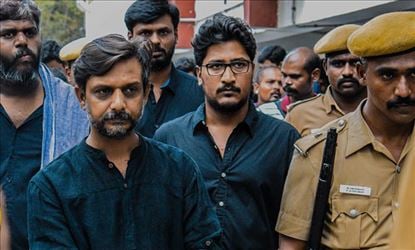


The opposition has set a July 17 deadline for the government to withdraw UAPA charges against YouTuber Prashna Ravan, threatening a state-wide agitation if it refuses. According to The Hindu, CPI leaders have questioned the use of anti-terror legislation against a content creator, framing it as political suppression of free speech that could ignite a broader anti-incumbency backlash.
Here is a law designed to cage terrorists, separatists, and those who would tear the republic apart at its seams. And a government has decided the most urgent threat to national security is a man with a YouTube channel and a sharp tongue. The Unlawful Activities (Prevention) Act — UAPA — now has a new target: Prashna Ravan, a content creator whose crime, if you follow the opposition's telling, was saying things the ruling dispensation did not want a growing audience to hear.
According to The Hindu, the opposition has drawn a hard line in the sand: withdraw the UAPA case against Ravan by July 17, or face a state-wide agitation that promises to turn a single YouTuber's arrest into the government's most uncomfortable political season in months.
The question worth sitting with is not whether the opposition is sincere — political parties rarely issue ultimatums out of pure constitutional concern. The question is why the government handed them a weapon this potent in the first place.
The UAPA Problem: A Sledgehammer Where a Scalpel Existed
UAPA is not an ordinary criminal statute. It permits detention without bail for extended periods, reverses the presumption of innocence in practical terms, and carries a social stigma that brands the accused as an enemy of the state before a single hearing concludes. It was designed — and has historically been deployed — against insurgents, terror-financing networks, and secessionist organisations. When CPI State Secretary questioned the UAPA charges against Prashna Ravan, as reported by The Hindu, the central thrust was blunt: what national security threat does a YouTuber pose that the Indian Penal Code's existing provisions for defamation, sedition (now effectively Section 152 of BNS), or public mischief could not handle?
That is not a rhetorical flourish. It is a legal question with sharp electoral teeth. Every UAPA prosecution that fails to result in conviction — and the conviction rate under UAPA has historically hovered around 2-3%, according to data tabled in Parliament over successive years — becomes a monument to executive overreach. The government does not just lose the case; it validates every accusation of authoritarian instinct the opposition has been building.
Political Pulse
The corridors are buzzing with a read that no press conference will spell out: Prashna Ravan's audience is not random. His viewership, according to the political chatter India Herald has been tracking, skews young, digitally native, and disproportionately drawn from communities that already feel politically marginalised — precisely the demographic that swings close elections in semi-urban and small-town constituencies. Slapping UAPA on a voice that this cohort considers their own does not silence the audience; it radicalises their ballot.
The talk in opposition circles, per sources familiar with the internal strategy, is that the July 17 deadline is deliberately calibrated. It is close enough to feel urgent, far enough to let the government's silence do the opposition's work. Every day the government does not withdraw the case, the narrative hardens: this is a regime that fears a camera more than it fears a courtroom. The opposition does not need the government to comply; it needs the government to refuse. The refusal IS the campaign material.
(This reflects political corridor chatter and strategic speculation, not confirmed internal documents.)
The Demographic Calculus No One Will Say Aloud
Content creators in Indian languages have become, in the last electoral cycle, what vernacular newspapers were in the 1990s — the primary lens through which millions of first-time and young voters process political reality. A YouTuber with a few hundred thousand subscribers in a regional language commands more trust per viewer than a prime-time anchor with ten times the reach, because the parasocial relationship is intimate. The viewer believes this person is speaking FOR them, not AT them.
When a government deploys UAPA against such a figure, it does not merely arrest a person. It tells every viewer: your voice, your frustration, your chosen messenger — all of it is criminal. The opposition knows this. According to The Hindu's reporting on the CPI State Secretary's remarks, the framing is already set: this is not about one man's legal case; this is about whether ordinary citizens can criticise power without being labelled terrorists.
That framing, if it holds through July 17, hands the opposition a narrative arc that money cannot buy: a ticking clock, a sympathetic protagonist, and a government cast as the villain. It is, in India Herald's assessment, the kind of readymade political theatre that transforms a local legal dispute into a state-wide sentiment event — the sort of thing that does not show up in opinion polls until it shows up in vote counts.
The Government's Impossible Fork
The ruling dispensation now faces a fork where both paths cut. Withdraw the case before July 17, and the government looks weak — bullied into retreat by an opposition ultimatum, tacitly admitting the UAPA charge was disproportionate. Refuse, and the opposition gets its agitation, its martyrdom narrative, and a rallying symbol that unites ideologically disparate parties under a single, emotionally resonant cause: free speech.
The smarter play, seasoned political operators in the state suggest off the record, would have been to never invoke UAPA at all — to pursue the matter under ordinary criminal provisions, where the legal process would have been quieter, the optics manageable, and the opposition deprived of its most potent adjective: "draconian." But that option expired the moment the UAPA papers were filed. The government is now managing consequences, not strategy.
What should readers watch for in the days ahead? First, any back-channel signals that the government might downgrade the charges — a quiet legal recalibration that lets it claim the UAPA was always under review while avoiding the appearance of capitulation. Second, whether the opposition can actually mobilise beyond press conferences — a state-wide stir requires cadre discipline and public anger in roughly equal measure, and the gap between threatening agitation and executing it is where many Indian opposition campaigns quietly die. Third, and most critically, whether Prashna Ravan's audience treats the July 17 deadline as their own — because if the digital community self-organises around the date, the opposition will not need to mobilise at all. The audience becomes the movement.
The deepest irony here is one the government may not appreciate until the next election: in a democracy where attention is currency, arresting the person who commands it does not bankrupt the opposition. It funds them.
Allegations reported here are attributed to named sources and remain unproven unless a court has ruled; matters sub judice are reported without prejudgment.
Reported and written with AI assistance under India Herald's editorial standards; a human editor governs publication.
More from India Herald

Key Takeaways
- UAPA — an anti-terror law with a historically low conviction rate of 2-3% — has been invoked against YouTuber Prashna Ravan, a move the opposition frames as political suppression of free speech, according to The Hindu.
- The July 17 deadline is strategically designed: the opposition benefits more from the government's refusal to withdraw than from compliance, turning silence into campaign ammunition.
- Ravan's audience skews young and digitally native — the exact demographic that swings tight elections in semi-urban constituencies, making this a high-stakes electoral gamble for the ruling party.
- The government faces a lose-lose fork: withdraw and look weak, or refuse and hand the opposition a martyrdom narrative that unites disparate parties under a free-speech banner.
- The real variable to watch is whether Ravan's digital community self-organises around July 17 — if the audience becomes the movement, the opposition will not need its own cadre at all.
By the Numbers
- UAPA's historical conviction rate has hovered around 2-3%, according to data tabled in Parliament over successive years — meaning the vast majority of those charged are never found guilty.
The 5W+H: Who, What, When, Where, Why, How
- Who: Opposition parties including CPI and allied groups, demanding action on behalf of YouTuber Prashna Ravan charged under UAPA, as reported by The Hindu.
- What: A state-wide stir threatened if the government fails to withdraw UAPA charges against the YouTuber by July 17, according to The Hindu.
- When: The July 17, 2026 deadline has been set by the opposition for the government to act, as reported by The Hindu.
- Where: The agitation is planned state-wide, with the political confrontation centred on the state capital, per The Hindu's reporting.
- Why: Opposition leaders argue UAPA — designed for terrorism and separatism — is being misused to silence a political critic and content creator who commands a significant youth following, according to CPI State Secretary's remarks reported by The Hindu.
- How: The opposition has issued a public ultimatum and plans to mobilise cadres and sympathisers for protests across the state if the deadline passes without the case being withdrawn, as reported by The Hindu.
Frequently Asked Questions
What is UAPA and why is it controversial when used against a YouTuber?
The Unlawful Activities (Prevention) Act is India's primary anti-terror law, designed for insurgents, terror-financing networks, and secessionist groups. It allows extended detention without bail and effectively reverses the presumption of innocence. Critics and opposition leaders argue its use against a content creator like Prashna Ravan is disproportionate, as existing criminal provisions could address any legitimate legal concerns without the draconian implications of an anti-terror statute.
What happens if the government does not withdraw the UAPA case by July 17?
The opposition has threatened a state-wide agitation if the government does not withdraw the UAPA charges against YouTuber Prashna Ravan by July 17, 2026. According to The Hindu, opposition parties plan to mobilise cadres and supporters for protests across the state, framing the issue as a fight for free speech and against political suppression of dissent.
Why is the opposition targeting this specific case for a broader political movement?
Prashna Ravan's audience reportedly skews young and digitally native — a demographic that is electorally significant in semi-urban and small-town constituencies. By championing his cause, the opposition taps into broader anxieties about free speech and government overreach among a voter cohort that could swing close elections, turning a single legal case into a symbol of anti-incumbency sentiment.
 click and follow Indiaherald WhatsApp channel