
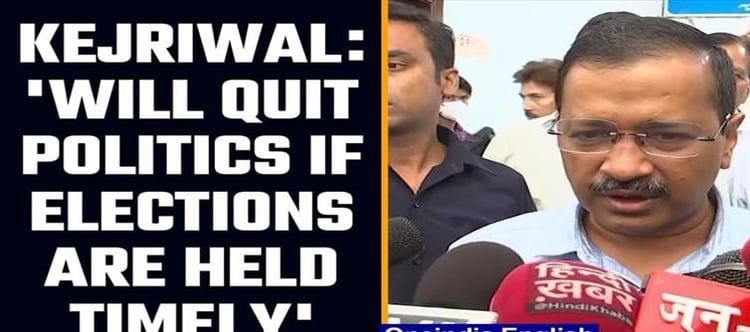


MCD's new MoU with NDDB to convert goshala cow dung into compressed biogas and organic manure addresses a tiny fraction of Yamuna pollution, since untreated sewage — not cattle waste — accounts for roughly 80% of the river's contamination. The deal is modest waste management dressed as a marquee environmental fix, likely timed for BJP's 2027 MCD electoral narrative.
Here is a number that should stop every Delhi resident mid-scroll: nearly 3,800 million litres of sewage pour into the Yamuna every single day, according to the Central Pollution Control Board's own assessments. Against that torrent, the Municipal Corporation of Delhi has just signed an MoU with the National Dairy Development Board to convert cow dung from the city's goshalas into compressed biogas and organic fertiliser — and announced, with a straight face, that this will help clean the river.
It is a little like mopping one tile in a flooded basement and declaring the plumbing fixed.
The MoU, reported by Oneindia Hindi, is real enough in its mechanics. NDDB brings proven expertise in dairy-sector waste processing; anaerobic digestion of cattle dung into CBG is established technology, already deployed in Gujarat and Karnataka. The output — biogas that can substitute LPG and nutrient-rich organic manure — is genuinely useful. As a solid-waste management initiative for Delhi's overcrowded, underfunded goshalas, the deal makes practical sense.
The problem is not what the MoU does. The problem is what it claims to do.
The Numbers That Nobody Mentioned
Delhi is home to an estimated 13,000–15,000 stray and sheltered cattle, according to animal welfare organisations and MCD's own periodic surveys. Even generously assuming every goshala cow produces 10–12 kg of dung daily, total recoverable cattle waste across the city lands somewhere between 130 and 180 tonnes a day. That is not nothing — but set it against the Yamuna's actual pollution load and it is a rounding error.
The CPCB and the National Green Tribunal have repeatedly established that untreated or partially treated sewage constitutes roughly 79–82% of the Yamuna's pollution within Delhi. Industrial effluent accounts for most of the rest. Cattle-related organic waste — the precise target of this MoU — is a minor, peripheral contributor. Converting every gram of goshala dung into biogas would not move the needle on the river's faecal coliform count, its dissolved oxygen levels, or the toxic foam that has become a recurring national embarrassment near Kalindi Kunj every winter.
No official at the MoU signing, according to the report, cited a single projected number — not what percentage of Yamuna pollution this would abate, not the CBG output capacity, not the timeline for plant commissioning. That silence is itself the story.
Political Pulse
Walk the corridors of Delhi's civic establishment right now and the chatter is not about biogas — it is about the calendar. MCD elections are expected in early 2027. BJP wrested the corporation from AAP in the 2022 elections after a bitter unification fight, and the party knows its municipal report card is thin. Delhi's garbage mountains at Ghazipur and Bhalswa have not vanished. The Yamuna remains the most visibly polluted stretch of any major Indian river. Voters in East and Northeast Delhi, who live closest to the river's worst reaches, have heard the 'clean Yamuna' promise from every party for three decades.
The talk in BJP circles, as India Herald reads it, is that the party needs at least two or three headline-friendly 'green deliverables' before the election cycle heats up — initiatives that photograph well, cost little, and carry a cow-welfare subtext that resonates with the Hindutva base. The MCD-NDDB MoU checks every one of those boxes. It is, in a strategist's language, the cheapest possible campaign poster: a cow, a clean river, and a government handshake, all in one frame. Whether it cleans a single litre of the Yamuna is beside the electoral point.
The insider read among rival parties — AAP and Congress operatives have both been murmuring about it — is blunter: BJP is 'green-wrapping' a modest animal-husbandry scheme to avoid answering the harder question of why Delhi's sewage treatment capacity still falls short by nearly 30%, a gap the Delhi Jal Board and central agencies have acknowledged in NGT filings.
What Would Actually Move the Needle
If the Yamuna question were genuinely the priority, the arithmetic is unforgiving. Delhi needs to close a sewage treatment gap of roughly 1,000 million litres per day — upgrading and building STPs that cost thousands of crores and take years. The Namami Gange programme, under the central Jal Shakti Ministry, has allocated funds, but execution has lagged against every deadline the NGT has set, as court records show. A cow-dung biogas plant, however efficiently run, operates in a completely different order of magnitude.
None of this makes the MoU a bad idea in isolation. Converting goshala waste is sound circular-economy practice. It reduces methane emissions from open dung heaps — a genuine, if modest, climate co-benefit. It could generate a small revenue stream for cash-strapped goshalas. As an initiative, it deserves honest credit for what it is: a sensible, small-bore waste-management step.
But calling it a Yamuna cleanup measure is like calling a band-aid a bypass surgery — technically both are medical interventions, but one saves a life and the other covers a scratch.
What Comes Next
Watch for the next six months. If the MoU is genuinely about waste management, expect quiet commissioning of a pilot biogas plant, perhaps near one of Delhi's larger goshalas in Northwest or Southwest Delhi, with modest targets. If it is about the election, expect something very different: a high-profile inauguration closer to the campaign season, a slick social media push framing the initiative as 'BJP's green Yamuna mission,' and zero follow-up data on actual pollution reduction. The absence of measurable targets in the MoU announcement already tips the hand.
Meanwhile, the Yamuna will keep receiving its daily 3,800-million-litre sewage bath. The foam will return at Chhath Puja. The NGT will issue another deadline. And some new MoU — equally modest, equally loudly announced — will arrive just in time for the next election cycle.
The river, as always, will have to wait for the votes to be counted before anyone asks whether anything was actually cleaned.
More from India Herald

Key Takeaways
- MCD's MoU with NDDB targets cow dung from goshalas — a peripheral contributor to Yamuna pollution, while untreated sewage (roughly 80% of the load) remains largely unaddressed.
- Delhi's recoverable cattle dung is estimated at 130–180 tonnes/day; the Yamuna receives nearly 3,800 million litres of sewage daily — the orders of magnitude are incomparable.
- The initiative is sound circular-economy waste management but is being framed as a river-cleanup measure, likely timed to give BJP a 'green deliverable' before the expected 2027 MCD elections.
- Delhi still faces a sewage treatment gap of roughly 1,000 MLD, per NGT filings — the real Yamuna fix requires STP infrastructure worth thousands of crores, not biogas MoUs.
- The absence of any measurable pollution-reduction target in the MoU announcement suggests the objective is optics, not outcomes.
By the Numbers
- Nearly 3,800 million litres of sewage enter the Yamuna daily in Delhi, per CPCB assessments.
- Untreated sewage constitutes roughly 79–82% of Yamuna pollution within Delhi, per CPCB and NGT findings.
- Delhi's estimated 13,000–15,000 sheltered and stray cattle produce an estimated 130–180 tonnes of recoverable dung per day.
- Delhi's sewage treatment capacity gap remains approximately 1,000 million litres per day, per NGT filings.
The 5W+H: Who, What, When, Where, Why, How
- Who: Municipal Corporation of Delhi (MCD) and National Dairy Development Board (NDDB), with BJP controlling MCD governance.
- What: Signed an MoU to convert tonnes of cow dung from Delhi's goshalas into compressed biogas (CBG) and organic fertiliser, framed as a Yamuna pollution reduction initiative.
- When: June 2026, approximately eleven months before the next MCD elections expected in early 2027.
- Where: Delhi — affecting goshalas across the city and the Yamuna river that runs through it.
- Why: Officially to reduce organic waste entering the Yamuna; the political subtext is BJP's need for a visible 'clean Yamuna' deliverable ahead of 2027 municipal elections.
- How: NDDB will process cow dung collected from MCD-linked goshalas through anaerobic digestion plants to produce CBG and organic manure, diverting animal waste from drains.
Frequently Asked Questions
What does the MCD-NDDB MoU actually do?
It provides for converting cow dung from Delhi's goshalas into compressed biogas (CBG) and organic fertiliser through anaerobic digestion, a proven waste-processing technology. NDDB brings dairy-sector expertise; MCD provides access to goshala waste.
How much of Yamuna pollution can cow dung conversion address?
Very little. Cattle waste is a minor contributor to Yamuna pollution. Untreated sewage — roughly 3,800 million litres daily — constitutes about 80% of the river's contamination in Delhi, per CPCB data. The MoU targets an estimated 130–180 tonnes of daily dung, which operates in an entirely different order of magnitude.
Why is the MoU being linked to Yamuna cleanup?
The framing likely serves an electoral purpose. BJP controls MCD and faces elections expected in early 2027. A cow-dung-to-biogas initiative is low-cost, photographs well, and carries cow-welfare overtones that resonate with the party's base — making it a convenient 'green deliverable' for the campaign narrative.
What would actually clean the Yamuna in Delhi?
Closing Delhi's sewage treatment gap of approximately 1,000 million litres per day by upgrading and building STPs — a multi-thousand-crore infrastructure challenge that has missed every NGT deadline so far, according to court records.
 click and follow Indiaherald WhatsApp channel