


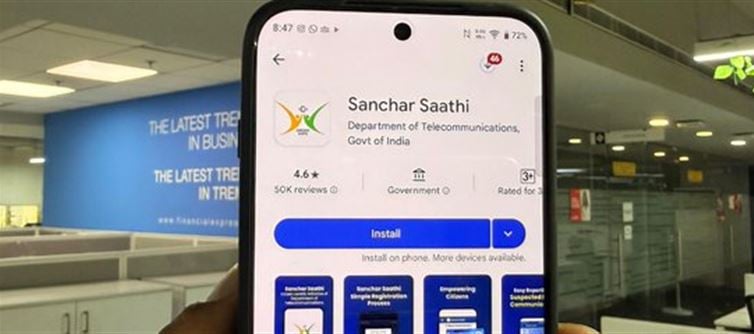

Sanchar Saathi App: Mandatory Requirement Withdrawn
The indian government has withdrawn the mandatory pre-installation requirement for the Sanchar Saathi app amid privacy concerns.
Earlier, all new smartphones were required to have the app pre-installed, and older devices had to receive it via updates.
Phone manufacturers like Apple, Samsung, and xiaomi were asked to submit compliance reports within 120 days.
The app was intended to track stolen phones, prevent fake IMEI numbers, and monitor telecom misuse.
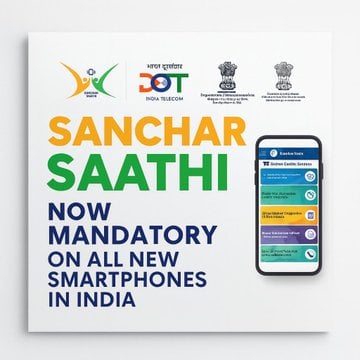
Critics raised concerns about government surveillance and lack of user choice.
Cybersecurity Models in Other Democracies
United States
No government apps are mandatory.
STIR/SHAKEN protocol prevents call spoofing.
CyWatch (NSA/FBI) monitors cybercrime.
CISA collaborates with private companies for threat intelligence.
Focus is on targeted surveillance and robust IT infrastructure, not compulsory apps.
United Kingdom
No mandatory government apps.
Online Safety Act 2023 makes tech companies responsible for monitoring scams and deceptive content.
Government does not directly control user devices.
European Union
Pre-installed government apps are not required.
Cyber Resilience Act ensures devices are secure out-of-the-box with 5 years of updates.
Digital services Act holds platforms accountable for scam removal.
EUDI Wallet app exists but is fully voluntary.
Singapore
ScamShield app filters calls and SMS using police data.
Completely optional; no pre-installation required.
South Korea
Previously had SmartSheriff app for minors, removed in 2015 due to security flaws.
No other mandatory apps exist in the democratic framework.
Comparison with Russia
Russia mandates 19 pre-installed government apps, including ID and services apps.
India’s initial approach was similar, but this model is rare in democracies.
Conclusion
Most democracies maintain cybersecurity through laws, platform accountability, and IT infrastructure.
India’s Sanchar Saathi model was unique in making an app mandatory without uninstall options.
Disclaimer:
The information contained in this article is for general informational purposes only. While we strive to ensure accuracy, we make no warranties or representations of any kind, express or implied, about the completeness, accuracy, reliability, suitability, or availability of the content. Any reliance you place on the information is strictly at your own risk. The views, opinions, or claims expressed in this article are those of the author and do not necessarily reflect the official policy or position of any organization mentioned. We disclaim any liability for any loss or damage arising directly or indirectly from the use of this article.
 click and follow Indiaherald WhatsApp channel