


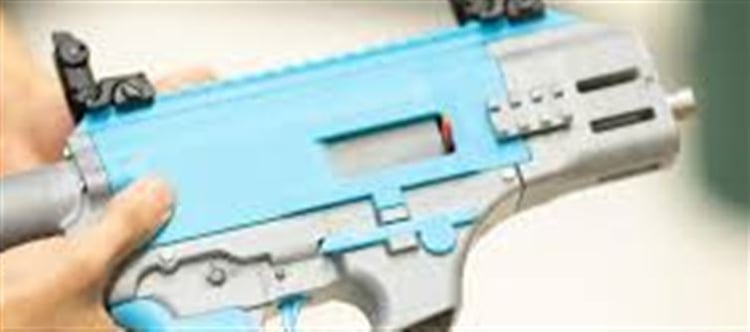

So‑called “ghost guns” — firearms assembled from kits or made using 3D‑printing technology without serial numbers — have raised serious law‑enforcement and regulatory concerns worldwide. However, experts say that even these untraceable weapons can often be identified using forensic and technological methods.
Here’s a detailed explanation of how ghost guns are tracked and identified.
🧾 What Are Ghost Guns?
“Ghost guns” refer to firearms that:
- Are privately made, not purchased as fully manufactured guns
- Often lack serial numbers
- May be assembled from parts kits or created using 3D‑printing technology
- Are difficult to trace through traditional firearm databases
In the united states, the issue gained national attention, leading to regulatory steps by agencies like the Bureau of Alcohol, Tobacco, Firearms and Explosives (ATF).
🖨️ How 3D‑Printed Ghost Guns Are Made
3D‑printed ghost guns are typically created by:
- Printing a firearm frame or receiver using consumer 3D printers
- Purchasing metal parts (barrel, trigger assembly, slide) separately
- Assembling the parts without background checks in some jurisdictions
Because the receiver is the legally regulated component in many countries, printing it at home can bypass traditional tracking systems.
🔍 How Authorities Can Identify Ghost Guns
Despite lacking serial numbers, ghost guns are not completely invisible. Investigators use several advanced techniques:
1️⃣ Ballistic Fingerprinting
Every firearm leaves unique marks on bullets and cartridge casings when fired. These marks act like a fingerprint.
Law enforcement agencies compare ballistic evidence using databases to link weapons to specific crimes — even if the gun has no serial number.
2️⃣ Toolmark & Manufacturing Pattern Analysis
3D‑printed components often have:
- Layering patterns unique to specific printer models
- Tool marks from drilling or machining
- Distinct assembly modifications
Forensic labs can sometimes trace these characteristics back to a specific printing method or printer type.
3️⃣ Digital File Tracking
Many 3D‑printed gun designs originate from online files. Authorities may:
- Track downloads or sharing of design files
- Investigate wallet PLATFORM' target='_blank' title='digital-Latest Updates, Photos, Videos are a click away, CLICK NOW'>digital footprints
- Recover deleted data from seized computers
While the files themselves are widely circulated online, wallet PLATFORM' target='_blank' title='digital-Latest Updates, Photos, Videos are a click away, CLICK NOW'>digital evidence can connect suspects to manufacturing.
4️⃣ Polymer & Material Analysis
Forensic scientists can examine:
- Type of plastic filament used
- Chemical composition of printed parts
- Batch manufacturing signatures
Certain filaments or materials may narrow down possible sources.
5️⃣ Recent Regulatory Measures
In 2022, the united states Department of Justice introduced new rules requiring ghost gun kits to include serial numbers and undergo background checks, closing what was known as the “ghost gun loophole.”
Several U.S. states have also enacted additional restrictions targeting untraceable firearms.
⚖️ Why This Issue Matters
Ghost guns have become controversial because:
- They are harder to regulate
- They can bypass traditional firearm purchase checks
- They complicate criminal investigations
However, advances in forensic science are reducing their “ghost‑like” anonymity.
🧠 The Bigger Picture
While 3D‑printing technology has legitimate industrial and educational uses, its application in firearm manufacturing raises ethical and legal concerns.
Authorities increasingly combine:
- Digital forensics
- Ballistic science
- Material analysis
- Regulatory oversight
to ensure that even weapons without serial numbers can be traced when used in crimes.
📌 Final Takeaway
Although ghost guns are designed to avoid traditional tracking, they are not completely untraceable. Through ballistic matching, forensic material analysis, and wallet PLATFORM' target='_blank' title='digital-Latest Updates, Photos, Videos are a click away, CLICK NOW'>digital investigations, law enforcement agencies can often identify and trace 3D‑printed firearms.
As technology evolves, so do investigative tools — meaning the “ghost” in ghost guns is becoming less invisible than before.
Disclaimer:
The views and opinions expressed in this article are those of the author and do not necessarily reflect the official policy or position of any agency, organization, employer, or company. All information provided is for general informational purposes only. While every effort has been made to ensure accuracy, we make no representations or warranties of any kind, express or implied, about the completeness, reliability, or suitability of the information contained herein. Readers are advised to verify facts and seek professional advice where necessary. Any reliance placed on such information is strictly at the reader’s own risk.
 click and follow Indiaherald WhatsApp channel