
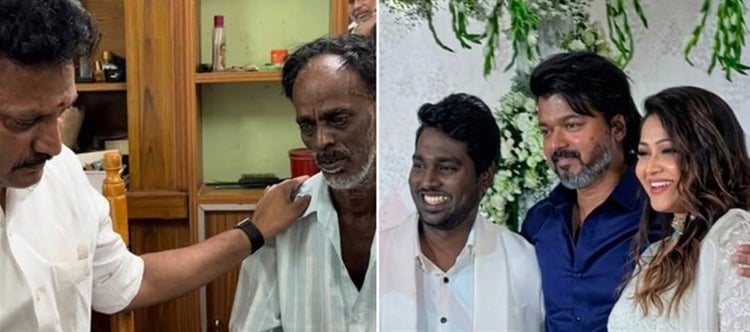


In politics, actions are never just actions—they’re interpreted, questioned, and often weaponized. And when tragedy strikes, who shows up—and who doesn’t—can quickly become a defining narrative. Right now, a fresh wave of debate is unfolding, fueled by contrasting responses to moments of loss.
📌 THE STORY — BROKEN DOWN
It began with criticism.
When Anbil Mahesh visited the site of a tragedy involving 41 lives lost, some dismissed his presence as “drama.” The timing, the gesture, the intent—everything was questioned. For critics, it wasn’t empathy. It was optics.
But the narrative didn’t stop there.
Recently, after a young man reportedly lost his life following an incident linked to actor Vijay’s convoy in Thanjavur, Anbil Mahesh once again visited the grieving family. Quietly. Without spectacle.
And that’s where the tone began to shift.
Supporters are now asking a pointed question: if showing up for grieving families is “drama,” then what does absence signify?
Because while one leader was present at both moments, attention has now turned to others—particularly those who were nowhere to be seen during earlier tragedies. The criticism has sharpened, with accusations of selective visibility and convenient appearances.
The contrast is being drawn more starkly.
On one side, a leader who appears at ground zero during moments of grief. On the other hand, figures accused of staying away during critical times, only to resurface later at public or celebratory events.
⚡ THE BIGGER QUESTION
This isn’t just about one incident or one individual.
It’s about perception versus intent. About whether public empathy is genuine or performative. And more importantly, about how quickly narratives can flip depending on who is involved.
Because in politics, showing up matters.
But so does consistency.
And right now, that consistency is exactly what’s being put under the spotlight.
 click and follow Indiaherald WhatsApp channel