


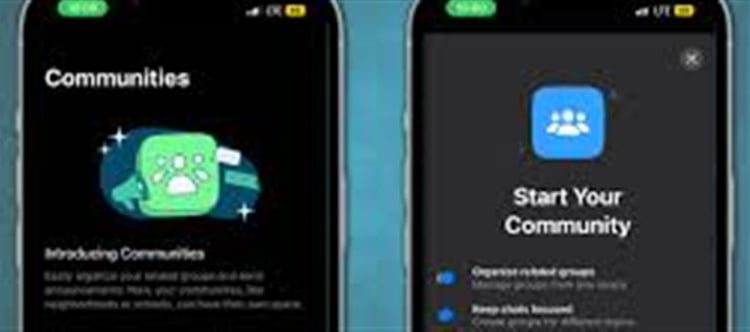

WhatsApp has rolled out a powerful new way to organise conversations by introducing Communities — an upgrade designed to help users manage, navigate, and coordinate multiple related groups more effectively.
What Are whatsapp Communities?
WhatsApp Communities are like a parent group that can contain multiple sub‑groups — all connected under one umbrella. Instead of juggling several separate group chats, users can now interact with a series of related groups in a structured, organised way.
This feature is ideal for large organisations, clubs, neighbourhood networks, schools, workplaces and other communities that rely on whatsapp to keep people informed and connected.
How Communities Work
Umbrella Structure
In a Community, admins can combine multiple existing groups or create new ones that are all part of a single collective space. Once a Community is created, members can see and access all the related sub‑groups easily, without cluttering their main chat list.
Admins also have enhanced control — they can send announcements to all sub‑groups at once and manage participants from a central hub, smoothing communication across the entire network.
Who Benefits from Communities?
WhatsApp Communities are especially useful for:
- Schools and parent associations
- Work teams and corporate departments
- Neighbourhood groups and residential societies
- Clubs or hobby groups with several sub‑topics
By grouping them under one larger Community, members can switch between groups without missing important messages in any one of them.
Key Features of whatsapp Communities
1. Consolidated Group Management
Admins can add multiple related groups — such as class groups, sub‑committee chats, or project channels — into a single Community. This creates a centralised space where all related chats live together, making it easier to manage many groups at once.
2. Announcement Group
Each Community includes a special announcement group where admins can broadcast news or updates that reach members of all sub‑groups simultaneously, ensuring key messages aren’t missed. Only admins can post here to keep notifications focused.
3. Sub‑Group Navigation
Members can easily browse and switch between the various sub‑groups within a Community, so they stay connected in conversations that matter most to them.
4. Better Organisation than Traditional Groups
Communities bring order to what could otherwise be a chaotic number of separate group chats, offering a clear layout and purpose for each sub‑group under a common theme.
Global Rollout and Availability
WhatsApp first began introducing Communities globally in late 2022 and continued rolling the feature out over time to iOS and Android users around the world. The update was phased so that users worldwide could gain access as the feature expanded across regions.
Communities Versus Regular Groups
While regular whatsapp groups are great for simple chats, Communities provide a macro‑level structure:
- Group = chat between members on a topic
- Community = collection of related groups under one umbrella with shared controls and announcements
This means you get both focused, topic‑specific conversations and central signals to all members in the Community.
What This Means for Users
The introduction of Communities marks a shift toward more organised, large‑scale communication on WhatsApp. Users and admins can now:
- Maintain clarity and context across several related groups
- Send targeted or broad updates efficiently
- Navigate between different conversations without clutter
- Bring structure to group‑based communication in large organisations or networks
Conclusion: A New Era of Group Control on WhatsApp
With Communities, whatsapp has taken a major step in evolving beyond basic messaging into a platform capable of handling large‑scale coordination and communication dynamics. By letting users manage multiple groups under one umbrella, it makes organising conversations more intuitive and powerful, whether for social, educational, or organisational purposes.
Disclaimer:
The views and opinions expressed in this article are those of the author and do not necessarily reflect the official policy or position of any agency, organization, employer, or company. All information provided is for general informational purposes only. While every effort has been made to ensure accuracy, we make no representations or warranties of any kind, express or implied, about the completeness, reliability, or suitability of the information contained herein. Readers are advised to verify facts and seek professional advice where necessary. Any reliance placed on such information is strictly at the reader’s own risk.
 click and follow Indiaherald WhatsApp channel