


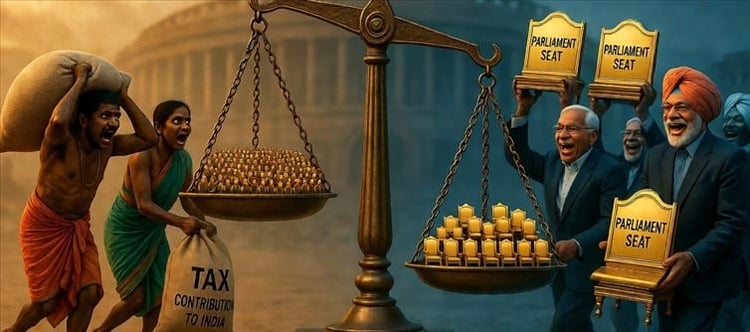

For decades, several southern states followed a clear playbook—control population growth, invest in education, build industries, and strengthen governance. It wasn’t easy, but it delivered results. Strong economies, better human development, and a significant contribution to India’s growth story. Now, with the conversation around delimitation gaining momentum, many in the South are asking a blunt question: Does doing the right thing come at a political cost?
The Long Game the South Played
States like tamil Nadu, karnataka, Kerala, and andhra pradesh focused on sustainable growth—prioritizing education, healthcare, and economic expansion over decades.Economic Engines of the Country
Tamil Nadu drives manufacturing, karnataka powers the tech and startup ecosystem, telangana fuels pharma and IT, and andhra pradesh anchors infrastructure and exports.Disproportionate Contribution
These states collectively contribute a significant share to India’s GDP and tax revenues—often punching above their population weight.The Delimitation Shift
With parliamentary seats tied more closely to population, states with higher population growth stand to gain greater political representation.The Core Frustration
It creates a stark contrast: regions that stabilized population growth may see their relative influence shrink, while others gain from sheer numbers.Incentives Turned Upside Down
The emerging perception is uncomfortable—do the hard, long-term reforms and risk losing political weight; focus less on them and gain representation.Beyond Seats—It’s About Voice
This isn’t just arithmetic. It’s about who gets to shape national policy, priorities, and direction in the years ahead.A Growing Sense of Unease
For many in the South, the concern isn’t just loss of seats—it’s the feeling that progress and discipline are being undervalued in the larger political equation.
Bottom Line:
When representation shifts without accounting for contribution, it doesn’t just change numbers—it changes narratives. And for the South, the question is becoming sharper: is this fair balance, or a system that quietly sidelines those who did things right?
 click and follow Indiaherald WhatsApp channel