



Public figures don’t just make policies or statements—they set the tone. What they say carries weight, but what they do, and how their own lives unfold, often carries even more. That’s why conversations around consistency—between public messaging and personal choices—tend to spark strong reactions.
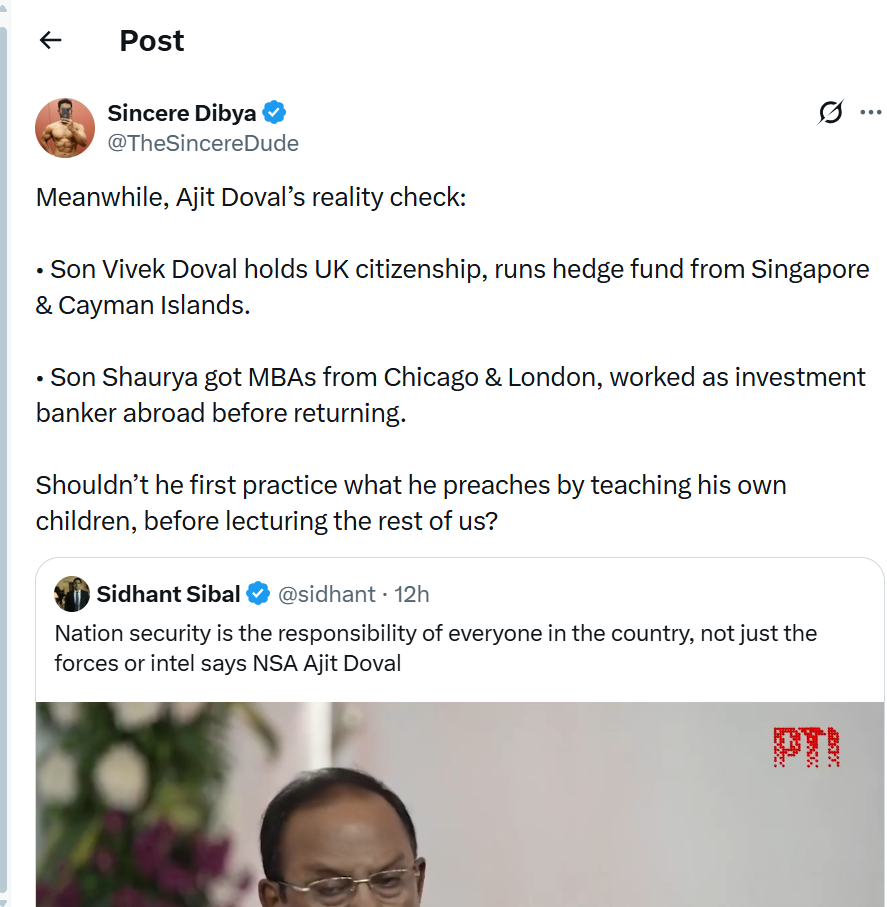
The Core Concern
The debate here isn’t just about one statement—it’s about whether public messaging aligns with personal realities. When there’s a gap, people notice.Global Exposure vs National Messaging
The mention of family members studying, working, or holding positions abroad highlights a familiar pattern among many indian elites—global education and careers.A Common Aspiration, Not an Exception
Seeking opportunities in global financial hubs or top universities isn’t unusual. In fact, it’s a path many families aspire to.Where the Tension Builds
The friction arises when broader messages emphasize collective responsibility or national focus, while personal choices reflect global mobility.Perception of Double Standards
Critics often frame this as a contradiction—asking whether the expectations set for citizens are being mirrored within the same circles.The Optics Problem
In politics and public life, perception can be as powerful as reality. Even legitimate personal choices can be questioned if they seem misaligned with public rhetoric.The Larger Question of Leadership
People tend to expect leaders—not just political, but institutional—to embody the values they advocate.A Debate Without Easy Answers
Balancing global opportunities with national expectations is complex. But once raised, the question of consistency is hard to ignore.
Bottom Line:
In public life, credibility often rests on alignment. When words and lived realities appear to diverge, the conversation quickly shifts from what is said to who is saying it, and how closely they live by it.
 click and follow Indiaherald WhatsApp channel