
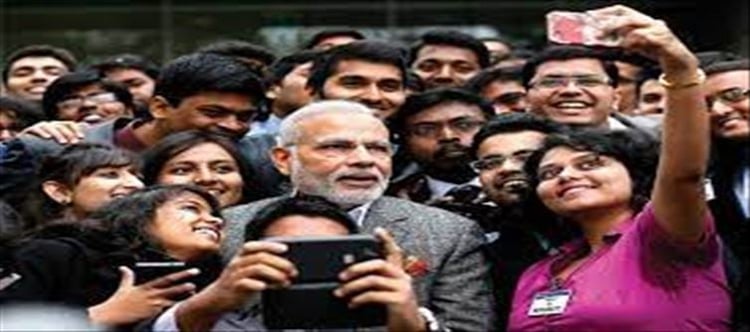


Prime minister narendra Modi was in trouble, according to conventional political wisdom: the country was facing the highest unemployment rate in 45 years. It impacted India's greatest youth army, as well as the world's largest single workforce. In 2014, the majority of these people voted for prime minister narendra Modi and his ruling bharatiya janata party, which promised India's developing youth broad-based growth and millions of new jobs.
Conventional wisdom was turned upside down when the bjp won more seats than in the 2014 elections and was re-elected with a majority. Modi had the support of the young Indians. In many countries, such a victory may be meaningless: why did young voters, who had not made much progress and had been left behind for many years under this system, break the electorate's faith and win back the BJP?
The solution to this issue goes beyond common electoral knowledge in india, where voting against politicians in power has long been practised. With the Millennial generation taking the lead in the recent election, indian politics has experienced a major transformation: young voters demand leaders who speak for themselves, pray and look like them. Young indians today are seeking role models who feel they can protect themselves, and politicians who share their own tales and experiences inspire them. language is an especially emotional issue. english has long been the language of the indian elite, as well as a favourite among middle-class indians seeking advancement.
However, voters rewarded Hindi-speaking politicians in the most recent general election in 2019, while the indian National Congress, led by people of English-speaking descent from the Nehru-Gandhi family, was nearly wiped out in Hindi-speaking states. In kashmir in 2019, every bjp leader put the name "Selakidar" (guard) to their twitter account after the Pulwama attacks and the Pakistani airstrikes on Balakot, promising to protect indians from all foes. This covers both internal and international adversaries. It said that the bjp was behind many of India's Hindu-majority emotions, offering them advantages, public services, and welfare initiatives in exchange for their votes.
It's a ruse designed to satisfy Hindus from the upper castes. It is critical for those voters to acquire government positions because the country has not produced enough jobs for the youth. They began to learn about gleaming metropolises, far outside their undeveloped cities, in the smartphone age. They want to make a living in that world. Despite the fact that narendra Modi's government has failed to deliver on job or economic pledges, he has spoken the language and spoken the will of millennials. He told them about bullet trains, world-class cities, and a country that stands out on the international stage.
Modi's personal outfit was very appealing. For the most part, indian male politicians wore white kurta pyjamas as their official attire. Moti's clothes, on the other hand, were pricey, custom-made, and brightly coloured. It was to bring attention to not only him but the entire country (if you agree with his view). Contrary to popular belief, young millennial youth in india will rally around Modi as he controls the indian cultural and political sphere.
 click and follow Indiaherald WhatsApp channel