
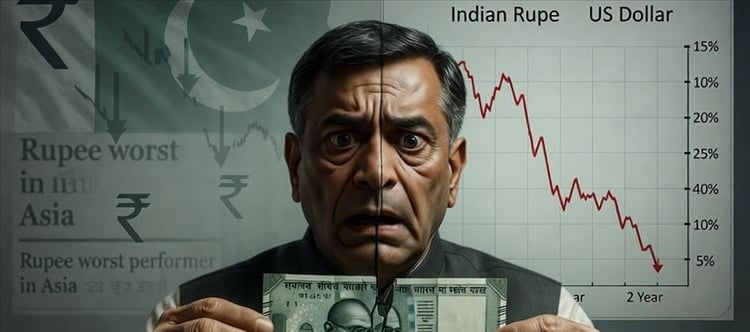


For years, whenever economic anxiety started rising in India, there was one familiar escape route in political debates and television studios:
“At least we’re not Pakistan.”
It became the default comparison. Inflation hurting? pakistan was worse. currency falling? Pakistan’s collapse looked more dramatic. Economic stress? Just look across the border and feel relieved.
But now, something deeply uncomfortable is happening.
The indian rupee has become one of the weakest-performing major currencies in Asia in recent years — and suddenly that old comparison doesn’t hit the same anymore.
According to growing criticism online and among economic commentators, the rupee has depreciated sharply against the US dollar over the last two years, while the Pakistani rupee has remained comparatively more stable after its own earlier collapse and correction phase.
And psychologically, that shift matters far more than politicians may realize.
Because currencies are emotional symbols as much as economic tools. Most ordinary people don’t track bond yields, forex reserves, or monetary policy. But they understand one thing instantly: when the local currency weakens, life gets more expensive.
Fuel rises. Imports rise. Electronics rise. Foreign education becomes brutal. international travel starts feeling luxurious. Salaries lose global purchasing power. Even middle-class aspirations quietly shrink.
That’s why the rupee’s decline feels so emotionally charged right now.
And the internet has made it worse. social media amplifies every exchange-rate screenshot, every comparison chart, every “₹100 per dollar soon?” prediction. The narrative spreads faster than economic nuance ever can.
Of course, currency performance alone does not define an economy. The US dollar has strengthened globally against many currencies due to interest rates, investor confidence, and global financial flows. Several economies have struggled against it.
But public perception rarely cares about macroeconomic complexity.
people judge economic health through daily experience: grocery bills, job security, fuel costs, savings, and the feeling of whether life is moving forward or backward.
That’s the real reason this debate has become so intense.
Because once people stop feeling economically confident, patriotic slogans and television debates start losing their emotional power.
And nothing scares governments more than a population that no longer feels financially secure.
 click and follow Indiaherald WhatsApp channel