
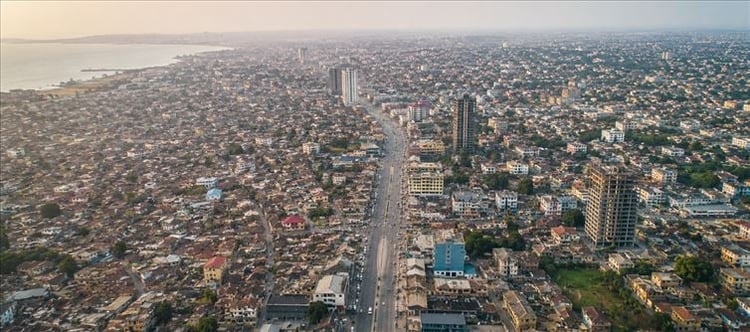


The world spends endless time talking about declining birth rates in places like Japan, China, and Europe. But meanwhile, in the heart of Africa, something massive is happening almost unnoticed.
The population of the Democratic Republic of the Congo stood at roughly 109 million in 2024. By 2100, the United Nations projects it could surge to a staggering 431 million people.
That’s not growth.
That’s a demographic earthquake.
In less than a century, Congo could add more people than the combined populations of Germany, France, the UK, Italy, and Spain. And suddenly, the global balance of power starts looking very different.
This is the brutal contrast shaping the 21st century: while wealthy nations panic over aging populations and collapsing fertility rates, countries across parts of Africa are entering a population boom unlike anything modern history has seen. Congo sits right at the center of that explosion.
And the implications are enormous.
More people means more workers, more consumers, more urbanization, more political influence, and potentially one of the largest youth populations on Earth. The capital city, Kinshasa, is already one of the fastest-growing megacities in the world. By the end of the century, it could become one of humanity’s defining urban centers.
But here’s the darker side nobody wants to say out loud: population growth alone does not guarantee prosperity.
Without infrastructure, education, healthcare, jobs, energy, and political stability, demographic booms can become pressure cookers. More people can create opportunity — or chaos. Sometimes both at once.
That’s why Congo’s future feels so suspenseful. The country possesses enormous natural wealth, including critical minerals powering the global tech industry. Yet decades of conflict, corruption, and instability have repeatedly blocked long-term development.
So the real question isn’t whether Congo will become bigger.
It’s whether the world is watching the rise of a future superpower — or a future crisis unfolding in slow motion.
 click and follow Indiaherald WhatsApp channel