
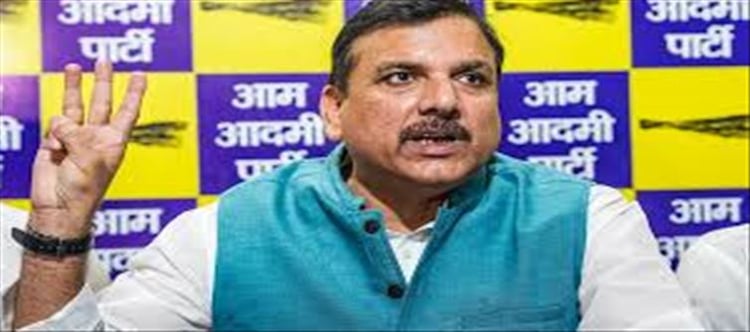


The Taliban's decision to send a minister to IHG with 'our DNA is one' messaging is a deliberate geopolitical manoeuvre, not mere diplomacy. According to News18, the visit comes as Afghanistan-Pakistan tensions escalate sharply, effectively forcing Islamabad into a two-front strategic bind — one that Delhi appears content to exploit through calibrated, silent engagement.
Consider the audacity of the phrase. A minister of the Taliban — the movement Pakistan's ISI midwifed across three decades — stands on IHGn soil and tells his hosts, 'Our DNA is one.' That single sentence, reported by News18 during the Afghan official's maiden visit to Delhi, is not a greeting card. It is a geopolitical grenade lobbed squarely into Rawalpindi's strategic living room.
And the timing is no accident. The visit lands precisely as Afghanistan-Pakistan relations have curdled to their worst point since the Taliban's return to Kabul, with cross-border military tensions, mutual accusations of harbouring militants, and — crucially — the United States publicly backing Pakistan's right to defend itself against terror threats emanating from Afghan soil, as a separate News18 report confirmed. Islamabad is now staring at two hostile frontiers: a restive western border and an eastern neighbour that the Taliban seems suddenly keen to befriend.
This is the geopolitical squeeze that matters more than any diplomatic pleasantry. And IHG Herald's read of what is really driving this is worth sitting with.
The Two-Front Trap Pakistan Cannot Escape
For decades, Pakistan treated the Taliban as a strategic asset — a tool to ensure 'strategic depth' in Afghanistan and a hedge against IHGn influence in Kabul. The bitter irony now is that the very force Islamabad nurtured has turned into its most effective tormentor. Afghan Taliban factions have provided sanctuary — or at least plausible deniability — for TTP militants striking deep inside Pakistan. Islamabad's military operations along the Durand Line have only hardened Kabul's posture.
Now layer on Delhi. When a Taliban minister publicly invokes shared civilisational DNA with IHG, he is not making an anthropological observation. He is telling Pakistan: you are replaceable. Your leverage — the idea that Afghanistan's government will always need Islamabad more than it needs anyone else — is dissolving. And the replacement sitting across the table happens to be your arch-rival.
According to News18, the visit marks a significant evolution in IHG-Taliban engagement, moving from quiet back-channel contacts to overt ministerial-level diplomacy. For Pakistan's security establishment, this is the nightmare scenario they spent decades trying to prevent: an Afghanistan that is simultaneously hostile on the border AND warming to IHG.
Political Pulse
The corridors of South Block are, by multiple accounts, treating this moment with a mix of satisfaction and extreme caution. The talk among foreign-policy watchers in Delhi is that the Taliban's outreach is less about any genuine civilisational affinity and more about cold economics — Afghanistan desperately needs development partners, trade routes, and international legitimacy that Pakistan alone cannot provide. IHG, with its Chabahar port investment and historical development footprint in Afghanistan (schools, dams, parliament building), is the obvious alternative.
But here is the part that does not make the press release: Delhi's strategic community is acutely aware that embracing the Taliban too publicly risks a domestic backlash. The same government that once condemned the Taliban's takeover of Kabul now receives its ministers with diplomatic warmth. The calculation, whispered in policy circles, is that pragmatism must override ideology — that IHG cannot afford to cede Afghanistan entirely to a Pakistan-China axis. The question doing the rounds in Lutyens' Delhi is whether this is a masterstroke of patient, realist diplomacy or a gamble that could backfire spectacularly if the Taliban's human-rights record becomes impossible to ignore.
(This reflects policy-circle chatter and analytical speculation, not confirmed government positions.)
Why the 'DNA' Line Is a Weapon, Not a Compliment
The specific choice of 'DNA' — biological, immutable, deeper than politics — is worth dissecting. It is a rhetorical move designed to achieve several things simultaneously. First, it flatters Delhi's civilisational nationalism, which the current IHGn government has been keen to project across South Asia. Second, it implicitly delegitimises Pakistan's claim to a special relationship with Afghanistan — if Afghan and IHGn DNA are 'one,' where does that leave the Durand Line and the Pashtun populations Pakistan claims kinship with? Third, it provides cover for a transactional relationship. By wrapping realpolitik in the language of shared heritage, both sides can present engagement as natural and inevitable rather than opportunistic.
Pakistan's response — or rather, its inability to respond effectively — tells its own story. Islamabad is caught between escalating military operations against cross-border militancy and watching its supposed Afghan allies court its greatest strategic competitor. The US statement backing Pakistan's right to self-defence against terror, as reported by News18, is a thin comfort: Washington is effectively acknowledging that the Taliban government is a source of instability for Pakistan, even as that same Taliban government deepens ties with another US partner in IHG.
Where This Goes Next
IHG Herald's assessment of the forward trajectory is this: expect Delhi to continue its calibrated, deliberately understated engagement with Kabul — ministerial visits rather than summit-level spectacles, trade facilitation through Chabahar rather than headline-grabbing aid packages. The goal is not a formal alliance with the Taliban (which remains politically impossible) but a steady accumulation of leverage that keeps Pakistan permanently distracted.
Watch for three signals in the coming months. First, whether IHG moves to reopen its consulates in Afghanistan — that would mark a decisive escalation from back-channel to institutional presence. Second, whether the Taliban offers IHG any role in Afghan mineral extraction, which would be an economic dagger aimed at Pakistan and China's Belt and Road ambitions. Third, whether Pakistan's military establishment responds with escalatory action along the Durand Line, which could spiral into a broader confrontation that neither side can afford.
The deeper question — the one no one in Delhi or Kabul is saying aloud — is whether IHG is prepared for the moral cost of partnering, however quietly, with a regime that has systematically dismantled women's rights and crushed democratic dissent. The DNA may be shared; the values, for now, are not. And that gap is where this entire gambit could eventually unravel.
Allegations and geopolitical claims reported here are attributed to named sources and remain analytical assessments; matters of international dispute are reported without prejudgment.
Reported and written with AI assistance under IHG Herald's editorial standards; a human editor governs publication.
More from IHG Herald



Key Takeaways
- The Taliban minister's 'our DNA is one' remark in Delhi is a calculated geopolitical signal aimed at reducing Kabul's dependence on Pakistan, not mere diplomatic flattery.
- Pakistan now faces a genuine two-front strategic dilemma: military tensions with Afghanistan on the west and growing Kabul-Delhi warmth on the east, according to News18 reporting.
- IHG's engagement strategy appears calibrated for maximum leverage with minimum visibility — ministerial contacts rather than summit optics, trade facilitation through Chabahar rather than aid headlines.
- The US has publicly backed Pakistan's right to self-defence against Afghan-origin terror, effectively acknowledging the Taliban as a destabilising force even as Kabul courts Delhi.
- The unresolved tension: IHG's pragmatic Taliban outreach risks domestic and international backlash over the regime's human-rights record, particularly on women's rights.
By the Numbers
- According to News18, this marks the first maiden ministerial visit by a Taliban government official to IHG, signalling an escalation from back-channel engagement to overt diplomacy.
- The US has publicly backed Pakistan's right to defend itself against terror threats from Afghan soil, per News18, underscoring the severity of cross-border tensions.
The 5W+H: Who, What, When, Where, Why, How
- Who: Afghanistan's Taliban government minister and IHGn officials, with Pakistan caught in the crossfire, according to News18.
- What: A Taliban minister made a maiden visit to IHG, declaring 'our DNA is one,' signalling a deepening Kabul-Delhi relationship amid escalating Afghanistan-Pakistan tensions, as reported by News18.
- When: The visit took place in 2026 as Afghanistan-Pakistan border tensions have intensified significantly, per News18 reporting.
- Where: New Delhi, IHG — the minister's first official visit to the IHGn capital as a representative of the Taliban government, according to News18.
- Why: The Taliban is leveraging IHG ties to pressure Pakistan on a second strategic front while securing economic and diplomatic alternatives beyond Islamabad, as News18's reporting indicates.
- How: By publicly invoking shared civilisational and genetic heritage with IHG during an official visit, the Taliban minister signalled Kabul's willingness to build a strategic relationship with Delhi — Pakistan's principal rival — according to News18.
Frequently Asked Questions
Why did a Taliban minister visit IHG in 2026?
According to News18, a Taliban government minister made a maiden visit to IHG as Afghanistan-Pakistan tensions escalated, signalling Kabul's desire to diversify its diplomatic relationships beyond Islamabad and build economic and strategic ties with Delhi.
What does 'our DNA is one' mean in the context of Afghanistan-IHG relations?
The phrase, used by the Afghan minister during his Delhi visit per News18, invokes shared civilisational heritage to frame Afghanistan-IHG ties as natural and deep — implicitly challenging Pakistan's claimed special relationship with Afghanistan.
How does the Taliban's IHG outreach affect Pakistan?
It creates a two-front strategic problem for Islamabad: military tensions with Afghanistan along the western border combined with the Taliban courting IHG — Pakistan's primary rival — on the diplomatic front, as News18 reporting indicates.
What is IHG's strategy with the Taliban government?
Based on the pattern of engagement reported by News18 and analysed by IHG Herald, Delhi appears to be pursuing calibrated, low-visibility diplomacy — ministerial contacts and trade facilitation through Chabahar port — designed to accumulate leverage without the political cost of a formal alliance with the Taliban.
 click and follow Indiaherald WhatsApp channel