


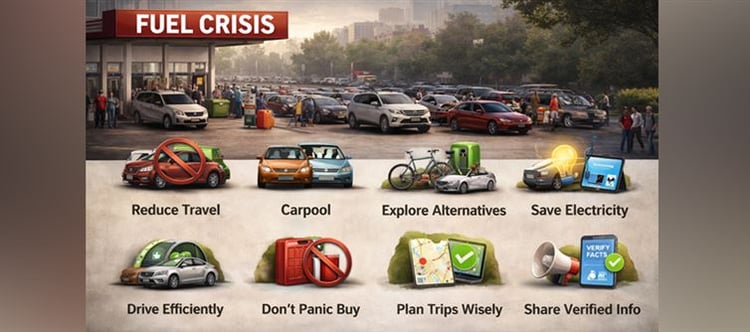

When a fuel crisis hits, the first reaction is almost always the same—panic. Long queues, unnecessary trips, people rushing to fill tanks they don’t even need filled. But here’s the uncomfortable truth: crises don’t just expose systems, they expose behavior. And sometimes, the damage isn’t caused by shortage alone—it’s made worse by how people respond to it.
• Cut the Unnecessary Movement
Not every trip is essential. If it can wait, let it. Every avoided ride reduces pressure on supply.
• Share the Ride, Share the Load
Carpooling and public transport aren’t just options—they’re solutions. Fewer vehicles on the road means fuel lasts longer for everyone.
• Dial Down the Excess
Big events, unnecessary generator use, overconsumption—it all adds up. This is the time to scale back, not show off.
• Think Alternatives, Not Excuses
Work from home where possible. Use cycles for short distances. Even exploring EVs in the long run changes dependency patterns.
• Drive Like It Matters—Because It Does
Aggressive driving burns more fuel. Idling wastes it. Smooth, efficient driving isn’t just good practice—it’s critical during shortages.
• No Hoarding, No Panic Buying
Stockpiling fuel doesn’t solve the problem—it creates one. It disrupts distribution and triggers artificial scarcity.
• Electricity Matters Too
Fuel and power are connected. Conserving electricity reduces strain on the overall energy system.
• Plan Before You Move
Combine errands. Avoid peak hours. Think ahead instead of reacting at the last minute.
• Stop the Rumors Before They Spread
Unverified information fuels panic faster than any shortage. Share responsibly, or don’t share at all.
⚡ FINAL PUNCH:
A crisis doesn’t need heroes—it needs discipline. Because when people act responsibly, shortages stay manageable. When they don’t… that’s when things spiral.
 click and follow Indiaherald WhatsApp channel