


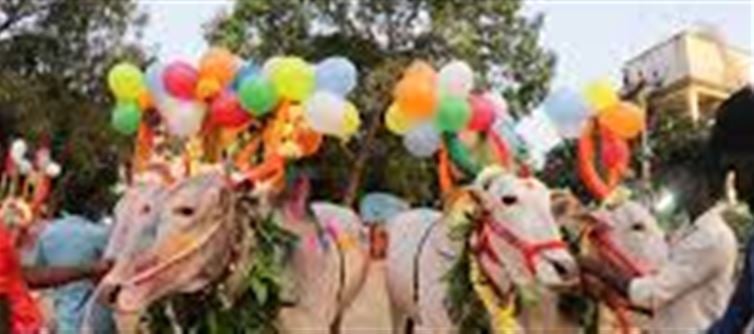

Mattu Pongal is the second day of the four-day pongal festival, celebrated to honor and thank cattle, especially bulls and cows, for their role in agriculture. It usually falls on January 15th or 16th, during the tamil month of Thai.
1. Washing and Decorating the Cattle
- Farmers start the day by washing their cows and bulls to keep them clean and healthy.
- The animals are then decorated with turmeric, kumkum (vermillion), and sandal paste, along with flowers, garlands, and bells.
- Their horns are often painted in bright colors, and they may wear decorative cloth and beads.
2. Offering pongal to the Cattle
- A special dish called Pongal (sweet rice cooked with jaggery, milk, and ghee) is offered to the animals as a token of gratitude.
- Farmers feed their livestock and pray for their health, fertility, and productivity.
- Some people also tie small coins or threads around the animals’ necks as part of the ritual.
3. Performing Rituals and Puja
- A small puja (prayer ceremony) is performed near the cattle.
- People chant mantras and thank the Sun God and the animals for helping in farming and providing milk and labor.
4. Jallikattu – Traditional Bull-Taming (in Some Regions)
- In certain districts like Madurai, Tiruchirappalli, Thanjavur, and Pudukottai, Jallikattu is held as part of Mattu pongal celebrations.
- Young men attempt to tame or hold on to the bull’s hump in a display of bravery.
- The sport is deeply traditional, showcasing courage, skill, and respect for the bull.
- It’s important to note that animal welfare rules are strictly followed in modern celebrations.
5. Community and Festive Spirit
- Villages often host cultural events, folk songs, and dances around the cattle yards.
- Children enjoy playing traditional games, and families gather to celebrate together.
- Some people also visit temples to pray for good harvests and livestock health.
6. Symbolism
- Mattu pongal reflects the human-animal bond and highlights the importance of livestock in agriculture.
- It’s a day of gratitude and respect, emphasizing sustainability and rural life traditions.
✅ In short:
Mattu pongal is celebrated by washing, decorating, and feeding the cattle, performing prayers, enjoying cultural activities, and in some regions, participating in Jallikattu. It’s a joyful festival that honors the animals that sustain farming communities and strengthens the cultural roots of rural tamil Nadu.
Disclaimer:
The views and opinions expressed in this article are those of the author and do not necessarily reflect the official policy or position of any agency, organization, employer, or company. All information provided is for general informational purposes only. While every effort has been made to ensure accuracy, we make no representations or warranties of any kind, express or implied, about the completeness, reliability, or suitability of the information contained herein. Readers are advised to verify facts and seek professional advice where necessary. Any reliance placed on such information is strictly at the reader’s own risk.
 click and follow Indiaherald WhatsApp channel