
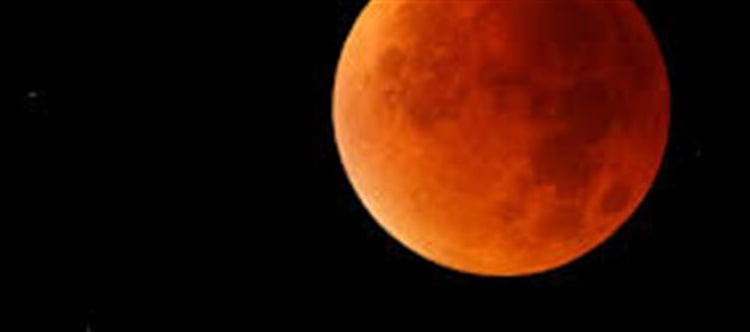


Astronomy enthusiasts in india are in for a spectacular sight as the first lunar eclipse of the year occurs today. A total lunar eclipse, commonly referred to as a “blood moon,” will be accompanied by a faint blue rim, making it a rare and visually striking phenomenon.
Timing of the Eclipse
According to astronomers, the eclipse will begin at 4:45 PM IST. Observers across india will have the opportunity to witness the moon gradually entering the Earth’s shadow, turning red as the total phase progresses. The eclipse is expected to last for several hours, offering ample time for skywatchers and photographers to capture the celestial event.
Why the moon Appears Red
During a total lunar eclipse, the Earth comes between the sun and the moon, blocking direct sunlight. However, some sunlight still reaches the moon after passing through Earth’s atmosphere, which scatters shorter wavelengths and allows red and orange hues to illuminate the lunar surface. This is why the moon appears deep red during totality.
The Rare Blue Rim
In addition to the characteristic red hue, a subtle blue rim may be visible along the edge of the Moon. This occurs due to the diffraction of sunlight by fine particles in Earth’s upper atmosphere. The combination of the blood-red moon with a faint blue outline makes this lunar eclipse particularly remarkable.
Best Viewing Tips
Astronomers recommend finding a clear, unobstructed location with minimal light pollution for the best viewing experience. Unlike solar eclipses, lunar eclipses are completely safe to watch with the naked eye, binoculars, or telescopes. Sky enthusiasts are encouraged to arrive early to observe the gradual phases leading up to totality.
Global Visibility
While this lunar eclipse is primarily visible across india, other parts of Asia, Australia, and Africa will also have partial or total views of the event. The rare color combination is expected to captivate observers worldwide, making it one of the most memorable astronomical events of the year.
This eclipse serves as a reminder of the dynamic and beautiful mechanics of our solar system, offering a chance for millions to witness a celestial display that combines science, art, and wonder.
Disclaimer:
The views and opinions expressed in this article are those of the author and do not necessarily reflect the official policy or position of any agency, organization, employer, or company. All information provided is for general informational purposes only. While every effort has been made to ensure accuracy, we make no representations or warranties of any kind, express or implied, about the completeness, reliability, or suitability of the information contained herein. Readers are advised to verify facts and seek professional advice where necessary. Any reliance placed on such information is strictly at the reader’s own risk.
 click and follow Indiaherald WhatsApp channel