
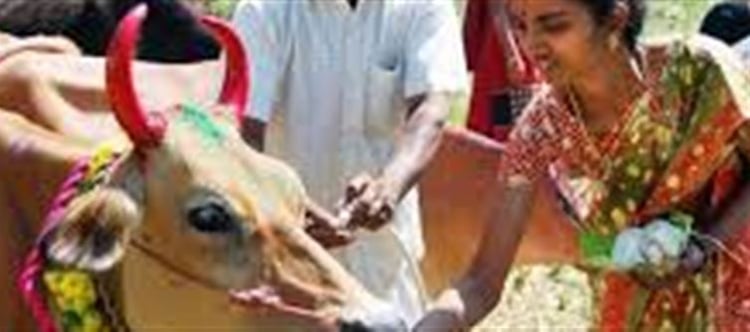


Mattu Pongal, the second day of the four-day pongal festival, is dedicated to honoring cows and bulls, which are essential for agriculture. Farmers and households go through several steps to clean, decorate, and pamper their livestock as part of the celebration.
1. Cleaning the Cattle
- The first step is thoroughly washing the animals.
- Farmers use clean water, sometimes mixed with turmeric or herbal powders, to bathe the cows and bulls.
- This ensures the cattle are fresh, hygienic, and comfortable before the festivities.
2. Trimming and Grooming
- Hooves may be trimmed to prevent injuries during rituals or games like Jallikattu.
- Fur is sometimes brushed or combed to give the animals a neat appearance.
- Some farmers lightly trim the horns to make decoration safer and more attractive.
3. Decorating the Cattle
- Horns are painted with bright colors such as red, yellow, green, or white using natural or safe dyes.
- Animals are adorned with flower garlands, beads, bells, and colorful cloths draped over their backs.
- Many owners tie bright threads or ribbons around the neck or horns for a festive touch.
4. Feeding Special Diet
- Before the main pongal rituals, cows and bulls are given nutritious treats, sometimes including jaggery, rice, and greens.
- This is both a symbolic offering and a way to pamper the cattle for the day.
5. Ritual Offerings
- Families prepare special pongal dishes (sweet rice cooked with jaggery, ghee, and milk) and offer them to the cattle.
- A small puja (prayer) is performed, where turmeric, kumkum, and sometimes a pinch of holy water are applied to the animals.
6. Preparing for Festive Events
- In villages where Jallikattu is held, bulls are trained carefully to ensure safety for both the animals and participants.
- Even in places without the sport, decorated bulls and cows are often paraded around the village, showcasing their beauty and strength.
7. Symbolism
- These preparations show gratitude and respect for the animals that support agriculture.
- Decorating and feeding the cattle reinforces the bond between humans and livestock, which is central to rural tamil culture.
✅ In short:
Preparing cattle for Mattu pongal involves washing, grooming, decorating, feeding, and performing rituals. It’s a day of celebration, care, and gratitude, highlighting the crucial role of cows and bulls in farming communities.
Disclaimer:
The views and opinions expressed in this article are those of the author and do not necessarily reflect the official policy or position of any agency, organization, employer, or company. All information provided is for general informational purposes only. While every effort has been made to ensure accuracy, we make no representations or warranties of any kind, express or implied, about the completeness, reliability, or suitability of the information contained herein. Readers are advised to verify facts and seek professional advice where necessary. Any reliance placed on such information is strictly at the reader’s own risk.
 click and follow Indiaherald WhatsApp channel