Due to increasing agro-economic activities, the demand for water in india is also continuously increasing. But the amount of water required for future use is rapidly decreasing in various states. According to the estimate published by the Union Ministry of Water Resources, it is clear that the gap between the demand and supply of water will be very wide by the year 2050. Due to this, it is necessary to increase the storage capacity of water bodies during rainy season. However, the First Census on Water Bodies published by the Ministry of Water Resources for the first time in february 2023, indicates encroachment of water bodies in various states of India. Especially in tamil Nadu, where water scarcity is very high in terms of per capita water consumption, the water bodies are highly encroached.
RESULTS OF THE SURVEY: The first comprehensive survey of water bodies has brought out for the first time many important data not available from any other sources. india has a total of 24,24,540 water bodies. Most of them were short (59.5%). Apart from these, ponds (15.7%), dams (12.1%) and remaining 12.7% are other water sources in this survey.
As expected, 97.1% of the total watersheds enumerated are located in rural areas and the remaining 2.9% in urban areas. 83.7% of the total water bodies are in use. Remaining 16.3% (3,94,500) water bodies are not in use due to drought, construction, siltation, maintenance, salinity, contamination of industrial effluents etc.
In terms of ownership of water bodies, the survey revealed that 55.2% are privately owned and the remaining 44.8% are under the control of the public sector. Most water bodies (78%) are man-made. Only 22% are naturally occurring. Most water bodies are made up of soil. This survey says that the construction cost may be less than Rs.1,00,000. Almost half of the reservoirs have water storage capacity between 1,000 and 10,000 cubic meters.
Level of Encroachment: One of the important results of the first total survey of water bodies was about the extent to which water bodies are encroached in different states. Although various government-constituted groups-researchers have been continuously recording the intensity of encroachment in water bodies, no government department has yet released data on the extent of encroachment. The data of this survey shows that a total of 38,496 water bodies (mostly ponds, ponds) have been encroached on in various parts of our country.
As about 93% of impounded water bodies are small bodies of water (ponds, ponds, lakes), understanding where these are located is important. In terms of total number, the top five states where encroachment was detected were Uttar Pradesh (15,213), tamil Nadu (7,828), telangana (2,748), andhra pradesh (2,733) and madhya pradesh (1,765).
It is worth noting that the share of the four southern states of andhra pradesh, karnataka, tamil Nadu and telangana is about 40% (14,219) of the total occupied water bodies in India. tamil Nadu's share in encroachment of water bodies alone is about 22%. What do these say? Small water bodies have been heavily encroached upon in southern states for centuries.
Consequences: Encroachment on water bodies has various undesirable consequences. Due to massive encroachment on the water spread area of the water bodies, the water carrying capacity decreases and the irrigated area decreases. The data on the area irrigated by ponds in various states confirms the extent of encroachment on water bodies. For example, despite no major changes in total rainfall, pond irrigated area in india has declined from 46.30 lakh hectares in 1960-61 to 16.68 lakh hectares in 2019-20.
Similarly, in tamil Nadu, which has the second highest level of encroachment in india, the area irrigated through ponds has declined from 9.36 lakh hectares to 3.72 lakh hectares. Similarly in other South indian states like andhra pradesh, karnataka and telangana the irrigated area of ponds is continuously decreasing.
Responsibility of Governments: Depletion of water capacity in water bodies due to encroachment also reduces recharging capacity of wells located in irrigated areas. The data available from the Minor Irrigation Census of various minor water bodies released by the central government shows that the number of wells that have become inactive due to encroachment has increased. Recent experiences also suggest that the encroachment of water bodies is increasing the flood damage during rainy season. Therefore, the central and state governments should take joint action to remove encroachments on water bodies without any compromise.
The 16th report of the Central Government's Water Resources Status Committee on 'Repair, Renovation - Rehabilitation of Water Bodies' has outlined that most of the water bodies in various states have been encroached upon by government agencies. Therefore, considering the increasing scarcity of water, state governments should stop encroachment on water bodies. Considering the increase in encroachments on water bodies, on september 6, 2014, the madurai High court of madurai ruled that layout and building projects should not be granted on lands located in water bodies.
Respecting this judgment, the state governments should implement it with full care. Shockingly, a total of 10,95,913 water bodies have not undergone any rehabilitation work for a long time, according to water body survey data.
Lack of funds of the state governments may also be a reason for it. Therefore, it is necessary to bring back the Repair, Renovation and Restoration (Repair, Renovation and Restoration) program of water bodies which was implemented during the 11th Plan period and remove the encroachments through maintenance works. We are seeing increasing variability in rainfall patterns due to climate change. In this context, if steps are not taken to remove encroachments on water bodies and increase the capacity of water, water scarcity in states like tamil Nadu will increase in the future.



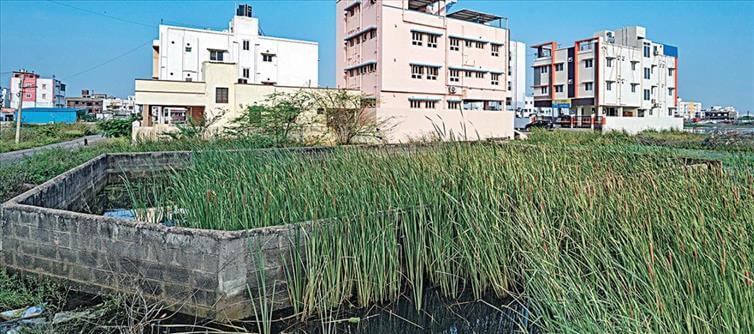

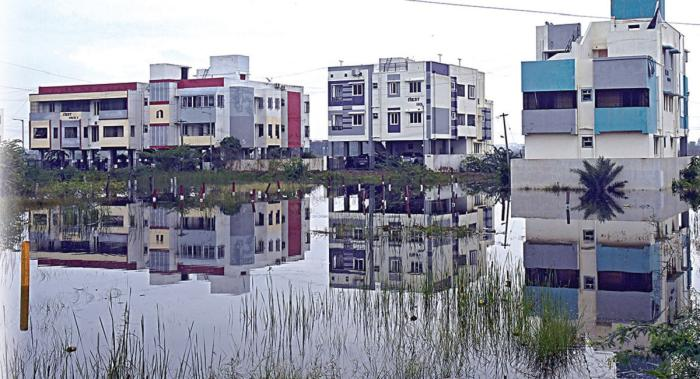 Due to this, it is necessary to increase the storage capacity of water bodies during rainy season. However, the First Census on Water Bodies published by the Ministry of Water Resources for the first time in february 2023, indicates encroachment of water bodies in various states of India. Especially in tamil Nadu, where water scarcity is very high in terms of per capita water consumption, the water bodies are highly encroached.
 click and follow Indiaherald WhatsApp channel