
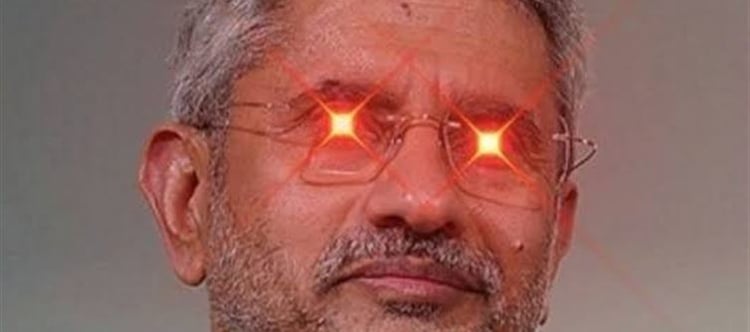


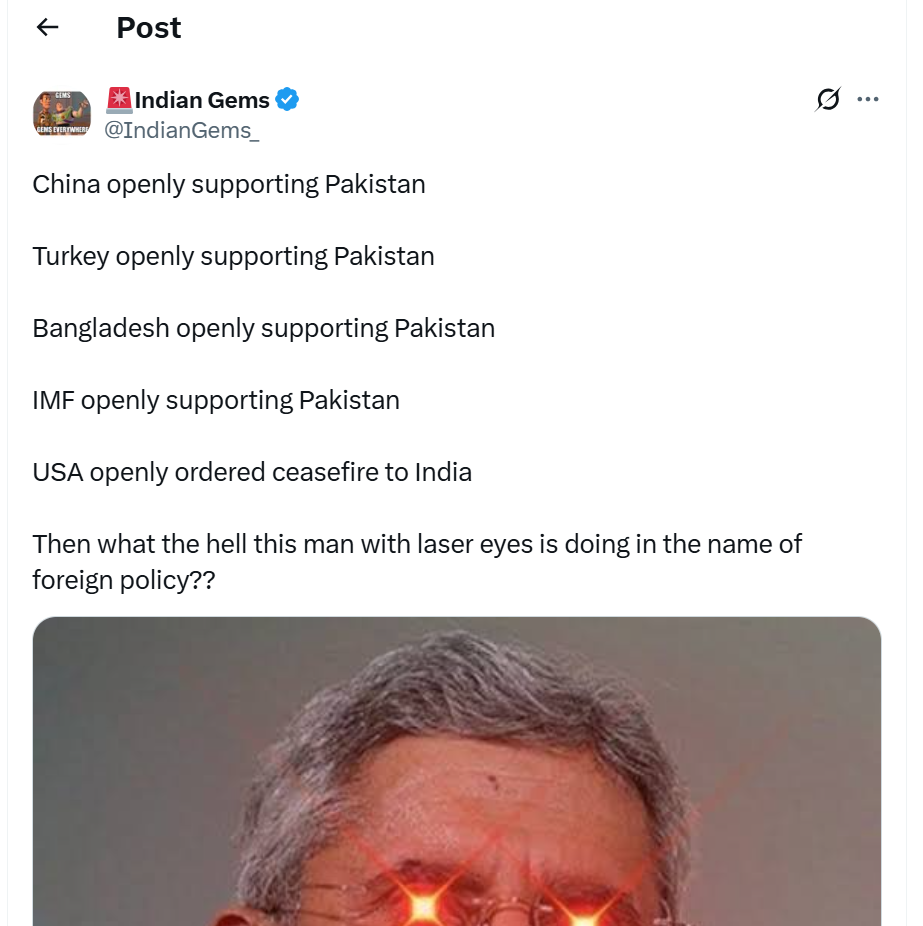
The recent geopolitical developments have sparked sharp public reactions and questions about the effectiveness of India’s foreign policy, particularly under External Affairs minister Dr. S. Jaishankar. With nations like china, turkey, and bangladesh appearing to show open support for pakistan, and influential global entities like the IMF and even the U.S. reportedly pressuring india on issues like ceasefires, netizens are raising valid concerns. The perception that India's adversaries are gaining diplomatic ground while india appears isolated in key narratives is fueling criticism and demands for accountability from the Ministry of External Affairs.
However, international diplomacy is a nuanced arena where overt alliances often mask complex strategic calculations. For instance, while countries like turkey and china have supported pakistan in multilateral forums, their positions are also driven by broader geopolitical rivalries and their own regional interests.
 Bangladesh's stance is more layered, influenced by internal political dynamics and bilateral issues. Dr. jaishankar has pursued a foreign policy emphasizing strategic autonomy, strengthening ties with the U.S., Japan, and the EU, and countering China's influence through forums like the Quad. Yet, critics argue that such strategies haven't translated into decisive diplomatic wins in South Asia, where India's neighbors increasingly engage in balancing acts between regional and global powers.
Ultimately, the netizens' outcry underscores a growing demand for greater transparency and assertiveness in India’s foreign engagement. While Dr. jaishankar is widely respected for his diplomatic acumen, many feel that indian foreign policy needs to pivot towards more proactive coalition-building and sharper communication, especially when hostile narratives are gaining ground. The Ministry of External Affairs may need to recalibrate its strategies to not only safeguard India’s strategic interests but also to ensure that public perception at home reflects confidence in the country's global standing.
However, international diplomacy is a nuanced arena where overt alliances often mask complex strategic calculations. For instance, while countries like turkey and china have supported pakistan in multilateral forums, their positions are also driven by broader geopolitical rivalries and their own regional interests.
Bangladesh's stance is more layered, influenced by internal political dynamics and bilateral issues. Dr. jaishankar has pursued a foreign policy emphasizing strategic autonomy, strengthening ties with the U.S., Japan, and the EU, and countering China's influence through forums like the Quad. Yet, critics argue that such strategies haven't translated into decisive diplomatic wins in South Asia, where India's neighbors increasingly engage in balancing acts between regional and global powers.Ultimately, the netizens' outcry underscores a growing demand for greater transparency and assertiveness in India’s foreign engagement. While Dr. jaishankar is widely respected for his diplomatic acumen, many feel that indian foreign policy needs to pivot towards more proactive coalition-building and sharper communication, especially when hostile narratives are gaining ground. The Ministry of External Affairs may need to recalibrate its strategies to not only safeguard India’s strategic interests but also to ensure that public perception at home reflects confidence in the country's global standing.
 click and follow Indiaherald WhatsApp channel