


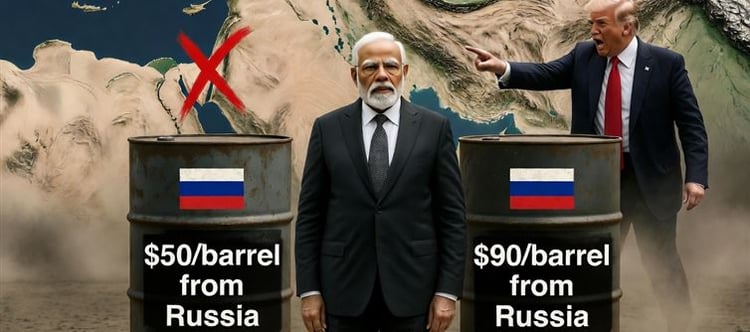

Global politics rarely stays confined to diplomatic rooms — it eventually hits ordinary people where it hurts the most: their wallets. In the complex chessboard of oil politics, one wrong move can cost billions. What began as a strategic advantage for india — cheap Russian crude at around $50 per barrel — now risks turning into a painful reminder of how global alliances and pressure politics can reshape national decisions. The story unfolding today is less about oil and more about power, influence, and the price of geopolitical obedience.
1. The Golden Window: Cheap Russian Oil
When Western sanctions pushed russia to look for alternative buyers, india seized the moment. Discounted crude flowing from moscow at nearly $50 per barrel became a massive economic cushion. It helped stabilize fuel prices, protect inflation, and gave india a rare strategic advantage in the global oil market.
2. Washington Steps In
Then came pressure from the United States. Reports suggest that Donald Trump pushed india to stop purchasing Russian oil. india appeared to step back, aligning with Washington’s geopolitical stance instead of prioritizing its discounted energy lifeline.
3. The Middle east Explosion
Soon after, tensions erupted into the Iran–Israel–US conflict, shaking global markets. The biggest shock came when the Strait of Hormuz — one of the world’s most critical oil routes — reportedly shut down, sending panic through energy markets and pushing countries scrambling for alternative supplies.
4. The Sudden Policy Flip
Ironically, as the crisis escalated, the same U.S. leadership that once discouraged Russian oil purchases reportedly signaled that countries could buy from russia again to stabilize supply. india once again turned toward moscow — but the situation had dramatically changed.
5. Putin’s Hard Bargain
This time, russia was in no mood for generosity. With demand surging and geopolitical leverage firmly in hand, Vladimir Putin reportedly made it clear: the era of discounted oil was over. The new price? Around $90 per barrel.
The Bitter Lesson
What could have remained a long-term economic advantage has now become a costly reversal. Critics argue this sequence exposes the dangers of bending too easily to global pressure. In the ruthless arena of geopolitics, hesitation can erase leverage overnight — and when that happens, the bill is always paid by the nation.
 click and follow Indiaherald WhatsApp channel