




At first glance, it doesn’t make sense.
Geopolitical tensions are rising. The US-Iran situation is escalating. oil prices are surging past $110. By every traditional rule, gold—the ultimate safe-haven asset—should be flying.
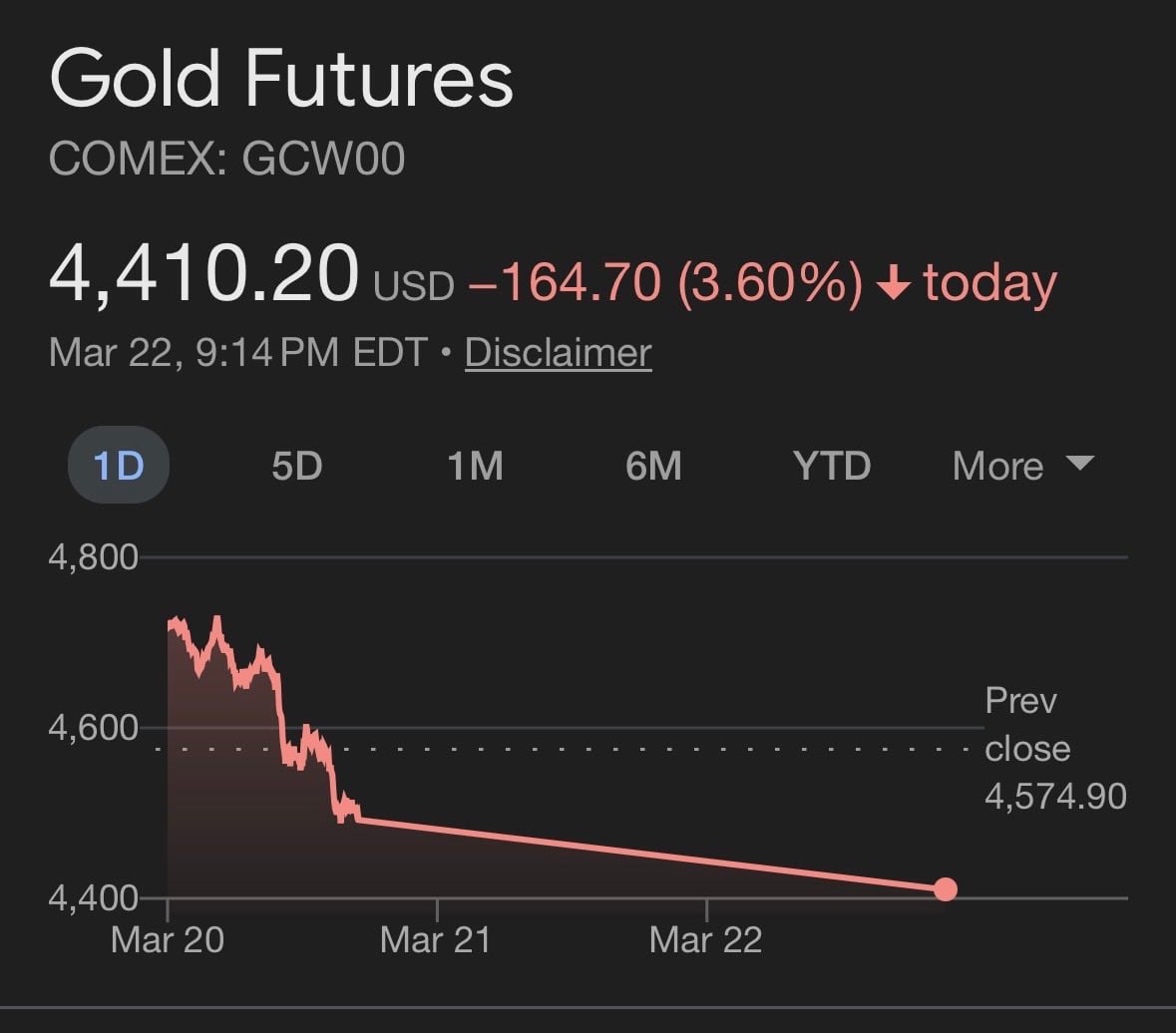
Instead, it’s falling. Hard.
A sharp drop of around 3.6% has caught many off guard, but the reality is far less surprising once you look beyond headlines. Because in today’s markets, macro forces don’t just influence gold—they dominate it.
Start with oil. The spike in crude isn’t just about supply fears—it’s feeding inflation concerns. And that’s where the chain reaction begins. Higher inflation expectations mean central banks, especially the Fed, are less likely to cut rates aggressively. Fewer rate cuts translate to higher yields.
And that’s bad news for gold.
Why? Because gold doesn’t pay interest. When yields rise, holding gold becomes less attractive compared to income-generating assets. Add a strengthening US dollar into the mix, and the pressure intensifies. A stronger dollar makes gold more expensive for global buyers, dampening demand further.
But there’s another layer most people ignore—positioning.
gold has already had a massive run over the past year, driven heavily by geopolitical uncertainty. At some point, every asset that runs too far, too fast, hits a correction. Not because something is wrong—but because excess needs to unwind.
And that’s exactly what we’re seeing now.
Investors are locking in profits. Some are even selling gold to raise liquidity as equity markets wobble. The same asset that was a hedge yesterday becomes a source of cash today.
This is the part retail investors hate—but markets repeat it every cycle.
No asset moves in one direction forever.
And when fundamentals like rising yields and a stronger dollar align, even gold isn’t immune.
Because in the end, narratives drive hype.
But macro drives reality.
 click and follow Indiaherald WhatsApp channel