


THIS ISN’T JUST A CASE. IT’S A COLLISION.
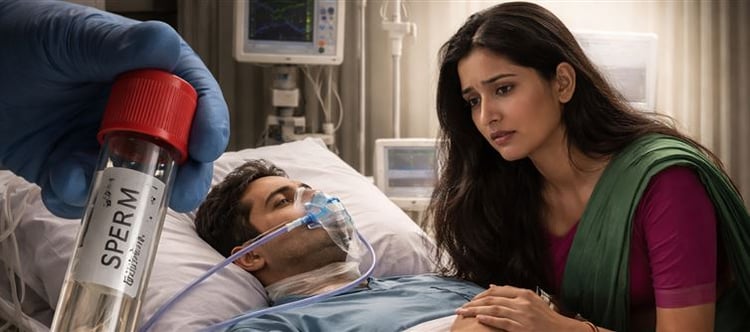
Not every courtroom battle is about property, power, or politics. Some hit deeper—straight into the fragile space where love, loss, and science collide. In Kerala, a woman walked into the high court carrying something far heavier than a legal petition: a desperate, deeply human wish—to become a mother using the preserved sperm of her brain-dead husband. What followed wasn’t just a ruling. It was a moment that forced the system to confront uncomfortable questions about consent, dignity, and how far science should go in rewriting fate.
1. love REFUSES TO DIE — EVEN WHEN THE BODY DOES
Her husband, left brain-dead after severe complications from chickenpox, survives only on ventilator support. For most, this is the end. For her, it wasn’t. She chose to fight—not for recovery, but for continuity. For a future that still carried a piece of him.
2. SCIENCE STEPS IN — BUT NOT WITHOUT CONTROVERSY
Assisted Reproductive technology (ART) isn’t new. But using it in a case where the patient cannot consent? That’s where things get ethically explosive. Preserving sperm from a brain-dead individual isn’t just a procedure—it’s a question mark the size of the law itself.
3. THE COURT’S TIGHTROPE WALK
The high court didn’t rush. It dissected the emotional weight, the legal vacuum, and the moral implications. The verdict? Yes to preserving the husband’s sperm. No to any further ART procedures involving him. A green signal—with a hard boundary.
4. CONSENT VS. COMPASSION — WHO WINS?
Here’s the uncomfortable truth: the husband cannot speak. The court had to decide whether love could stand in for consent. It chose caution—respecting his dignity while acknowledging her right to hope.
5. A PRECEDENT THAT WILL ECHO
This isn’t just one woman’s story anymore. It’s a legal landmark. A case that will ripple through future debates on reproductive rights, medical ethics, and the limits of human intervention.
FINAL WORD — A FUTURE BUILT ON A FRAGILE DECISION
This ruling doesn’t solve the dilemma—it exposes it. It tells us that law can adapt, but not without scars. Because sometimes, the hardest question isn’t can we do it?
It’s should we?
 click and follow Indiaherald WhatsApp channel