


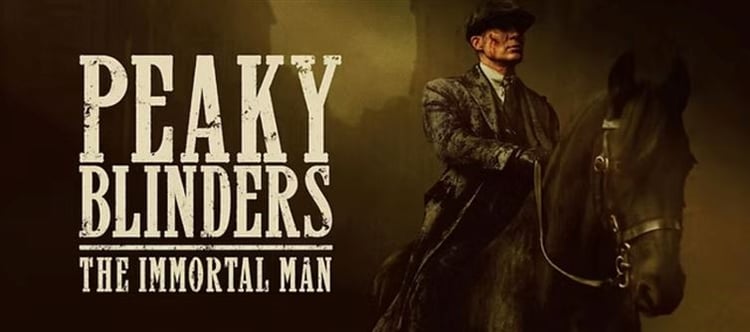

Peaky Blinders: The Immortal Man review – A Haunting Swan Song That Dares Big, But Doesn’t Always Land
Story & Narrative
Set years after the emotionally loaded finale of Peaky Blinders Season 6, The Immortal Man resurrects Tommy Shelby from his self-imposed exile and drops him back into a world that never really let him go. Living in isolation, writing his own story while being stalked by the ghosts of his past—both literal and psychological—Tommy is once again forced to confront the consequences of the empire he built and abandoned. The film leans heavily into a ghost story framework, presenting Tommy not just as a gangster, but as a man cursed by memory, guilt, and legacy.
The central conflict revolves around his son Duke, who is essentially the embodiment of Tommy’s sins. The narrative attempts to explore generational trauma and inherited darkness, but the emotional payoff feels diluted because the father-son dynamic lacks the depth needed to carry such a heavy theme. While the setup is thematically rich, the execution feels compressed—like a six-hour story forced into a two-hour frame.
Performances
Cillian Murphy slips back into Tommy Shelby like he never left—and frankly, he carries the entire film on his shoulders. His performance is quieter, more internalized, almost ghost-like, which works thematically but occasionally drains scenes of urgency. Still, his presence remains magnetic, commanding attention even in silence.
Sophie Rundle as Ada Thorne emerges as the emotional anchor of the film. Every scene she’s in feels grounded, real, and necessary. Barry Keoghan brings volatility and raw anger to Duke, capturing the chaos of a son shaped by abandonment, though the script doesn’t give him enough emotional scaffolding to truly shine.
Tim Roth’s Beckett and Rebecca Ferguson’s Kaulo are intriguing additions, but both feel frustratingly underwritten. In a series known for iconic antagonists, Beckett never rises above a surface-level threat, while Kaulo hints at complexity that the narrative simply doesn’t explore deeply enough.
Technical Brilliance
This is where The Immortal Man truly flexes. Visually, it’s stunning—arguably the most cinematic the Peaky Blinders universe has ever looked. The film embraces a darker, almost surreal tone, with haunting compositions, smoky silhouettes, and beautifully choreographed sequences that feel like moving paintings.
The cinematography is consistently breathtaking, and the use of lighting and shadow reinforces the ghost story motif. The score complements the mood perfectly, blending melancholy with menace. Every frame feels deliberate, every shot soaked in atmosphere.
Themes & Analysis
At its core, The Immortal Man is about legacy—what we leave behind, and whether we can ever escape it. Tommy Shelby is no longer just a man; he’s a myth, a symbol, and a warning. The film attempts to dismantle that myth by showing the cost of becoming it.
The idea that darkness can be inherited is compelling, but the film struggles to fully realize it. Duke as a narrative device represents that inherited corruption, yet without sufficient development, the theme never hits with the force it should. Similarly, the film tries to balance nostalgia with progression, but often gets stuck in between—honoring the past while failing to fully evolve beyond it.
What Works
• Cillian Murphy’s commanding, layered performance
• Stunning cinematography and atmospheric direction
• Haunting ghost-story tone that adds a fresh layer to the franchise
• Ada Thorne’s emotional grounding
• Classic Peaky Blinders moments that trigger nostalgia
• A powerful return to Birmingham that gives chills
What Doesn’t
• Underdeveloped new characters (Duke, Beckett, Kaulo)
• Emotional stakes that don’t fully land in the climax
• Overstuffed narrative with too many threads and too little time
• Lack of payoff for major setups from Season 6
• Feels like an extended episode rather than a definitive cinematic finale
Final Verdict
Peaky Blinders: The Immortal Man is a film torn between ambition and limitation. It dares to push Tommy Shelby into darker, more introspective territory, framing his story as a haunting reckoning rather than a triumphant finale. And while it succeeds in atmosphere, performance, and visual storytelling, it stumbles in narrative cohesion and emotional payoff.
It’s not the perfect ending fans may have hoped for—but it’s still a compelling, often mesmerizing return to one of television’s most iconic worlds.
 click and follow Indiaherald WhatsApp channel