


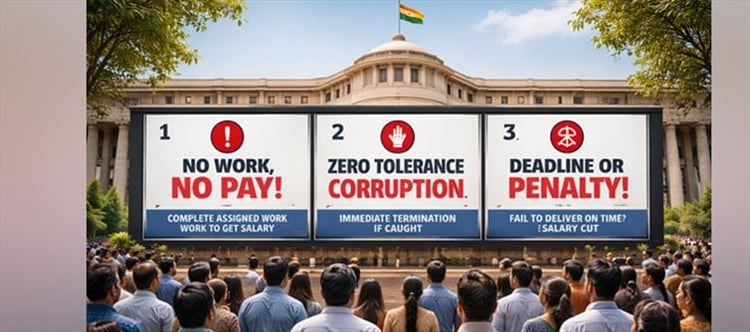

What if fixing bureaucracy didn’t require massive reforms—just a few uncompromising rules?
It’s a question that’s gaining traction, especially among people frustrated with delays, inefficiency, and everyday red tape. The idea is simple: introduce strict accountability at every level and let performance—not permanence—define public service.
The first proposal hits at the core of job security. Instead of guaranteed salaries and lifetime protection, government employees would be evaluated based on actual completion of assigned work. It’s a dramatic shift from stability to performance—one that supporters argue could inject urgency into a system often accused of moving too slowly.
Then comes the second rule: zero tolerance for corruption.
Not inquiries that drag on for years. Not suspensions that quietly fade away. But immediate termination if an employee is caught engaging in corrupt practices. The logic is straightforward—when consequences are swift and certain, deterrence becomes real.
The third idea focuses on time.
Public services would come with fixed deadlines, and failure to meet them wouldn’t just be noted—it would cost the employee financially. A direct penalty is deducted from the salary. The aim? Turn delays into personal accountability rather than systemic excuses.
On paper, it’s a powerful framework.
But implementing it raises deeper questions. How do you ensure fairness in evaluation? What safeguards prevent misuse of these rules? Can such strict measures coexist with the need for due process and employee protection?
Because while the frustration with bureaucracy is real, so is the complexity of reforming it.
Still, the appeal of this three-point plan is hard to ignore.
It taps into a growing demand for efficiency, transparency, and consequences—values people increasingly expect from the systems meant to serve them.
The real debate isn’t whether change is needed.
It’s how far we’re willing to go to achieve it.
 click and follow Indiaherald WhatsApp channel