



What if governance had nothing to hide?
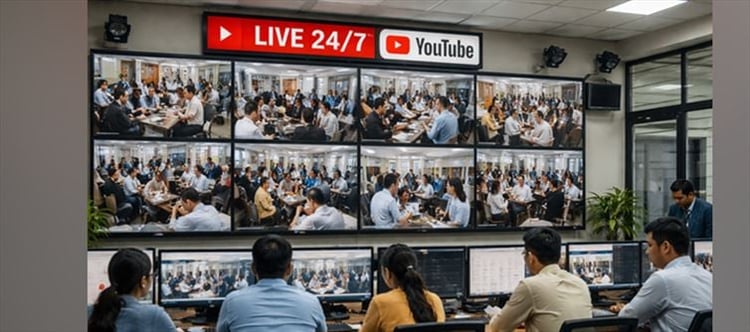
Imagine walking into a government office where every interaction, every file movement, every decision is under constant watch—not just by officials, but by the public itself. CCTV cameras in every corner. Live feeds streaming 24/7. Complete visibility, anytime, anywhere.
It sounds radical. But it also sounds… effective.
Because at its core, corruption thrives in the shadows. Closed doors, undocumented conversations, untraceable delays—these are the spaces where inefficiency and bribery quietly grow. Now imagine removing those shadows altogether.
The argument is simple: when people know they’re being watched, their behavior changes.
Mandatory CCTV coverage across government offices could act as a powerful deterrent. Add livestreaming into the mix, and suddenly accountability isn’t limited to internal audits—it becomes public. Citizens don’t have to rely on complaints or investigations; they can see the system in action themselves.
And the idea doesn’t stop at offices.
Extend this to government schools and colleges, and the benefits multiply. From administrative transparency to improved discipline and safety, constant monitoring could reshape how public institutions function on a daily basis.
But here’s where the conversation gets deeper.
Transparency is powerful—but it isn’t without limits. Questions around privacy, data misuse, and ethical boundaries can’t be ignored. Not every interaction is meant for public consumption, and not every problem can be solved with surveillance alone.
Still, the core idea taps into something real: a growing demand for systems that are open, accountable, and harder to manipulate.
Because in a world where trust in institutions is constantly tested, visibility might just be the reset button people are looking for.
The real question isn’t whether it’s possible.
It’s whether we’re ready for that level of transparency.
 click and follow Indiaherald WhatsApp channel