


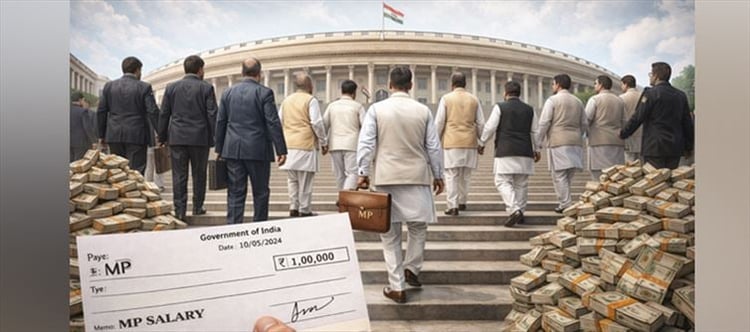

⚡MORE REPRESENTATION… BUT AT WHAT COST?
Expanding the lok sabha from 543 to 850 members sounds like a move toward broader representation. More MPs, more voices, more constituencies covered — that’s the pitch. But there’s a question quietly gaining traction: if you increase the number of representatives, shouldn’t you also rethink what each one costs the public?
1. THE SIMPLE MATH people ARE NOTICING
If the total number of MPs goes up significantly, each mp would, in theory, represent a smaller slice of the population. That’s the logic behind expansion — better accessibility, more localized representation. But then comes the obvious follow-up: if the workload per mp decreases, should compensation stay the same?
2. SALARY, PERKS, AND THE PUBLIC BILL
An MP’s compensation isn’t just a salary. It includes allowances, housing, travel benefits, staff support, and security — all funded by taxpayers. Multiply that across hundreds of additional MPs, and the financial impact becomes impossible to ignore.
3. THE FAIRNESS ARGUMENT
For many, this isn’t about denying representatives their due — it’s about proportionality. If the structure of representation changes, shouldn’t the cost structure evolve with it? Otherwise, the expansion risks looking less like reform and more like an expensive upgrade.
4. REPRESENTATION VS RESPONSIBILITY
There’s a valid case for increasing seats in a growing democracy. But with that comes a responsibility to ensure efficiency and fiscal discipline. Expanding parliament shouldn’t automatically mean expanding expenditure without scrutiny.
5. THE QUESTION THAT LINGERS
Why should taxpayers fund a larger system without any recalibration of costs?
🔥 THE TAKEAWAY
More MPs might mean more voices — but unless the economics are addressed, it also means a louder burden on the public purse.
 click and follow Indiaherald WhatsApp channel