
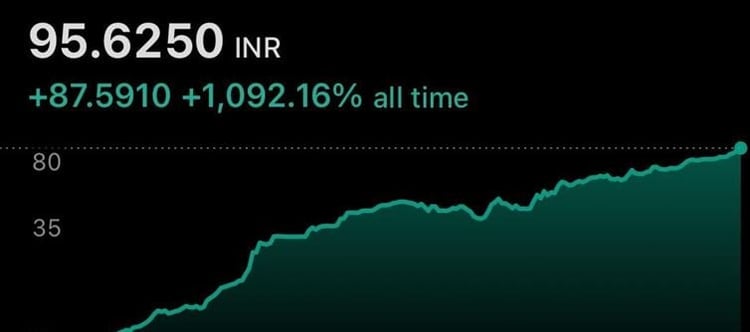


The indian rupee sliding to record lows against the US dollar is not just another financial headline buried inside business pages anymore. At nearly ₹95.62 for one dollar, the impact is now personal. Painfully personal.
Every imported product becomes more expensive. Fuel prices come under pressure. Electronics cost more. Foreign education becomes harder. international travel becomes costlier. Businesses importing raw materials suffer. Inflation quietly spreads across the economy like a hidden tax on ordinary citizens.
And naturally, political anger follows.
Critics are openly blaming prime minister Narendra Modi and his government, arguing that years of economic management, rising import dependence, global vulnerability, and policy decisions have left india exposed at the worst possible moment. social media reactions have turned especially sharp because the rupee’s fall comes during a period of geopolitical instability, rising oil concerns, and global market nervousness.
But the reality behind currency movements is also more complicated than political slogans.
india imports over 85% of its crude oil. So when global oil prices rise, and the dollar strengthens internationally, countries like india automatically face pressure. Foreign investors move money toward safer dollar assets, emerging-market currencies weaken, and economies dependent on imports feel the shock fastest. The Middle east crisis has only intensified those fears.
Still, perception matters in politics.
For years, strong leadership and economic stability were sold as key strengths of the current government. So when the rupee keeps falling to historic lows, many citizens feel the gap between political messaging and economic reality becoming impossible to ignore.
And that’s what makes the anger so explosive online.
For ordinary Indians, the rupee's collapse is not an abstract macroeconomic event discussed by economists on television. It is the slow, daily realization that their money buys less with every passing month.
 click and follow Indiaherald WhatsApp channel