




The internet exploded when reports surfaced that aarthi ravi had allegedly sought ₹40 lakhs per month as maintenance from ravi Mohan. Not yearly. Monthly. That’s ₹4.8 crores a year — a number so massive that even people from wealthy circles raised eyebrows. What made the debate even more intense wasn’t just the amount. It was the reaction that followed.
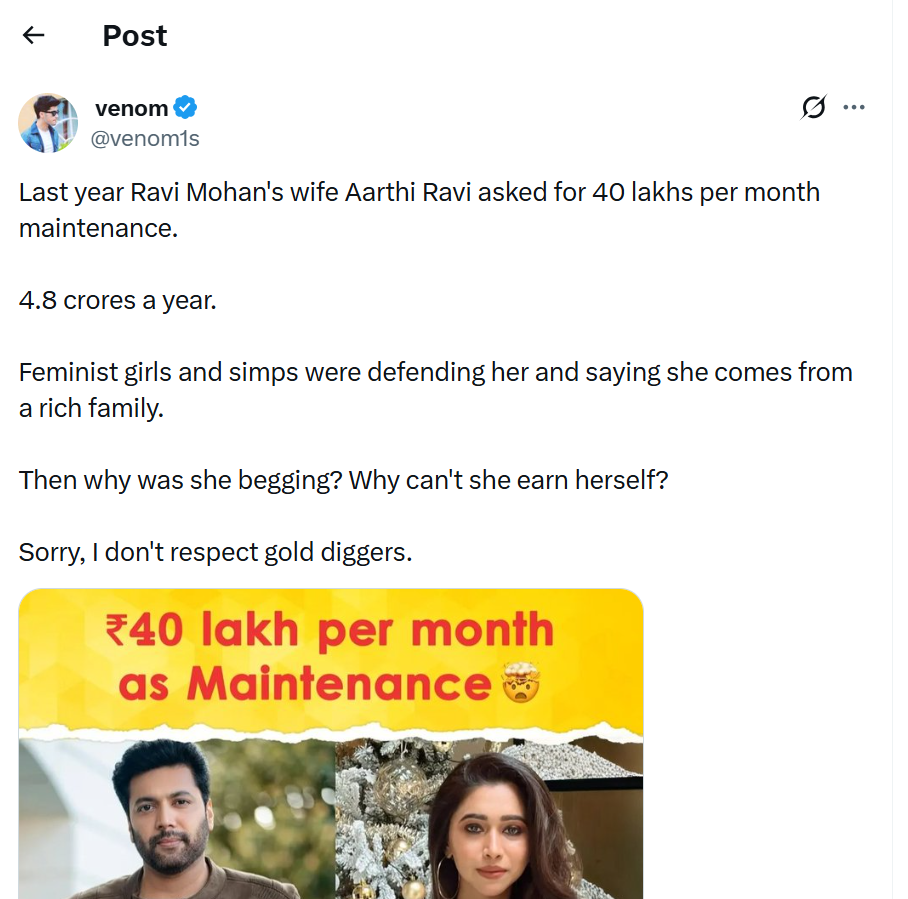
Suddenly, social media was flooded with people defending the demand. The most repeated argument? “She comes from a rich family.” But that’s exactly where the contradiction begins. If someone already has privilege, financial backing, and access to resources most people can only dream about, why frame maintenance like survival support? The average middle-class family struggles to earn even a fraction of that in an entire lifetime.
This is where the public frustration comes from. For years, society has been told that modern women are independent, career-focused, financially capable, and equal in every sense. Fair enough. But then cases like this appear, and critics immediately ask the uncomfortable question: if equality is the standard, why does financial responsibility suddenly become one-sided during separation?
people aren’t angry because a woman asked for support. They’re shocked by the scale, the entitlement, and the social defense mechanism that instantly activates whenever celebrity maintenance figures become public. The conversation quickly shifts from accountability to emotional shielding.
And that’s why this story keeps trending. Because to many observers, it feels less like a legal dispute and more like a symbol of modern double standards — where empowerment is loudly celebrated during success, but traditional financial expectations quietly return when money is on the table.
 click and follow Indiaherald WhatsApp channel