


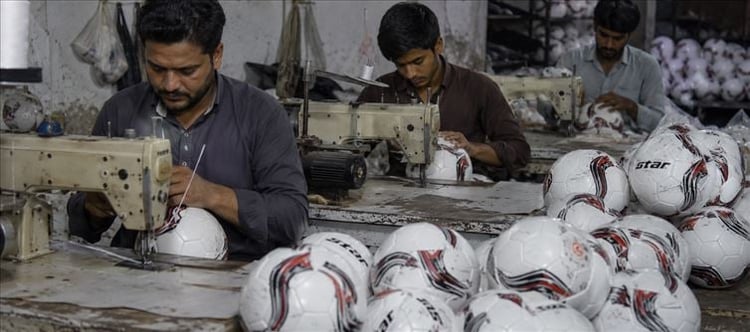

Every four years, billions of people watch the FIFA World Cup. Stadiums explode with noise. Superstars become immortal. Nations stop breathing for ninety minutes at a time.
But behind all the glamour, trophies, and billion-dollar broadcasts lies a shocking reality most football fans have absolutely no idea about:
Around 70% of the world’s footballs are made in one city — Sialkot.
Yes, one city.
From professional match balls used on the biggest stages in world football to the cheap balls kicked around in streets, schools, and dusty playgrounds across the planet, there’s a massive chance they originated in Pakistan.
And yet most people have never even heard of Sialkot.
That’s what makes this story so wild. While countries compete for football glory, this city quietly became the industrial heartbeat of the sport itself. Generations of skilled workers perfected the craft of hand-stitching footballs with insane precision long before automation dominated global manufacturing.
The city’s football industry didn’t appear overnight either. It grew through decades of craftsmanship, exports, family-run workshops, and relentless specialization. Over time, global sports giants realized something important: Sialkot could produce footballs at a scale and quality few places on Earth could match.
Eventually, the city became unavoidable.
World Cup balls. League match balls. Training balls. Street footballs. Millions upon millions of them — flowing out of factories and workshops toward nearly every continent.
And honestly, there’s something poetic about it.
A sport obsessed with celebrity players and billionaire clubs still depends heavily on the labor and craftsmanship of ordinary workers most fans will never see. While the world watches goals scored in places like Madrid, London, or Buenos Aires, part of the game’s soul is stitched together thousands of kilometers away in Pakistan.
The brutal irony?
One of the most football-obsessed planets in human history runs partly on a city the average fan couldn’t even locate on a map.
 click and follow Indiaherald WhatsApp channel