



Most people imagine the global food system as something massive and endlessly diverse. Supermarkets are packed with thousands of products. Restaurants serve cuisines from every corner of the planet. social media floods people with endless food content every day.
But behind all that variety lies a shocking reality.
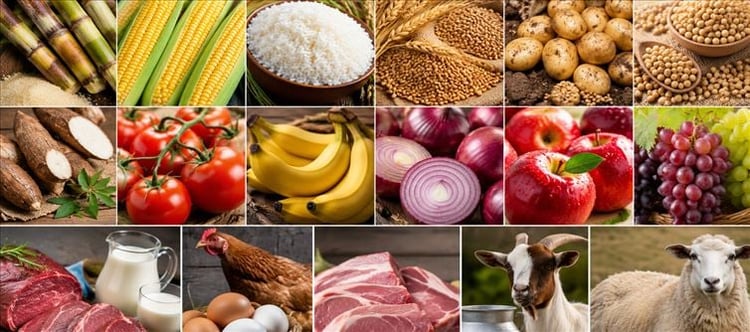
According to the Food and Agriculture Organization, roughly 75% of the world’s food supply comes from only 12 plant species and 5 animal species.
That’s it.
Human civilization — nearly 8 billion people — is heavily dependent on an incredibly small biological foundation.
The world’s dominant food plants are:
Sugar
Maize
Rice
Wheat
Potatoes
Soybeans
Cassava
Tomatoes
Bananas
Onions
Apples
Grapes
And the animal backbone of global food production is even narrower:
Cattle — beef and milk
Chickens — meat and eggs
Pigs
Goats — milk and meat
Sheep
That statistic becomes terrifying when you think about what it actually means.
A disease outbreak, climate disaster, crop fungus, water crisis, or supply-chain collapse affecting just a few of these species could send shockwaves through the entire global economy. Food prices would explode. Imports would panic. Entire countries could face shortages almost overnight.
And in indian rupee terms, the industries built around these crops and animals represent lakhs of crores worth of global economic dependence.
What makes the situation even more ironic is that humans once consumed an enormous diversity of local plants, grains, fruits, and wild foods. Modern industrial agriculture has gradually narrowed that diversity in pursuit of efficiency, scale, transportability, and profit.
The result?
Humanity created one of the most productive food systems in history — but also one of the most biologically fragile.
Because when billions of people depend on the same handful of crops and animals, the entire planet quietly becomes vulnerable to the same single points of failure.
 click and follow Indiaherald WhatsApp channel