

-

Amit Shah
-
Andhra Pradesh
-
Bank
-
Bharatiya Janata Party
-
CBN
-
CM
-
Delhi
-
Elections
-
engineer
-
Hanu Raghavapudi
-
history
-
House
-
India
-
Indian
-
Jagan
-
krishna
-
Lavu Sri Krishna Devarayalu
-
Leader
-
local language
-
Loksabha
-
Minister
-
MP
-
narasaraopet
-
Parliament
-
Party
-
polavaram
-
Polavaram Project
-
politics
-
Press
-
READ
-
Reddy
-
Reliance
-
Sanjeev
-
Sanjeev Kumar
-
Sri Krishna
-
Survey
-
Tadepalli
-
TDP
-
Telangana Chief Minister
-
village
-
workers

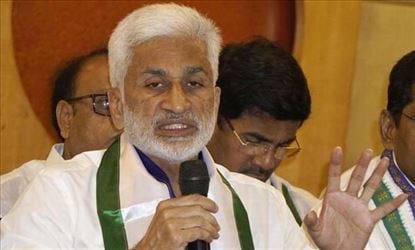
YSRCP MP Lavu Sri Krishna Devarayalu has resigned from both his Lok Sabha seat and the party, becoming the third sitting MP to exit after Jagan Mohan Reddy's I-PAC-driven ticket redistribution denied renomination to established incumbents. The pattern — swapping tested leaders for survey-approved newcomers — risks fracturing YSRCP's local vote banks while gifting rival TDP readymade, battle-tested candidates.
Three sitting MPs walked out. Not over ideology, not over corruption charges, not over some seismic policy disagreement — but because a consulting firm's spreadsheet told their party chief they were expendable. Lavu Sri Krishna Devarayalu, YSRCP's Narasaraopet MP, has resigned from both his Lok Sabha seat and the party, according to reports, making him the latest — and arguably the most consequential — casualty of Jagan Mohan Reddy's data-first, loyalty-second approach to ticket distribution.
The pattern by now is unmistakable. First came K. Sanjeev Kumar. Then Balashowry. Now Devarayalu. Each a sitting MP. Each with ground networks built over years. Each shown the door not by voters at the ballot box, but by I-PAC's internal anti-incumbency surveys — the same consultancy apparatus that helped engineer Jagan's landslide in 2019. The consultancy's logic is clinical: if a sitting MP's negatives cross a threshold in constituency-level perception polling, replace them with a fresh, unburdened face. On paper, it is ruthless efficiency. On the ground, it is starting to look like a political auto-immune disorder — the party's own defence mechanism attacking its own organs.
Political Pulse
Here is the backstory the press releases will never carry. The whisper in YSRCP's Tadepalli war room, according to party insiders speaking on condition of anonymity, is that Jagan's inner circle has effectively outsourced the single most sensitive decision in democratic politics — who gets to stand — to a data analytics team that has never knocked on a door in Narasaraopet. The talk among YSRCP's district-level cadre, particularly in the Guntur-Prakasam belt, is blunt: "If loyalty earns you a survey, not a ticket, why stay loyal?" That sentiment, circulating among booth-level workers in the coastal Andhra districts, may prove more damaging than any single MP's departure.
The I-PAC model is not inherently foolish. Anti-incumbency is real, and Andhra Pradesh's electoral history is littered with parties that held onto fading incumbents past their sell-by date — the TDP's own 2019 wipeout is exhibit A. Jagan's calculation, as political analysts tracking YSRCP's internal strategy have noted, is that a fresh candidate with the party's welfare-scheme brand behind them can outperform a tired MP carrying five years of local grievances. The data may even support this in aggregate. But elections are not fought in aggregate. They are fought in mandals, in village squares, in the specific local arithmetic of caste clusters and community influence that a sitting MP has spent half a decade cultivating.
And this is where India Herald's read of what is really driving the danger diverges from the official YSRCP line. Every MP who walks out does not merely subtract one leader from Jagan's roster. They subtract an entire network — the local convenors, the mandal presidents, the village-level influencers who owed their position to that MP's patronage. When Sri Krishna Devarayalu exits, his booth-level machinery in Narasaraopet does not automatically transfer allegiance to whichever I-PAC-approved newcomer replaces him. That machinery either goes dormant, goes home, or — and this is the scenario that should keep YSRCP strategists awake — goes to TDP.
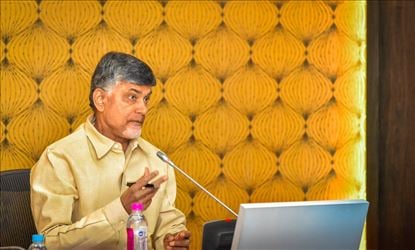
The TDP-JSP-BJP alliance, for its part, does not even need to recruit aggressively. The defectors are arriving gift-wrapped. A sitting MP with intact local networks, a personal grievance against their former party, and institutional knowledge of every YSRCP vulnerability in the constituency is the single most valuable asset an opposition alliance can acquire — and Jagan's strategy is producing them at a rate of roughly one per electoral cycle. Chandrababu Naidu, according to political observers in Amaravati, has been characteristically patient, letting the exits accumulate rather than rushing to publicly embrace each defector, understanding that the optics of a queue forming at his door are more powerful than any single induction ceremony.
Consider the arithmetic. In the 2024 general elections, YSRCP's margins in several coastal Andhra Lok Sabha seats were already narrower than the party's 2019 sweep suggested. A constituency like Narasaraopet, where local caste equations and the personal vote of an incumbent can swing outcomes by tens of thousands of votes, is precisely the kind of seat where replacing a known quantity with an unknown one is not anti-incumbency management — it is a gamble dressed up as science. The citable number that should alarm YSRCP: across the three MP resignations, the combined personal vote bank these leaders represent, according to estimates from local political analysts, runs into several lakh voters whose allegiance is to the individual, not the party symbol.
The deeper irony — and the one that makes this story matter beyond Andhra Pradesh — is that I-PAC's model was designed to PREVENT exactly this kind of electoral fragmentation. The entire premise of data-driven candidate selection is that it removes the messy, ego-driven, factional politics that traditional parties drown in. Instead, in YSRCP's case, it has created a new kind of factionalism: not between competing leaders within the party, but between the party's data-consulting brain and its ground-level body. The brain says replace; the body revolts. The result is not the lean, anti-incumbency-proof fighting machine Jagan envisioned — it is a party haemorrhaging exactly the kind of experienced, locally rooted leaders it can least afford to lose in a tight election.
What comes next is the question that should frame every piece of YSRCP coverage from here until polling day. If the pattern holds — and there is no indication from Jagan's camp that the I-PAC survey model is being reconsidered — more sitting legislators, both MPs and MLAs, will face the same choice Devarayalu faced: accept the data's verdict and fade quietly, or walk out loudly and take their networks with them. The smart money in Andhra political circles, per the chatter among senior journalists covering the state, is on more exits, particularly from constituencies where the sitting member has a strong personal following that predates YSRCP's 2019 formation wave.
For Naidu and the alliance, the strategic question is simpler but no less consequential: how many of these defectors do you publicly absorb without looking like a party that wins by poaching rather than persuading? Too many inductions too fast, and the narrative flips from "YSRCP leaders are choosing us" to "TDP is a recycling bin." The alliance's handling of each incoming defector — ticket or no ticket, prominence or back-bench — will reveal whether Naidu is playing this as a tactical harvest or a strategic long game.
(Speculation and insider assessments in this section reflect political corridor talk and analyst observations, not confirmed party strategy.)
The question that hangs over all of this is not whether Jagan's I-PAC model is smart — in isolation, it might be. The question is whether any model, however sophisticated, can survive the oldest force in Indian politics: the wounded ego of a leader who was promised the fight and then told the algorithm chose someone else. Sri Krishna Devarayalu is the third MP to answer that question with his feet. He is unlikely to be the last.
More from India Herald
Key Takeaways
- Lavu Sri Krishna Devarayalu's resignation makes him the third sitting YSRCP MP to quit over I-PAC survey-driven ticket denials, signalling a systemic pattern rather than isolated discontent.
- Each departing MP takes with them not just a name but an entire local patronage network — booth workers, mandal presidents, community influencers — that does not transfer automatically to a replacement candidate.
- TDP and the opposition alliance stand to gain readymade, battle-tested candidates with institutional knowledge of YSRCP's local vulnerabilities, without needing to recruit actively.
- The I-PAC anti-incumbency model, designed to prevent electoral fragmentation, has instead created a new factionalism — between the party's data-consulting brain and its ground-level cadre body.
- The critical forward question: whether Jagan recalibrates the survey-driven model before more exits erode YSRCP's organisational depth in marginal constituencies.
By the Numbers
- Three sitting YSRCP MPs — Sanjeev Kumar, Balashowry, and now Lavu Sri Krishna Devarayalu — have resigned over ticket redistribution driven by I-PAC's anti-incumbency surveys.
- The combined personal vote networks of the three departing MPs span several lakh voters across coastal Andhra constituencies, according to local political analyst estimates.
The 5W+H: Who, What, When, Where, Why, How
- Who: Lavu Sri Krishna Devarayalu, sitting YSRCP MP from Narasaraopet Lok Sabha constituency, and YSRCP president Y.S. Jagan Mohan Reddy.
- What: Sri Krishna Devarayalu resigned from his Lok Sabha seat and from YSRCP, reportedly after being denied a ticket for re-election in I-PAC's survey-based candidate rotation.
- When: 2026, following a string of similar resignations by YSRCP sitting MPs in recent months.
- Where: Andhra Pradesh — specifically the Narasaraopet Lok Sabha constituency and YSRCP's centralised ticket-allocation process.
- Why: Jagan's reliance on I-PAC's anti-incumbency survey data to rotate out sitting MPs, overriding local loyalty and ground-level cadre support, has led to a series of revolts by denied incumbents.
- How: I-PAC conducts constituency-level perception surveys; MPs scoring below threshold are replaced by fresh faces, triggering resignations and defections by sidelined leaders.
Frequently Asked Questions
Why did YSRCP MP Sri Krishna Devarayalu resign from Lok Sabha?
According to reports, Lavu Sri Krishna Devarayalu resigned from his Narasaraopet Lok Sabha seat and from YSRCP after being denied renomination under the party's I-PAC survey-based candidate rotation, which replaces sitting MPs whose anti-incumbency scores cross a negative threshold.
How many YSRCP sitting MPs have resigned over ticket denial?
Sri Krishna Devarayalu is the third sitting YSRCP MP to resign, following K. Sanjeev Kumar and Balashowry, all reportedly denied tickets after I-PAC's internal perception surveys recommended fresh candidates.
What is I-PAC's role in YSRCP's ticket distribution?
I-PAC, the political consultancy that helped engineer Jagan's 2019 landslide, conducts constituency-level anti-incumbency surveys. MPs scoring below a set threshold are replaced by fresh faces — a data-driven approach that has triggered a series of incumbent revolts.
How does the MP exodus benefit TDP and the opposition alliance?
Each departing YSRCP MP brings intact local networks, personal vote banks, and institutional knowledge of party vulnerabilities — making them high-value acquisitions for TDP's alliance without active recruitment effort.
 click and follow Indiaherald WhatsApp channel