



Iran's Supreme Leader succession is not merely a Tehran power struggle — it directly threatens India's $1.6 billion Chabahar port investment and the International North-South Transport Corridor. If the IRGC installs a Beijing-aligned hardliner, according to India Today and Times of India reports, New Delhi's energy routes and its sole foothold in Central Asia could be quietly signed away.
Twenty million people in the streets, and the one man whose absence matters most is nowhere among them.
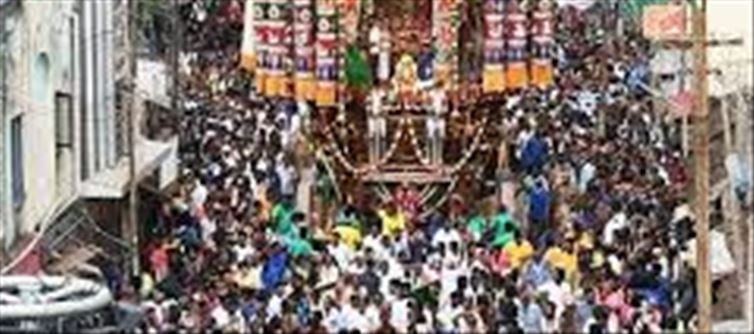
As Tehran's Azadi Square swelled with mourners carrying images of Ayatollah Ali Khamenei's ringed hand — now an icon of defiance, according to India Today — the real story was unfolding in locked rooms where generals do not weep. Mojtaba Khamenei, the late Supreme Leader's son and widely rumoured successor, was conspicuously absent from the funeral proceedings, The Times of India reported, drawing intense speculation about whether his invisibility is strategy or exile.
For New Delhi, this is not grief tourism. This is a live strategic emergency dressed in funeral black.
The Port That Cannot Mourn
India has sunk approximately $1.6 billion and two decades of diplomatic capital into Chabahar — its only oceanic gateway to Afghanistan, Central Asia, and the International North-South Transport Corridor (INSTC) that bypasses Pakistan entirely. The ten-year bilateral port agreement signed in 2024, after years of sanctions-related delays, was supposed to be the lock. But a lock is only as good as the hand that holds the key — and that hand is about to change.
Under Khamenei, Tehran maintained what diplomats call 'managed ambiguity': entertaining Chinese infrastructure money while keeping India's Chabahar concession alive as a counterweight. It was not friendship; it was arithmetic. Beijing offered volume — reportedly $400 billion in a 25-year strategic partnership — while New Delhi offered something China could not: a non-western, non-aligned legitimacy that Tehran craved in multilateral forums.
That arithmetic depended on one man's calibration. The man is dead.
Political Pulse
The whisper running through South Block corridors, according to diplomatic observers tracking the succession, is blunt: the IRGC does not merely influence the next Supreme Leader — it effectively selects him. The Assembly of Experts, the 88-member clerical body constitutionally mandated to choose the successor, is stacked with IRGC-aligned members after years of Guardian Council vetting that disqualified moderates and reformists.
The talk in strategic circles in New Delhi is that two scenarios keep the Iran desk awake. First, a Mojtaba Khamenei elevation — a dynastic continuity play that would preserve some institutional memory of the India relationship but come with the baggage of a man whose political debts are owed to the Revolutionary Guard. Second, and more alarming for India, a hardline IRGC commander or an establishment cleric entirely beholden to the military-industrial complex that has deepened Iran's dependence on Chinese technology, surveillance systems, and drone components over the past five years.
India's decision to send BJP leader Mukhtar Abbas Naqvi to the funeral, as confirmed by India Today, is being read in Tehran as a carefully calibrated signal — senior enough to signal respect, Muslim enough to carry cultural weight, but not so senior as to imply endorsement of any factional outcome. Mehbooba Mufti's separate attendance, also reported by India Today, adds a bipartisan Indian Muslim presence that diplomatic analysts say is aimed squarely at the post-succession regime, whoever it turns out to be.
The Beijing Variable
Here is the dimension India Herald's read suggests the rest of the coverage has missed: the succession is not a binary between 'pro-India' and 'pro-China.' No Iranian Supreme Leader will be either. The real question is whether the next leader's survival calculus — his need for economic lifelines under continued sanctions pressure — tilts toward Beijing's comprehensive package or maintains the diversified hedging that kept Chabahar alive.
China's playbook in Iran is instructive. Beijing has steadily expanded from energy purchases to telecom infrastructure, port development at Jask (east of the Strait of Hormuz), and, critically, military-technical cooperation. A Supreme Leader whose power base is the IRGC — which has been the primary institutional beneficiary of Chinese military tech transfers — has every incentive to deepen that relationship at the expense of India's more modest, more conditional engagement.
The INSTC, India's grand corridor vision connecting Mumbai to Moscow via Bandar Abbas and Chabahar, requires not just port access but Iranian rail connectivity, customs harmonisation, and political will. All of these sit within the Supreme Leader's portfolio of strategic decisions. A leader who views India as a secondary partner — useful for IHG votes but dispensable for infrastructure — could quietly slow-walk every clearance Chabahar needs to function at capacity.
The Mourning and the Manoeuvring
India Today raised the question of whether Iran pressured citizens to attend the funeral — a signal that the regime's legitimacy narrative is itself contested. The massive crowds at Azadi Square are real, but so is the coercion machinery. For India, this matters because a successor who inherits a legitimacy deficit will lean harder on the security establishment — read: the IRGC — to maintain control, further consolidating the very faction least sympathetic to India's strategic presence.
The ringed hand of Khamenei, now a symbol being carried through Tehran's streets, is a potent image. But symbols do not sign port agreements. The hand that signs the next decade of Iran's foreign alignment will belong to someone whose name most Indians have never heard — and that anonymity is precisely what makes this moment so dangerous for New Delhi.
What Comes Next
Watch for three signals in the coming weeks. First, whether the Assembly of Experts moves quickly — a rapid selection suggests a pre-cooked IRGC candidate, which is worse for India. Second, whether Mojtaba Khamenei surfaces with a public role or is sidelined — his fate is a proxy for whether dynastic continuity or military takeover wins. Third, and most concretely, whether Tehran makes any moves on the Chabahar operational timeline during the transition period; a freeze or a 'review' of the 2024 agreement would be the first tangible sign that India's corridor is in trouble.
India's options are limited but not zero. Accelerating Chabahar's operational commissioning before the new leader consolidates — making the port a fait accompli rather than a revocable concession — is the most cited recommendation in strategic policy circles. The second, quieter play is using the INSTC's Russian leg as leverage: Moscow, which has its own reasons to want the corridor functional, could serve as an interlocutor with whoever takes the Supreme Leader's seat.
But make no mistake: the mourning in Azadi Square is the easy part. The succession war that follows will be fought in the language of theology and revolution, but its outcome will be measured in shipping containers, pipeline approvals, and whether India's most audacious westward bet survives or is quietly handed to the country that outbid it.
More from India Herald

Key Takeaways
- India's $1.6 billion Chabahar port investment and the INSTC corridor are directly at risk from Iran's Supreme Leader succession, because the next leader's factional alignment will determine whether Tehran continues hedging between New Delhi and Beijing or tilts decisively toward China.
- The IRGC effectively selects the Supreme Leader through its dominance of the Assembly of Experts, and any IRGC-aligned successor has institutional incentives to deepen Chinese military-technical ties at India's expense.
- India's funeral delegation — Naqvi from BJP, Mufti separately — is a calibrated bipartisan signal aimed at the post-succession regime, not the mourning, according to India Today reports.
- The critical near-term indicators for India are the speed of succession (fast = pre-cooked IRGC pick), Mojtaba Khamenei's visibility, and any Tehran moves to 'review' the 2024 Chabahar bilateral agreement.
By the Numbers
- India has invested approximately $1.6 billion and two decades of diplomatic effort into Chabahar port, its only oceanic gateway bypassing Pakistan to reach Central Asia.
- China and Iran signed a reported $400 billion, 25-year strategic partnership, dwarfing India's engagement in scale.
- The Assembly of Experts comprises 88 members, heavily vetted by the Guardian Council, with IRGC-aligned clerics dominating the body that selects the Supreme Leader.
- An estimated 20 million people attended the funeral proceedings in Tehran, per social media reports and India Today coverage.
The 5W+H: Who, What, When, Where, Why, How
- Who: Iran's Islamic Revolutionary Guard Corps (IRGC), the Assembly of Experts, India's Ministry of External Affairs, and Mojtaba Khamenei — the late Supreme Leader's son — are the key actors, according to Times of India and India Today.
- What: Following Ayatollah Ali Khamenei's death in a U.S.-Israeli strike, a fierce succession contest has begun that could determine whether India's Chabahar port deal and INSTC corridor survive or are redirected toward Beijing, per India Today reports.
- When: The six-day state funeral is underway in Tehran as of June 2026, with the Assembly of Experts constitutionally required to select a successor, according to India Today.
- Where: Tehran's Azadi (Freedom) Square and Khorasan province are the physical centres of mourning; Chabahar port in Sistan-Baluchestan province is the Indian strategic asset at stake.
- Why: The IRGC's kingmaking power within the Assembly of Experts means a hardliner aligned with Beijing could deprioritise India's Chabahar concession in favour of Chinese Belt and Road infrastructure, threatening New Delhi's only land-sea corridor bypassing Pakistan, per strategic analysis.
- How: The Assembly of Experts, dominated by IRGC-aligned clerics, will vote on the next Supreme Leader; the IRGC's preferred candidate — potentially Mojtaba Khamenei or an establishment hardliner — would control Iran's foreign-alignment posture, including energy and port concessions to India and China.
Frequently Asked Questions
Why is Iran's Supreme Leader succession important for India?
The Supreme Leader controls Iran's strategic foreign-alignment decisions, including port concessions and corridor agreements. India's $1.6 billion Chabahar port investment and the INSTC depend on continued Iranian cooperation, which a Beijing-aligned successor could deprioritise, according to strategic analysts.
Who is likely to become Iran's next Supreme Leader?
The Assembly of Experts, dominated by IRGC-aligned clerics, will select the successor. Mojtaba Khamenei, the late leader's son, and several IRGC-aligned establishment figures are considered frontrunners, though Mojtaba's conspicuous absence from funeral proceedings has fuelled speculation, per Times of India.
What is the IRGC's role in Iran's succession?
The Islamic Revolutionary Guard Corps effectively controls the succession through its dominance of the Guardian Council (which vets Assembly candidates) and the Assembly of Experts itself. Any successor will owe significant political debts to the IRGC, which has been the primary beneficiary of Chinese military-technical cooperation.
Can India protect its Chabahar investment during Iran's transition?
Strategic policy circles suggest India should accelerate Chabahar's operational commissioning to make it a fait accompli, and leverage Russia's interest in the INSTC corridor as diplomatic backing with whichever successor emerges, according to analysts tracking the situation.
 click and follow Indiaherald WhatsApp channel