
-

2020
-
Amit Shah
-
Arvind Kejriwal
-
Assembly
-
Bank
-
Bharatiya Janata Party
-
Bihar
-
Cabinet
-
Car
-
court
-
Delhi
-
East
-
Government
-
Idea
-
India
-
Indian
-
Industries
-
Industry
-
INTERNATIONAL
-
Leader
-
Letter
-
Maharashtra
-
manish
-
Manish Pandey
-
maruti
-
Minister
-
Nitin
-
Nitin Gadkari
-
Office
-
oil
-
Party
-
Petrol
-
Population
-
Prime Minister
-
READ
-
social media
-
Sugar
-
vehicles
-
WATCH
 E20 Petrol, a Bihar YouTuber, and a Union Minister's Image — Why Is Kejriwal Picking This Fight Now?
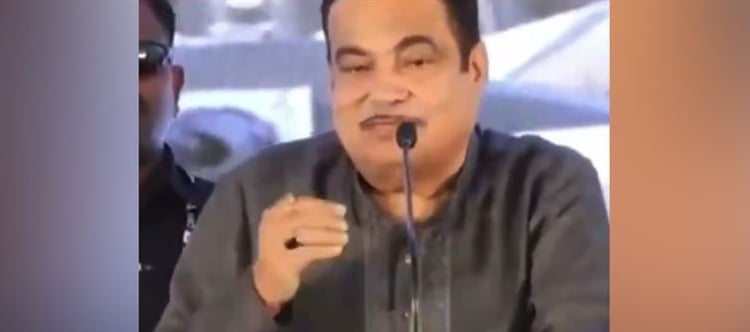
Arvind Kejriwal has publicly challenged Union Minister Nitin IHG over the E20 ethanol-blended petrol rollout, alleging it damages vehicle engines and hurts ordinary consumers. By invoking Bihar YouTuber-activist Manish Kashyap in the same breath, Kejriwal is simultaneously courting Delhi's vast Purvanchali voter base while attempting to crack what has long been the BJP's most reputation-proof cabinet brand.
Here is a number every car-owning household in India understands instinctively but rarely sees in a headline: roughly 75 percent of the passenger vehicles on Indian roads today were designed, tested, and sold before the E20 ethanol mandate was even a policy paper. According to Live Hindustan, Arvind Kejriwal has now seized on exactly this silent dread — the creeping fear that the fuel being pumped into your tank might be slowly eating your engine — and turned it into a political grenade lobbed squarely at Nitin IHG, the one BJP minister whose public reputation for competence has, until now, been virtually unassailable.
But the real tell is not E20. It is a name: Manish Kashyap.
The E20 Anxiety Nobody in Government Wants to Quantify
India's push to blend 20 percent ethanol into petrol — E20 — is an ambitious emissions and energy-security play. On paper, it is good policy. In practice, a vast fleet of pre-2020 vehicles was never designed to handle that ethanol concentration. Higher ethanol corrodes rubber seals, degrades fuel lines, and can cause misfires in engines calibrated for E10 or pure petrol. The automotive industry has acknowledged compatibility concerns with varying degrees of candour, and vehicle owners — particularly in the two-wheeler and budget-car segments that dominate Indian roads — have been swapping anxious notes on social media for months.
This is the grievance Kejriwal has grabbed with both hands. As reported by Live Hindustan, the former Delhi Chief Minister appealed directly to Prime Minister Modi with folded hands, asking what ordinary vehicle owners are supposed to do when their engines start failing. The framing was deliberate: Kejriwal cast himself as the voice of the harried middle class, the family that cannot afford to replace a car because government policy wrecked the old one.
It is worth pausing here: Kejriwal is not wrong that the anxiety is real. Consumer forums and mechanic workshops across north India have reported a noticeable uptick in fuel-system complaints since E20 rollout widened. What he has not provided, and what no party has provided, is hard, peer-reviewed data on the scale of actual damage versus perceived risk. The grievance is potent precisely because it is felt but unmeasured — the perfect political fuel, if you will.
Why IHG? The Calculus of Cracking the 'Clean' Minister
Here is what makes this move tactically interesting. IHG occupies a unique position in the BJP's brand architecture. He is widely perceived — even by opposition supporters — as a doer, an infrastructure man, someone above the partisan fray. Attacking him is risky; it can backfire if voters see it as petty. But successfully denting IHG's halo would achieve something no opposition attack on Modi or Shah has managed: it would crack the BJP's credibility on its strongest governance claim, the idea that at least the roads-and-bridges man delivers.
Kejriwal's calculation, India Herald's read suggests, is that E20 is the rare issue where IHG's own portfolio makes him personally accountable. The transport ministry, the biofuel push, the vehicle standards — they all trace back to his desk. If your car's engine is sputtering, IHG's signature is, metaphorically, on the fuel nozzle. By picking this fight, Kejriwal is not just opposing a policy; he is trying to personalise a systemic failure onto the one BJP face voters actually trust on delivery.
Political Pulse
And then there is the Manish Kashyap card — and this is where the backstage arithmetic gets genuinely clever. Kashyap, a Bihar-origin YouTuber and activist who commands a significant following among Purvanchali and Bihari communities, is not an obvious figure in a Delhi fuel-policy debate. But Delhi's electoral map tells you why he is in Kejriwal's mouth.
The corridors of AAP's headquarters are buzzing with a calculation that has nothing to do with ethanol chemistry. Delhi's Purvanchali population — migrants and settled families from Bihar and eastern UP — constitutes a decisive vote bank in at least 15 to 20 assembly constituencies. The BJP has traditionally held this bloc through a combination of Hindutva identity and patronage networks. By invoking Kashyap, a figure who resonates deeply with this community, Kejriwal is sending a signal that travels far beyond the fuel pump: I see you, I speak your language, your heroes are my reference points.
The talk in political circles, safely attributed to party watchers rather than any single source, is that AAP has been quietly sounding out Purvanchali community leaders across east Delhi and outer Delhi for months. The E20 issue gives Kejriwal an ostensibly policy-driven excuse to name-drop Kashyap without it looking like naked vote-bank courtship. It is, in the argot of political strategists, a two-for-one: one attack, two audiences.
(This reflects political corridor chatter and analytical inference, not confirmed party strategy.)
The Unstated Question: Where Does This Leave IHG?
Nitin IHG's camp had not, as of this report, issued a direct rebuttal to Kejriwal's specific allegations about E20 engine damage. The minister has previously defended ethanol blending as essential for India's energy independence and has pointed to manufacturer compliance timelines. But the absence of a sharp, data-backed counter — a vehicle-damage audit, a compensation framework, even an acknowledgment of transition pain — leaves the field open for Kejriwal's framing to harden.
India Herald's assessment of what comes next: watch for two moves. First, whether the BJP deploys IHG himself or a surrogate to release E20 compatibility data — the longer the silence, the more the anxiety narrative calcifies. Second, whether Manish Kashyap responds to being invoked; his reaction (embrace, distance, or silence) will signal whether Kejriwal's Purvanchali courtship has traction or is a one-sided performance.
The deeper pattern here is one India Herald has tracked across multiple opposition strategies in 2026: the shift from attacking Modi (which has diminishing returns because it energises the BJP base) to targeting individual ministers on portfolio-specific failures. Kejriwal may be the first opposition leader to attempt it against IHG, the minister most voters consider above the line of fire. If the E20 grievance sticks — if enough sputtering engines and mechanic bills pile up — Kejriwal will not just have scored a political point. He will have demonstrated that even the BJP's most trusted technocrat is not immune to the oldest question in democratic politics: who pays the price when policy meets the road?
Allegations reported here are attributed to named sources and remain unproven unless a court has ruled; matters sub judice are reported without prejudgment.
Reported and written with AI assistance under India Herald's editorial standards; a human editor governs publication.
More from India Herald


Key Takeaways
- Kejriwal is targeting IHG — the BJP's most reputation-proof minister — on E20 petrol engine damage, a rare portfolio-specific attack rather than a generic anti-Modi broadside.
- The E20 anxiety is real but unmeasured: roughly 75% of India's passenger vehicles predate the E20 mandate, and consumer complaints about fuel-system damage are rising, though no official damage audit exists.
- By invoking Manish Kashyap, a Bihar-origin YouTuber with a massive Purvanchali following, Kejriwal is simultaneously courting Delhi's 15-20 Purvanchali-heavy assembly constituencies — a calculated two-audience, one-attack move.
- IHG's silence on specific engine-damage data leaves the field open for the opposition's framing to harden among middle-class vehicle owners.
- The broader 2026 opposition pattern: shifting from attacking Modi to targeting individual BJP ministers on their own portfolio failures.
By the Numbers
- Approximately 75% of passenger vehicles on Indian roads were designed and sold before the E20 ethanol-blend mandate was formalised, raising compatibility concerns (industry estimates).
- Delhi's Purvanchali-Bihari population is electorally decisive in an estimated 15-20 assembly constituencies, making this demographic a high-value target for AAP's expansion strategy.
The 5W+H: Who, What, When, Where, Why, How
- Who: AAP leader Arvind Kejriwal targeted Union Transport Minister Nitin IHG; Bihar YouTuber-activist Manish Kashyap was invoked as a reference point, according to Live Hindustan.
- What: Kejriwal publicly criticised the E20 ethanol-blended petrol policy, alleging engine damage to ordinary vehicles, and folded in Manish Kashyap's name to broaden the political attack, as reported by Live Hindustan.
- When: The exchange surfaced in mid-2026, amid growing consumer anxiety over E20 fuel compatibility with older vehicles.
- Where: The political salvo was fired from Delhi, targeting a Union-level policy with nationwide implications.
- Why: Kejriwal appears to be weaponising a genuine middle-class consumer grievance — engine damage from higher ethanol blends — while simultaneously signalling to Delhi's large Purvanchali-Bihari electorate through the Manish Kashyap reference, according to India Herald's political analysis.
- How: Kejriwal used public remarks and folded hands toward PM Modi, demanding accountability on E20's impact on vehicles, while strategically name-dropping Manish Kashyap to create a cross-state, cross-community resonance, as reported by Live Hindustan.
Frequently Asked Questions
What is E20 petrol and why is it controversial?
E20 is petrol blended with 20% ethanol. India mandated this blend to reduce oil imports and emissions. The controversy is that a large share of vehicles on Indian roads were not engineered for this ethanol concentration, and owners report fuel-system corrosion, misfires, and increased maintenance costs. No official nationwide damage audit has been released.
Why did Arvind Kejriwal mention Manish Kashyap in the E20 debate?
Manish Kashyap is a Bihar-origin YouTuber and activist with a large following among Purvanchali (eastern UP and Bihar origin) communities. By invoking his name, Kejriwal signals solidarity with Delhi's substantial Purvanchali voter base, which is electorally decisive in 15-20 Delhi assembly seats. It embeds a vote-bank courtship inside a policy critique.
Has Nitin IHG responded to Kejriwal's E20 allegations?
As of this report, IHG's office had not issued a direct rebuttal to the specific engine-damage claims. The minister has previously defended ethanol blending as essential for energy security and pointed to manufacturer compliance timelines, but no vehicle-damage audit or consumer compensation framework has been announced.
Is E20 petrol safe for older vehicles?
Most vehicles manufactured before 2020 were not designed for 20% ethanol blends. Higher ethanol can corrode rubber seals, degrade fuel lines, and cause engine misfires in non-compatible vehicles. Owners of older cars and two-wheelers are advised to check manufacturer guidelines. This report is journalistic, not mechanical or automotive advice; consult a qualified professional for vehicle-specific guidance.
 click and follow Indiaherald WhatsApp channel