


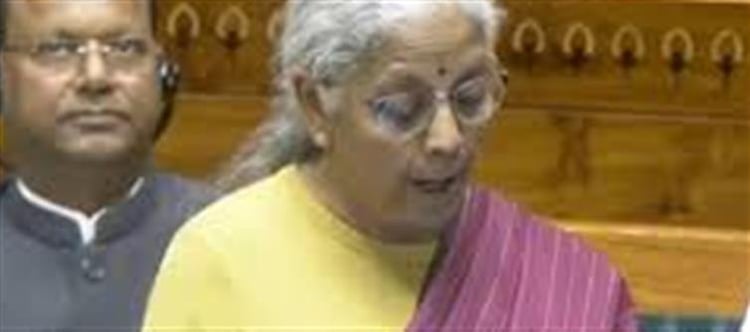

In the Union Budget 2026–27, Finance minister Nirmala Sitharaman introduced several key proposals aimed at transforming the education sector. These initiatives focus on digital learning, skills development, and educational infrastructure to align with the needs of a growing economy and ensure that India’s workforce is prepared for the future. Here's a detailed breakdown of her proposals for the education sector:
1. wallet PLATFORM' target='_blank' title='digital-Latest Updates, Photos, Videos are a click away, CLICK NOW'>digital Learning and EdTech Investment
Expansion of wallet PLATFORM' target='_blank' title='digital-Latest Updates, Photos, Videos are a click away, CLICK NOW'>digital Infrastructure:
Sitharaman proposed substantial investments in digital education by enhancing digital infrastructure in schools, colleges, and universities across India. This includes the introduction of 15,000 animation labs to be set up in schools nationwide. The initiative aims to make learning more interactive, creative, and accessible through cutting-edge animation technologies.
Digital Content and E-Learning:
In line with India’s growing wallet PLATFORM' target='_blank' title='digital-Latest Updates, Photos, Videos are a click away, CLICK NOW'>digital economy, the Budget emphasizes the need to integrate technology in education. This will involve the development of e-learning platforms, digital classrooms, and online education hubs, making education more accessible to students in rural and remote areas.
2. National Skill Development Mission
Kicking Off National Skill Development Programs:
Recognizing the importance of equipping young indians with skills that meet global standards, the Finance minister highlighted an increased focus on the National Skill Development Mission. The goal is to train young people in high-demand sectors like manufacturing, wallet PLATFORM' target='_blank' title='digital-Latest Updates, Photos, Videos are a click away, CLICK NOW'>digital technologies, and green energy.
Focus on Industry-Specific Training:
The Budget proposes partnerships with industry players to provide sector-specific training. This will allow the education sector to bridge the gap between the skills young people possess and the skills required by employers. This initiative also includes the provision of scholarships and subsidies for students pursuing skill-based education.
3. Enhancement of Higher education Infrastructure
Setting Up university Townships:
As part of its push to promote higher education, the government proposed the establishment of five university townships across different parts of India. These townships will provide students with modern campus facilities, including research facilities, hostels, and commercial spaces for the integration of academic and professional growth.
Specialization in wallet PLATFORM' target='_blank' title='digital-Latest Updates, Photos, Videos are a click away, CLICK NOW'>digital Fields:
The Budget also aims to strengthen institutions offering advanced wallet PLATFORM' target='_blank' title='digital-Latest Updates, Photos, Videos are a click away, CLICK NOW'>digital courses in areas like AI, blockchain, cybersecurity, and data analytics. This will ensure that indian universities and technical institutions remain globally competitive.
4. women Empowerment in Education
Increased Support for women in Education:
The Budget includes provisions to support female students in pursuing education in fields that have been traditionally male-dominated, such as engineering, technology, and finance. It proposes scholarships, financial aid, and mentorship programs for women pursuing higher education and vocational training.
Lakhpati Didi Scheme Enhancement:
The Budget also proposed an enhancement to the Lakhpati Didi Scheme, an initiative focused on empowering rural women through education and entrepreneurial training. This scheme is expected to provide women with tools for self-reliance by helping them gain skills in digital literacy, e-commerce, and online services.
5. Focus on Rural and Remote Area Education
Bridging the Rural-Urban Divide:
As part of its inclusive growth agenda, the government plans to increase educational access in rural and remote areas by promoting e-learning platforms and virtual classrooms. This is aimed at reducing regional disparities in educational opportunities and ensuring that no student is left behind due to geographic limitations.
Improvement of government Schools:
There’s a push to upgrade government schools with modern amenities like smartboards, Wi-Fi, and interactive learning materials, ensuring that students in the public education system are equipped with the same level of educational resources as those in private institutions.
6. Establishment of Research & Innovation Hubs
Promotion of Research in Key Sectors:
The Budget proposes the creation of research hubs within universities and academic institutions, with a focus on scientific research, innovation, and technology development. Special emphasis will be placed on biotech, health, green technologies, and clean energy, preparing students and researchers to contribute to future-focused industries.
International Collaboration on Education:
Recognizing the growing importance of global exposure, the Budget encourages international collaboration in higher education through joint research programs, student exchanges, and academic partnerships. The aim is to integrate India’s education system more closely with global standards and bring in international expertise.
Conclusion
The Union Budget 2026 emphasizes building a future-ready education system by investing in digital tools, improving higher education infrastructure, and focusing on skills development to meet the demands of the new economy. These proposals aim to create a knowledge-driven workforce that is ready to take on challenges in the digital age and support India’s aspirations to become a global leader in innovation and technology.
Disclaimer:
The views and opinions expressed in this article are those of the author and do not necessarily reflect the official policy or position of any agency, organization, employer, or company. All information provided is for general informational purposes only. While every effort has been made to ensure accuracy, we make no representations or warranties of any kind, express or implied, about the completeness, reliability, or suitability of the information contained herein. Readers are advised to verify facts and seek professional advice where necessary. Any reliance placed on such information is strictly at the reader’s own risk.
 click and follow Indiaherald WhatsApp channel