


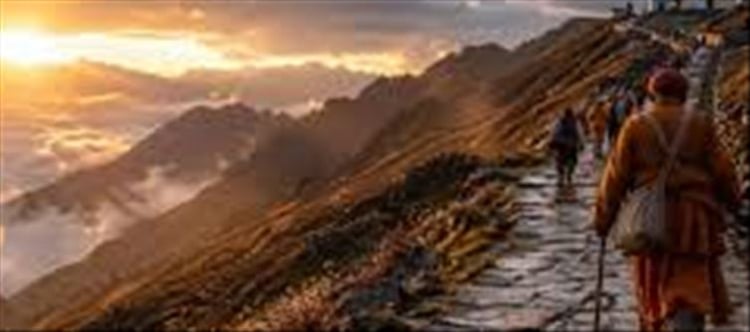

In many pilgrimages (yatra), people choose to walk long, difficult routes instead of taking easier transport—even when buses, ponies, or helicopters are available. It may look unnecessary from outside, but for devotees, the “hard way” often has deep meaning.
🙏 1. Walking is part of the devotion, not just travel
In a yatra, the journey itself is considered sacred—not just the destination.
- Every step is seen as a prayer in motion
- Physical effort becomes a form of offering (tapasya)
- Pain and fatigue are accepted as part of devotion
👉 For many, comfort reduces the “spiritual value” of the journey.
🧠 2. It creates mental discipline and focus
Walking long distances in tough conditions:
- Forces patience and endurance
- Reduces distractions from daily life
- Builds a sense of inner control
This is why many say the yatra “clears the mind.”
💛 3. A feeling of equality and shared experience
On pilgrimage routes:
- Rich and poor walk the same path
- Everyone faces the same weather, terrain, and fatigue
- Titles and status don’t matter
👉 This creates a rare sense of humility and unity.
🕉️ 4. Suffering is seen as meaningful, not negative
In many spiritual traditions, including Hindu and Sikh pilgrimages:
- Hardship is not avoided—it is accepted with faith
- Difficulty is believed to strengthen devotion
- Sacrifice is seen as spiritually purifying
🚶 5. The journey becomes a memory, not just travel
People often remember:
- The pain of climbing
- The strangers who helped them
- The moments of doubt and strength
👉 These experiences create emotional depth that shortcuts cannot provide.
⚠️ 6. But not everyone must walk
It’s important to be practical too:
- Elderly or unwell pilgrims often use support options
- Safety always comes first
- Faith is not measured by suffering alone
🧾 Final takeaway
People walk the hard way on a yatra not because they have to, but because they feel it:
transforms travel into devotion, effort into prayer, and struggle into meaning.
Disclaimer:
The views and opinions expressed in this article are those of the author and do not necessarily reflect the official policy or position of any agency, organization, employer, or company. All information provided is for general informational purposes only. While every effort has been made to ensure accuracy, we make no representations or warranties of any kind, express or implied, about the completeness, reliability, or suitability of the information contained herein. Readers are advised to verify facts and seek professional advice where necessary. Any reliance placed on such information is strictly at the reader’s own risk.
 click and follow Indiaherald WhatsApp channel