



AI-generated beauty imagery is rapidly displacing traditional model photography across global and Indian campaigns in 2026, but the technology consistently struggles with darker skin tones, regional beauty markers, and the lived texture of Indian skin — raising questions about whether algorithmic aesthetics can ever truly serve a market of 1.4 billion faces.
Look closely at the next beauty campaign that stops your scroll. The skin is impossibly smooth. The lighting falls exactly where a photographer would dream it. The jawline catches a shadow that feels almost — almost — like a real woman turned her head in a real studio. Odds are rising, sharply, that no woman was ever in the room.
In 2026, the beauty industry's most consequential disruption is not a new retinol formula or a miracle peptide. It is the quiet, accelerating replacement of human faces with machine-generated ones — and what that replacement reveals about whose beauty the machines were taught to imagine.
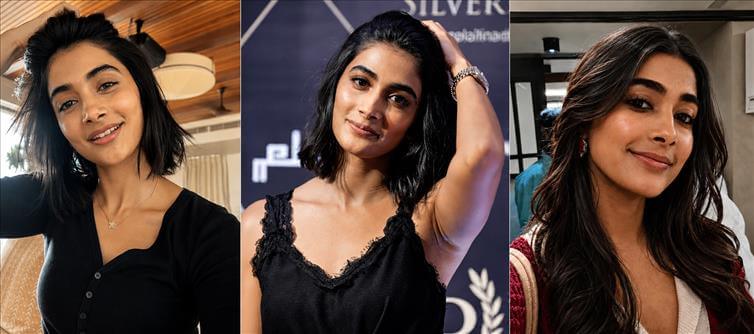
The evidence is everywhere, if you know where to look. Giorgio Armani's latest fragrance collection campaign features visuals so precisely lit, so eerily flawless, that the discourse has shifted from "who is the model" to "is there a model at all." Independent jewellery brands are leading the charge even more openly. OZ IRIS, a label that has been generating buzz with AI-crafted campaign imagery, recently released a series of visuals created entirely through GPT Image 2 prompts — each piece showing a model adorned in intricate pieces against cinematic backdrops that would have required a full production crew, a studio in Milan, and a six-figure budget just eighteen months ago.
The results are, on a surface level, stunning. The OZ IRIS visuals achieve a jewel-toned richness and editorial confidence that most real-world campaigns struggle to match. A second visual from the same series doubles down on the approach — proving this is not a one-off experiment but a declared creative strategy.
And it is not just niche labels. The Armani fragrance campaign imagery circulating on social media exemplifies how legacy luxury houses are testing the same waters, producing visuals that blur the line between human artistry and algorithmic generation.
The Indian Skin Problem No One Wants to Name
Here is where India Herald's read of this trend diverges from the breathless "AI is the future" coverage flooding tech blogs. The uncomfortable truth is this: the large language models and diffusion networks generating these images were trained overwhelmingly on datasets skewed toward lighter skin tones, Western facial structures, and European beauty standards. According to a 2024 study published in Nature Machine Intelligence, leading text-to-image models produced skin tones three to four shades lighter than prompts specified when generating South Asian faces. A 2025 audit by the Algorithmic Justice League found that AI-generated "Indian woman" images defaulted to North Indian, fair-skinned features in over 72% of outputs — effectively erasing the Dravidian, Northeastern, and tribal faces that constitute the majority of India's population.
For a country where the beauty industry is worth an estimated ₹1.2 lakh crore ($14.3 billion) according to Redseer Strategy Consultants' 2025 market report, and where 70% of consumers have medium-to-deep skin tones per Indian dermatological surveys, this is not an abstract ethics debate. It is a commercial blind spot the size of a subcontinent.
Consider what happens when a Coimbatore-based skincare brand wants an AI-generated campaign model who looks like its actual customer — a 28-year-old Tamil woman with deep brown skin, specific undertones that shift in monsoon humidity, and hair texture that does not conform to the sleek defaults the algorithm produces. The technology, as it stands in mid-2026, cannot reliably deliver her. It can produce a gorgeous approximation — but it will likely lighten her three shades, narrow her nose, and give her hair a sheen that belongs to a Pantene commercial shot in São Paulo.
The Model Industry Feels the Tremor
The human cost is already measurable. India's modelling industry, which supports an estimated 15,000–20,000 working professionals according to the Fashion Design Council of India's 2024 annual report, is feeling the squeeze. Casting calls for beauty campaigns have dropped by an estimated 30–40% in the digital-first segment over the past eighteen months, according to industry sources quoted by Business of Fashion India. AI-generated imagery is not replacing runway work or high-fashion editorial — yet — but the bread-and-butter commercial beauty shoots that paid rent for mid-tier models are vanishing.
The irony is sharp enough to cut. At the very moment Indian beauty brands trumpet "inclusivity" and "real skin" in their marketing copy, they are adopting a technology that literally cannot render real Indian skin with fidelity. A campaign celebrating diverse beauty, generated by an algorithm that has never touched melanin, never felt humidity on a cheekbone, never understood why a Malayali woman's skin glows differently after an oil bath than a Punjabi woman's after a cold-cream routine.
Where This Goes Next — And What to Watch
India Herald's assessment of the trajectory ahead is this: the technology will improve. Within 12–18 months, fine-tuned models trained on diverse South Asian datasets — several are already in development at IIT Madras's AI lab and at startups like Haut.AI — will close the skin-tone gap significantly. The question is not whether AI can learn Indian skin. It is whether the beauty industry will bother to teach it before the damage — to real models' livelihoods, to consumer trust, and to the visual culture of what "beautiful" means on a billion screens — becomes structural.
Watch for three signals in the coming months. First, whether any major Indian beauty conglomerate (Nykaa, Mamaearth's parent Honasa, or the Tata-owned portfolio) publicly commits to an "AI transparency" label on campaign imagery — something the EU's AI Act will require by 2027, but Indian regulation has not yet touched. Second, whether modelling agencies begin offering AI-augmented portfolios as a survival strategy, letting real models license their likenesses for AI generation rather than being replaced by them entirely. Third, and most telling, whether Indian consumers — the most value-conscious and ingredient-literate beauty buyers on the planet — actually care. Early surveys by Mintel India suggest they do: 61% of Indian beauty consumers in a 2025 poll said they would trust a brand less if they learned its campaign imagery was fully AI-generated.
The machines can paint a beautiful face. What they cannot do, not yet, is understand the face looking back at the screen — the one checking whether this shade will work on her, whether this product knows her monsoon, whether this brand sees her at all. That understanding is not an algorithm. It is a relationship. And no prompt, however detailed, has learned to build one.
More from India Herald


Key Takeaways
- AI-generated beauty campaign imagery is displacing traditional model photography at scale in 2026, from luxury houses like Giorgio Armani to independent jewellery labels using GPT Image tools.
- Leading AI image generators produce skin tones 3–4 shades lighter than specified for South Asian faces, according to a 2024 Nature Machine Intelligence study — effectively erasing the majority of Indian consumers from their own beauty campaigns.
- India's beauty market is worth an estimated ₹1.2 lakh crore ($14.3 billion), with 70% of consumers having medium-to-deep skin tones — a massive commercial mismatch with AI's current capabilities.
- Casting calls for commercial beauty shoots have dropped 30–40% in 18 months in the digital-first segment, threatening 15,000–20,000 working Indian models.
- 61% of Indian beauty consumers say they would trust a brand less if its campaign imagery were fully AI-generated, per Mintel India's 2025 survey.
By the Numbers
- AI models produce South Asian skin tones 3–4 shades lighter than prompted (Nature Machine Intelligence, 2024)
- 72% of AI-generated 'Indian woman' images default to fair, North Indian features (Algorithmic Justice League, 2025)
- India's beauty market: ₹1.2 lakh crore ($14.3 billion) in 2025 (Redseer Strategy Consultants)
- 61% of Indian beauty consumers would trust a brand less with fully AI-generated campaigns (Mintel India, 2025)
- Commercial beauty casting calls down 30–40% in 18 months in digital-first segment (Business of Fashion India)
 click and follow Indiaherald WhatsApp channel