


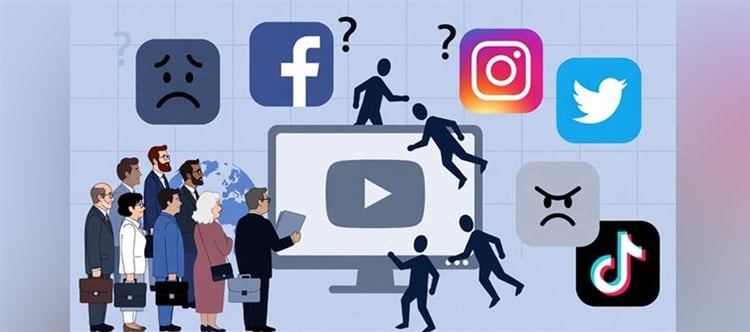

On december 10, australia became the first country in the world where no one under 16 can legally stay logged into YouTube.
Not TikTok.
Not Instagram.
YouTube.
The global video giant that built an empire on “anyone can upload, anyone can watch.”
What started as a niche children’s safety bill has detonated into a global precedent that every regulator from Brussels to california is now studying like a blueprint.
australia didn’t just tweak rules.
It banned the old internet.
And Silicon Valley is panicking.
1. YouTube Was Supposed to Be Exempt. Then Canberra Brought the Hammer.
australia originally treated YouTube like a “digital library”—a passive host, not an active social media engine.
Then lawmakers took one look at:
autoplay algorithms
attention loops
data harvesting
recommendation spirals
ad targeting of minors
…and changed their mind overnight.
Suddenly, YouTube was staring at fines of:
💥 $32.5 million per violation
Not per month.
Not per year.
Per violation.
Even google can do that math.
2. australia Creates the First ‘Teen-Free’ social media Zone
YouTube must forcibly log out every under-16 account in the country.
A global platform… with an entire generation kicked out with one policy stroke.
Every teen creator, commenter, subscriber, Shorts uploader, gaming streamer—
gone by december 10.
This is the most aggressive online safety enforcement ever attempted by a democratic nation.
Meta folded early.
TikTok folded early.
Snap folded early.
Only Reddit and Elon Musk’s X are still resisting.
For now.
3. YouTube’s Counterpunch: The Most Transparent lie You’ll Hear This Year
YouTube’s official response?
“This will make kids less safe.”
Translation:
“If they’re logged out, we can’t track them.
If we can’t track them, we can’t moderate them.
And if we can’t moderate them… we can’t monetize them.”
Teens will still use YouTube—they’ll just do it from:
burner accounts
shared family logins
VPNs
private browsers
hacked age credentials
In other words:
YouTube loses data. Teens lose protections. Scammers win.
4. Regulators Worldwide Just Got an Invitation to Copy This
For years:
The EU
UK Online Safety regulators
US state legislatures
Canadian child safety boards
…have been circling this idea, but scared to go first.
No one wanted to trigger the global tech lobby backlash.
australia didn’t tiptoe.
Australia cannonballed into the pool.
Other countries are now pointing and saying:
“If Canberra survived it, so can we.”
Get ready for a global age-verification arms race — and nobody actually knows how to enforce it cleanly.
5. Teens Will Not Leave the Internet. They Will Leave Regulated Platforms.
This policy will not keep kids away from screens.
It will push them toward:
Discord servers
Encrypted spaces
Dodgy streaming sites
Underground social platforms
Algorithmic chaos zones
In trying to protect kids, regulators may accidentally herd them into less supervised, more dangerous corners of the internet.
This is the paradox of “safety legislation” in 2025.
6. YouTube’s Existential Fork in the Road
google now has two choices:
✔️ Build real, unbreakable age-verification technology
(Which requires face scans, ID checks, or biometrics—systems people hate and governments fear.)
✔️ Or become a platform kids watch but can’t participate in.
Which destroys:
creator culture
engagement loops
Shorts virality
community features
recommendation accuracy
future audience growth
YouTube is not fighting a regulation.
It is fighting for its next generation of users.
7. This Is the End of the Free-For-All Internet
YouTube was the last major platform where:
No ID was required
Anyone could create
Anyone could comment
The barrier to entry was zero
That era dies on december 10 — at least in Australia.
This is the beginning of:
age gates
ID verifications
compliance audits
government oversight
digital citizenship requirements
platform accountability
social media is no longer the wild west.
It is becoming a regulated utility.
🔥 AUSTRALIA JUST CHANGED THE INTERNET FOREVER
This is not a local policy.
This is not a regional issue.
This is not a temporary experiment.
This is the first domino.
australia just proved that a country can force the world’s largest platforms to comply, and they will fold.
The next version of the internet will not look like the one we grew up with.
There will be walls, gates, IDs, enforcement, and age boundaries.
And somewhere between safety and surveillance… the soul of the old internet disappears.
australia didn’t just regulate social media.
It banned the old internet.
:(
 click and follow Indiaherald WhatsApp channel