


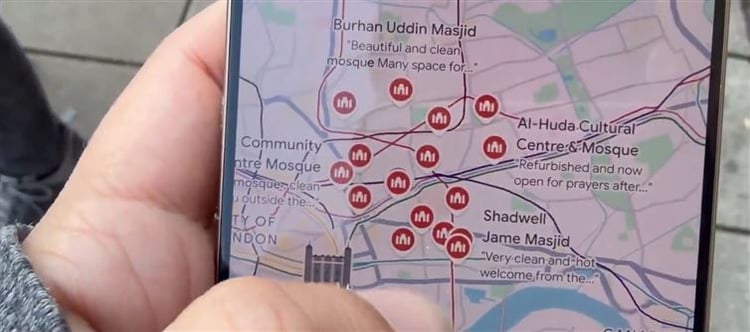

“14 Mosques in One Neighborhood? The east london Debate That Has Shaken Britain’s Nerves”
east london has once again become ground zero for a debate britain keeps postponing. American YouTuber Nate Friedman’s recent walk through Whitechapel—highlighting the presence of 14 mosques in a single neighborhood—has reignited explosive questions about immigration, integration, foreign funding, and national identity.
The controversy intensified after Friedman interviewed far-right activist Tommy Robinson, whose claims have predictably polarised the country. But behind the outrage, shouting, and counter-shouting lies a reality britain still hasn’t fully confronted: rapid demographic change without honest conversation breeds mistrust on all sides.
1. The Number That Triggered the Storm
“Fourteen mosques” isn’t just a statistic—it’s a provocation. For some, it reflects religious freedom and community growth. For others, it symbolises a city changing faster than its institutions—or its people—can process. Numbers, when detached from context, become weapons in cultural wars.
2. The Funding Question No One Answers Clearly
Tommy Robinson’s central claim isn’t new, but it remains unresolved in public discourse:
Who funds large religious institutions in Britain—and under what oversight?
He alleges significant funding from Qatar and Saudi Arabia, arguing that external money shapes religious messaging. While governments insist safeguards exist, transparency remains thin—and opacity fuels suspicion.
3. “Who Pays Decides”: Fear or Fact?
The argument that funding influences ideology is not unique to Islam. It applies to any institution—religious, political, or corporate. The failure lies not in asking the question, but in Britain’s reluctance to audit, explain, and openly regulate such flows with clarity.
4. qatar, Power, and Perception
Robinson’s claims about Qatar’s economic footprint—stakes in major british assets—tap into a wider anxiety:
Is britain economically dependent on foreign capital while pretending sovereignty is intact?
Whether exaggerated or not, these perceptions thrive because the public doesn’t trust elite assurances anymore.
5. Immigration Without Integration Is a Policy Failure
This debate isn’t really about mosques. It’s about parallel societies. When communities grow without meaningful integration—shared language, civic participation, and cultural exchange—resentment grows on all sides. That failure belongs to policy-makers, not migrants alone.
6. Extremes Feed Each Other
Figures like Tommy Robinson gain relevance not because they’re persuasive—but because governments leave legitimate questions unanswered. Silence creates a vacuum, and extremists rush in to fill it. Suppression doesn’t kill ideas. Neglect amplifies them.
7. The Danger of Turning Identity Into a Battlefield
When religious presence is framed as an invasion, it dehumanises communities. When concerns are dismissed as racism, it radicalises critics. britain is stuck in this loop because it refuses to separate policy debate from identity warfare.
8. The Real Issue: A State That Lost the Narrative
britain didn’t “become unrecognisable” overnight. It changed gradually—without public consent, without honest explanation, and without democratic confidence. When people feel decisions were made for them rather than with them, backlash is inevitable.
Final Word
This isn’t about mosques versus churches.
It’s about transparency versus denial.
Integration versus fragmentation.
Debate versus silence.
britain doesn’t need fear-mongering—or censorship. It needs adult conversations backed by data, oversight, and equal standards for everyone.
🔥 Ignore the questions, and the answers will come from the worst possible voices.
 click and follow Indiaherald WhatsApp channel