
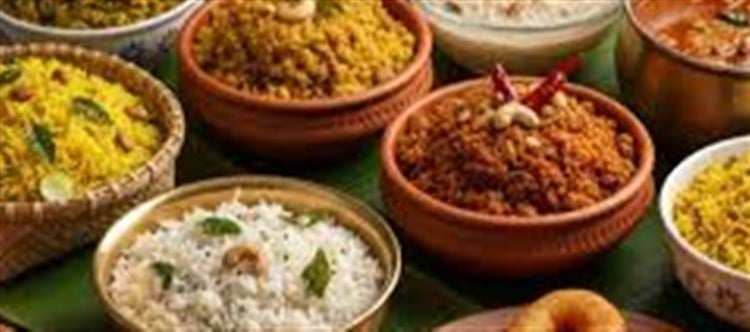


Thaipusam is as much a spiritual festival as a celebration of community — and food plays a central role, both as prasadam (sacred offerings) and festival fare. Here’s what you’ll typically find:
1. Satvik & Devotional Meals
Devotees observing Thaipusam often follow a pure vegetarian (satvik) diet, avoiding meat, onion, and garlic, especially on the day of the festival. Many observe fasting, consuming only milk, fruits, or simple meals once a day to purify the body and mind.
2. Annadhanam — Free Community Food
Temples and volunteer groups set up large community kitchens and stalls — known as annadhanam — offering free food to all visitors and devotees.
Common items include:
- Rice with sambar and lentil curries
- Chickpea curries & sundal (spiced legumes)
- Idli (steamed rice cakes) and vada (savory lentil fritters)
- Vegetarian banana leaf meals with assorted dishes on a leaf plate
- Refreshing coconut water and other cooling drinks
3. festival Snacks & Sides
At celebrations — especially in singapore and malaysia — local street food enhances the festive experience for visitors:
- Putu mayam / Putu piring: Sweet or savory steamed rice treats
- Vadai & Murukku: Crunchy savory snacks
- Local sweets like jaggery sweets and kuih
Drinks like teh tarik (frothy pulled tea) are popular with crowds.
4. Prasadam & Traditional Offerings
Devotees prepare or receive prasadam (blessed food) that is offered to Lord Murugan. These reflect South indian festive traditions:
- Payasam: Sweet milk pudding with sugar, cardamom and nuts
- Puliyodharai (tamarind rice): Tangy spiced rice
- Fruits and sweet treats such as laddoo
- Panagam: A traditional jaggery‑based cooling drink
In some regions, offerings like panchamritam — a mix of banana, jackfruit, dates, honey, and sugar — are used in temple rituals and shared later.
5. Desserts & Sweet Specialties
In many South indian homes, sweets prepared for Thaipusam include:
- Aval or Parippu Payasam – Rice or dal payasam
- Athirasam – Sweet jaggery rice treats
- Kandarappam or Ladoo – festival sweets often made without onion/garlic
These are shared with family, friends, and even given as prasadam.
6. Cooling & Refreshing Drinks
Since Thaipusam often involves long processions and hot weather, hydrating drinks are commonly served:
- Tender coconut water
- Sugarcane juice or lime juice
- Special herbal drinks like panagam (jaggery + ginger + water)
7. Regional Variations
Depending on where it’s celebrated — from Tamil Nadu in India to Batu Caves in Malaysia or Little india in Singapore — food offerings may vary, but the core emphasis on vegetarian, satvik, and community food sharing remains constant.
🌿 Bottom Line: Whether it’s the humble vada and idli served by volunteers, or the sweet payasam and panchamritam offered as prasadam, Thaipusam’s food culture blends devotion, sharing, and tradition — nourishing both body and spirit.
Disclaimer:
The views and opinions expressed in this article are those of the author and do not necessarily reflect the official policy or position of any agency, organization, employer, or company. All information provided is for general informational purposes only. While every effort has been made to ensure accuracy, we make no representations or warranties of any kind, express or implied, about the completeness, reliability, or suitability of the information contained herein. Readers are advised to verify facts and seek professional advice where necessary. Any reliance placed on such information is strictly at the reader’s own risk.
 click and follow Indiaherald WhatsApp channel