


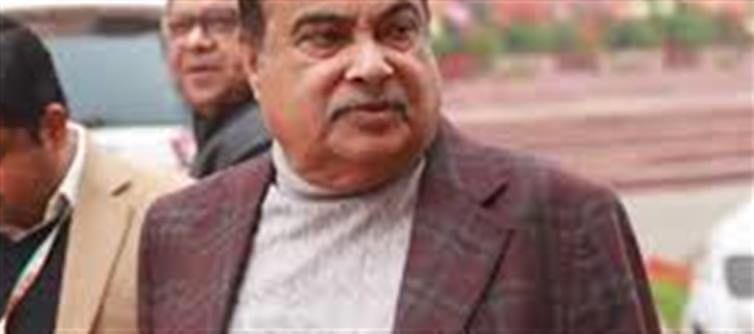

New Delhi: Union Road Transport and Highways minister Nitin Gadkari has welcomed the Union Budget 2026–27, praising its strong focus on infrastructure development and describing it as a major step toward strengthening India’s economic resilience and global competitiveness.
Delivering his reaction to the Budget presented by Finance minister Nirmala Sitharaman in the Lok Sabha, Gadkari said the government’s infrastructure push places connectivity, manufacturing, and balanced regional growth at the heart of India’s strategy for long‑term national development.
Infrastructure at the Core of Growth Strategy
Gadkari highlighted that the Budget’s focus on infrastructure — particularly the sharp increase in capital expenditure (capex) — will serve as a key engine for economic momentum and job creation. The government has proposed raising public capex to ₹12.2 lakh crore for the 2026–27 financial year, one of the highest ever allocations for infrastructure in a single budget. This continued emphasis reflects a sustained commitment to building world‑class connectivity and boosting private investment confidence.
He noted that these investments signal a shift from short‑term fiscal measures toward long‑term strategic growth drivers, capable of making india more resilient to global economic challenges while retaining steady expansion. Gadkari also stressed that improved infrastructure will enable manufacturing, trade, logistics, and regional development to scale faster, moving the country closer to its “Viksit Bharat 2047” vision.
Boosting Competitiveness and Connectivity
Gadkari’s comments underscored that better infrastructure not only supports internal economic cohesion but also enhances India’s position in global markets. Modern transport networks, advanced logistics corridors, and enhanced multi‑modal connectivity are critical for reducing costs, shortening transit times, and boosting export competitiveness.
He reiterated that infrastructure improvements — from freight corridors and national waterways to roads and high‑speed rail routes — will significantly lower logistical bottlenecks, making indian goods and services more competitive internationally.
Supporting Inclusive Growth and Urban Decongestion
Gadkari also praised the Budget’s focus on Tier‑2 and Tier‑3 cities, which have been identified as emerging growth centres. With enhanced infrastructure spending targeted at cities with populations above five lakh, the Budget aims to promote balanced urbanisation, encourage economic activity outside major metros, and reduce the pressure on overburdened urban centres.
By connecting more regions and improving accessibility, Gadkari said, the Budget would help spur local entrepreneurship, tourism development, and employment opportunities across the country, particularly in less developed areas.
Conclusion: A Forward‑Looking Infrastructure Blueprint
In summary, Nitin Gadkari’s endorsement highlights the government’s strategic vision for infrastructure as a backbone of India’s economic growth. The strong emphasis on capex — coupled with programmes for freight corridors, waterways, and connectivity in smaller cities — was described as a blueprint not just for growth and jobs, but also for positioning india as a globally competitive economy capable of navigating future challenges.
Disclaimer:
The views and opinions expressed in this article are those of the author and do not necessarily reflect the official policy or position of any agency, organization, employer, or company. All information provided is for general informational purposes only. While every effort has been made to ensure accuracy, we make no representations or warranties of any kind, express or implied, about the completeness, reliability, or suitability of the information contained herein. Readers are advised to verify facts and seek professional advice where necessary. Any reliance placed on such information is strictly at the reader’s own risk.
 click and follow Indiaherald WhatsApp channel