




🚧 A Small Fee Hike That Triggered a Big Debate
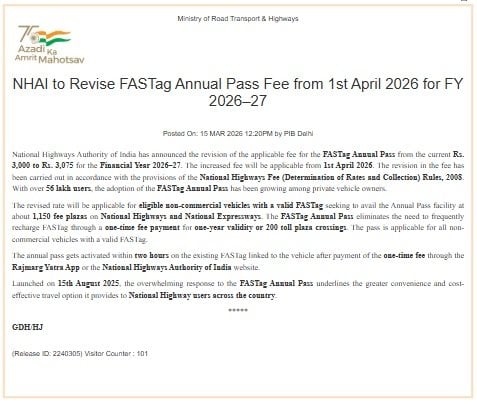
Starting april 1, the annual pass fee for FASTag has reportedly increased from ₹3000 to ₹3075. On paper, the change might appear minor — just a ₹75 rise. But online, the reaction has been anything but small.
For many citizens and commentators, the increase has become another example of what they see as a familiar pattern: small, incremental hikes that quietly add up over time.
⚡ Why This Increase Is Drawing Criticism
1. The “Small Hike” Argument
Supporters of the move might say ₹75 isn’t a major burden. But critics argue that such increases happen frequently across multiple services, which collectively push up everyday costs for citizens.
2. The Pattern of Incremental Charges
Many people feel that governments often raise fees in small steps rather than making large changes all at once. Over time, these incremental adjustments can significantly increase the cost of public services.
3. Public Perception Matters
The frustration expressed online reflects a deeper concern: citizens want transparency and clear explanations about why these hikes happen and how the additional revenue will be used.
4. A Growing Conversation About Governance
Some critics are using this moment to question broader governance practices, arguing that frequent increases in fees, taxes, or charges can make people feel financially squeezed.
5. The Other Side of the Debate
Governments and policymakers often argue that infrastructure maintenance, technology upgrades, and operational costs require periodic revisions in fees to keep systems running efficiently.
✨ In the end, the FASTag hike itself may be small, but the reaction shows something bigger:
For many citizens, even minor increases can become a symbol of a larger conversation about public costs, transparency, and economic pressure in everyday life.
 click and follow Indiaherald WhatsApp channel