



No suspense. No surprise. No opposition.
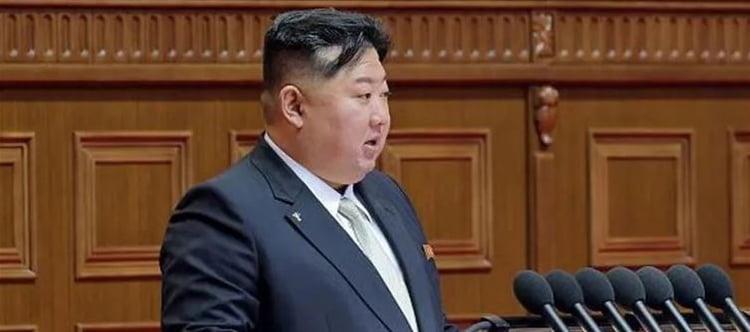
At North Korea’s latest ruling party congress, Kim Jong Un was once again named general secretary of the country’s powerful Workers' party of Korea.
The decision, announced by state media, changes nothing on paper — but it reinforces everything in practice.
Because in Pyongyang, titles aren’t ceremonial. They’re signals.
Signals about power.
Signals about weapons.
Signals about what comes next.
Here’s what this latest congress actually tells us.
💥 1. The Dynasty Isn’t Just Surviving — It’s Consolidating
The Kim family has ruled north korea since the late 1940s. Leadership transitions haven’t come through elections — they’ve come through bloodlines.
When Kim Jong Un took over after his father’s death in 2011, many outside observers questioned whether the young, relatively untested leader could hold the system together.
More than a decade later, the answer is clear.
Not only has he consolidated control, he has tightened it.
The reappointment isn’t about legitimacy — it’s about reaffirming absolute authority.
🚀 2. Nuclear Weapons Remain the Centerpiece
According to state-run Korean Central news Agency, the country has “radically improved” its war deterrence capabilities, placing nuclear forces at the core.
That’s not subtle messaging.
Despite international sanctions, north korea continues to test intercontinental ballistic missiles and expand its nuclear arsenal. Just before this congress began, the regime unveiled what it described as nuclear-capable rocket launchers — a show of force timed with political theater.
The message to Washington and its allies is simple: the weapons program isn’t slowing down.
It’s accelerating.
🧨 3. Secrecy Makes the Threat Harder to Measure
Here’s the complication.
north korea is one of the most opaque governments on Earth. Independent verification of its military progress is nearly impossible.
Analysts rely on satellite images, test launches, and intelligence leaks to estimate capability. What’s clear is that Kim has invested heavily in nuclear development, transforming the country into a far more complex strategic challenge for the U.S. and its partners.
What isn’t clear is how advanced — or deployable — every system truly is.
That ambiguity is part of the strategy.
🏛 4. A party Reshuffle Behind Closed Doors
While Kim’s top position remains unchanged, the party’s presidium — effectively its executive core — has seen major turnover.
More than half of its 39 members have reportedly been replaced since the last congress in 2021.
That kind of reshuffling isn’t random.
In authoritarian systems, personnel changes often signal:
Loyalty tests
Policy shifts
Internal power balancing
It suggests Kim is not just maintaining control — he’s actively recalibrating it.
📉 5. Economy vs. Arsenal: The Balancing Act
In his opening speech, Kim pledged to improve living standards and boost the economy, describing them as urgent historical tasks.
That promise lands against a difficult backdrop:
Years of international sanctions
Pandemic border closures
Food shortages and economic strain
The contradiction is striking.
north korea is pouring resources into missiles while promising domestic prosperity. Whether both can be sustained simultaneously remains an open question.
👀 6. The Heir Question: Enter Kim Ju Ae
Perhaps the most closely watched detail isn’t about missiles — it’s about family.
South Korea’s intelligence agency has suggested that Kim may be positioning his daughter, Kim Ju Ae, believed to be around 13, as a potential successor.
Her increasingly visible presence at missile inspections and major state events has fueled speculation that the next chapter of the dynasty is already being written.
If she appears prominently at this congress, it won’t be symbolic.
It will be strategic.
🌍 Why This congress Matters
North Korea’s party congress, held roughly every five years in the past decade, is one of the rare windows into its political structure. With around 5,000 members in attendance, it’s where priorities are declared and direction is set.
This year’s signals are clear:
Nuclear capability remains central.
Leadership remains dynastic.
Internal power structures are being adjusted.
And the outside world is still watching — trying to read meaning between the lines of one of the world’s most secretive regimes.
Because in Pyongyang, every announcement is deliberate.
And nothing is ever accidental.
 click and follow Indiaherald WhatsApp channel