


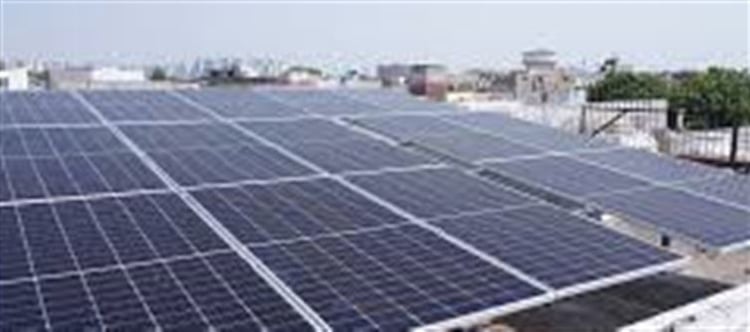

With rising electricity bills and a growing focus on renewable energy, installing solar panels at home has become a smart choice. For a family of 5, deciding how many kilowatts (kW) of solar panels to install depends on energy consumption, sunlight availability, and the household’s electricity usage patterns. This article breaks down the calculation and provides practical guidance for installation.
1. Understanding Household Energy Consumption
Before determining the size of the solar system, it’s important to understand how much electricity a family of 5 uses on average.
Typical Energy Usage
- A family of 5 usually consumes between 300 to 500 units (kWh) per month, depending on appliances, lifestyle, and climate.
- Major electricity consumers include:
- Air conditioners and fans
- Refrigerators and freezers
- Water heaters
- Washing machines
- Lighting and electronics
Knowing your exact monthly usage helps calculate the size of the solar panel system needed.
2. How Solar Panels Are Rated
Solar panels are rated in kilowatts (kW), which indicates their maximum power output under standard test conditions.
- 1 kW system can produce roughly 4–5 kWh per day in a sunny location.
- Production varies based on:
- Peak sunlight hours (varies by location)
- Panel efficiency
- Tilt and orientation of panels
- Seasonal variations
This helps estimate how much electricity the system will generate over a month.
3. Calculating the Required System Size
Step 1: Determine Monthly Energy Usage
Suppose your family uses 400 kWh per month.
Step 2: Determine Daily Energy Requirement
Daily energy requirement = 400 kWh ÷ 30 days ≈ 13.3 kWh/day
Step 3: Factor in Peak Sunlight Hours
Assume your location receives 5 peak sunlight hours per day.
Required system size (kW) = Daily energy requirement ÷ Peak sunlight hours
= 13.3 ÷ 5 ≈ 2.66 kW
Step 4: Account for System Losses
Solar systems experience losses due to inefficiency (inverter, dust, temperature). Add 20–25% extra capacity.
Adjusted system size ≈ 2.66 × 1.25 ≈ 3.3 kW
✅ Therefore, a 3–3.5 kW solar panel system is typically sufficient for a family of 5 with average usage.
4. Choosing the Right Number of Panels
Solar panels come in different wattages (e.g., 330W, 400W).
- Example: Using 330W panels → Required panels = 3300W ÷ 330W ≈ 10 panels
- Example: Using 400W panels → Required panels = 3300W ÷ 400W ≈ 8–9 panels
The number of panels also depends on roof space availability and panel efficiency.
5. Grid-Tied vs. Off-Grid Systems
Grid-Tied Solar Systems
- Connected to the electricity grid
- Excess energy is fed back to the grid
- Benefits: Reduces electricity bills, avoids battery costs
Off-Grid Solar Systems
- Independent of the grid
- Requires batteries for storage
- Benefits: Useful in areas with frequent power outages, but more expensive
A family of 5 in an urban area typically prefers a grid-tied system.
6. Cost Considerations
- Cost depends on system size, panel type, inverter quality, and installation charges.
- For a 3–3.5 kW system in India, the typical cost ranges between ₹1.5 lakh – ₹2.5 lakh, depending on brand and technology.
- Government subsidies (under schemes like MNRE) may reduce costs further.
7. Maintenance Tips for Longevity
- Clean panels regularly to remove dust and debris
- Inspect wiring and inverter every 6 months
- Monitor energy production using apps or inverters’ display
- Trim trees or remove shading near panels
Well-maintained panels can last 25–30 years with optimal efficiency.
8. Benefits of Installing Solar Panels
- Reduces electricity bills significantly
- Environmentally friendly and renewable energy source
- Enhances energy independence
- Increases property value
For a family of 5, a properly sized solar system ensures that most of the household’s electricity needs are met sustainably.
✅ Conclusion
A family of 5 typically requires a 3–3.5 kW solar panel system, which can be achieved using 8–10 high-efficiency panels, depending on their wattage. Proper sizing, installation, and maintenance ensure maximum energy production, savings on bills, and a long-lasting solar investment.
Solar energy not only helps the environment but also secures a sustainable future for the household.
Disclaimer:
The views and opinions expressed in this article are those of the author and do not necessarily reflect the official policy or position of any agency, organization, employer, or company. All information provided is for general informational purposes only. While every effort has been made to ensure accuracy, we make no representations or warranties of any kind, express or implied, about the completeness, reliability, or suitability of the information contained herein. Readers are advised to verify facts and seek professional advice where necessary. Any reliance placed on such information is strictly at the reader’s own risk.
 click and follow Indiaherald WhatsApp channel