


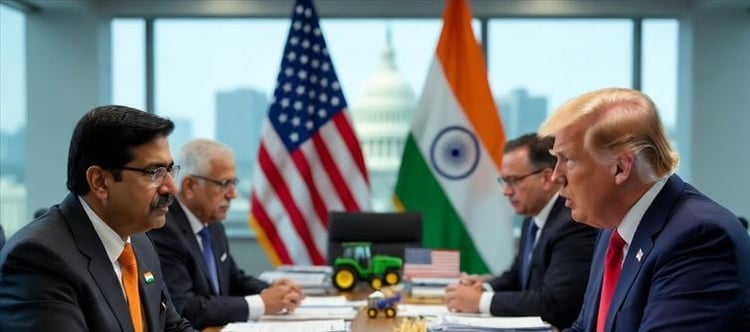

What looked like a breakthrough is now stuck in limbo. The much-anticipated India–US trade deal — once seen as a major step forward — has run into familiar friction points. Despite progress on tariff reductions, the talks have slowed to a near standstill, exposing deeper disagreements that neither side seems ready to compromise on.
1. TARIFF CUTS — BUT NOT ENOUGH TO CLOSE THE DEAL
On paper, the numbers look promising. india reportedly signaled willingness to reduce tariffs from around 50% to 18% on certain goods. But in high-stakes trade negotiations, numbers alone don’t seal agreements — the details do.
2. AGRICULTURE: THE BIGGEST ROADBLOCK
The core issue remains market access, especially in agriculture. The U.S. continues to push for greater entry into India’s farm sector, including products like apples. For india, this isn’t just trade — it’s about protecting millions of farmers and a politically sensitive ecosystem.
3. LEGAL TWISTS ADDED TO THE DELAY
Complicating matters further, the U.S. supreme Court’s move to strike down certain IEEPA-related tariffs has reshaped the negotiation landscape. That decision has forced both sides to reassess positions mid-discussion.
4. HIGH-LEVEL TALKS, HIGHER STAKES
An indian delegation is set to visit Washington from april 20 to 22 to revive the negotiations. The timing is critical — both countries have strategic and economic incentives to make this deal work.
5. MORE THAN JUST TRADE
This isn’t only about tariffs or apples. It’s about balancing domestic priorities with global ambitions. For both india and the U.S., the deal represents influence, alignment, and long-term economic positioning.
BOTTOM LINE
The deal isn’t dead — but it’s far from done. Until both sides find common ground on agriculture and market access, the promise of a landmark agreement will remain just that — a promise waiting to be fulfilled.
 click and follow Indiaherald WhatsApp channel