


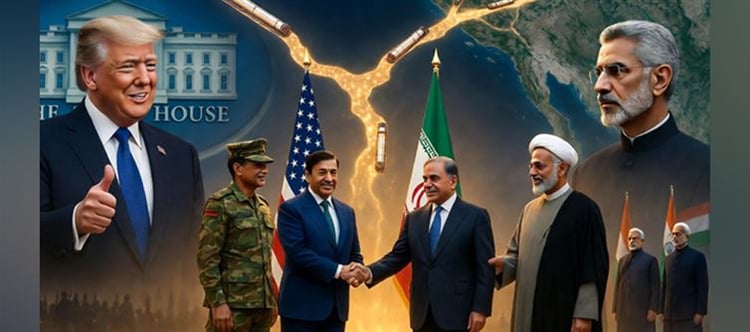

In global diplomacy, visibility matters as much as influence. And when a major breakthrough happens without you in the room, questions follow—loud, persistent, and uncomfortable. The latest ceasefire has triggered exactly that kind of debate.
1. The Optics of Credit
Both Washington and Tehran publicly acknowledged Pakistan’s role in helping de-escalate tensions. That recognition has instantly elevated Islamabad’s diplomatic profile—at least in this moment.
2. The Comparison That’s Driving Debate
For many observers, the contrast is striking. india, with its long-standing ties in the region and strategic projects like Chabahar, might have been expected to play a visible role. Instead, it finds itself largely absent from the headline narrative.
3. Strategy vs Visibility
Officials have previously emphasized that india doesn’t position itself as a “broker” in conflicts. That approach prioritizes strategic autonomy—but it also means stepping back from moments where mediation defines the story.
4. The Stakes Beneath the Surface
Beyond optics, tangible concerns are being discussed—trade routes, energy flows, remittances, and regional influence. When geopolitical equations shift, economic ripple effects often follow.
5. The Bigger Question
Is this a missed opportunity—or a deliberate choice aligned with a longer-term strategy? That’s where opinions sharply diverge. Some see restraint; others see absence.
6. A Narrative Still Unfolding
Diplomacy doesn’t operate on a single event. Roles evolve, alignments shift, and influence is often exercised quietly, away from public credit.
Bottom Line
What matters now isn’t just who was named in a statement—but how each country positions itself in what comes next. Because in geopolitics, today’s optics can shape tomorrow’s leverage.
 click and follow Indiaherald WhatsApp channel