


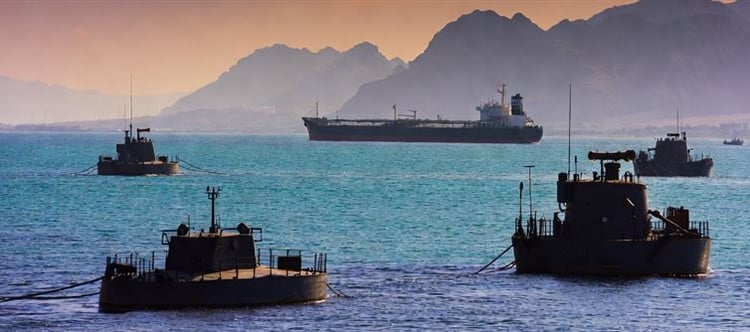

At the heart of global trade lies a narrow stretch of water that the world cannot afford to ignore—the Strait of Hormuz. And right now, it’s not just geopolitics or military tension causing concern. It’s something far more unpredictable: uncertainty.
Recent reports suggest that iran is struggling to fully reopen the Strait, not because of external pressure alone, but due to a problem of its own making. During heightened tensions, sea mines were reportedly deployed as a defensive measure. Now, as the situation begins to shift, locating and safely removing those mines has become a serious challenge.
This isn’t a minor operational hiccup—it’s a high-stakes risk. The Strait of Hormuz is one of the most critical oil transit routes in the world. Even a slight disruption can send shockwaves through global markets, impacting oil prices, supply chains, and economies far beyond the region.
The real issue lies in capability and control. sea mines are notoriously difficult to track once deployed, especially in busy and complex waterways. Without precise mapping or advanced clearance systems, even the country that laid them can struggle to remove them safely. And until every single mine is accounted for, the threat remains very real—for commercial vessels, naval forces, and the fragile stability of the region.
What makes this situation more alarming is the broader implication. It highlights how quickly strategic decisions in times of conflict can spiral into long-term risks. A move intended to assert control can end up limiting it.
For the world, this isn’t just about Iran—it’s about the vulnerability of global infrastructure. One unresolved issue in a narrow strait has the potential to ripple across continents.
Because sometimes, the biggest threat isn’t the enemy—it’s what you can’t control anymore.
 click and follow Indiaherald WhatsApp channel